Tuatha Dé Danann
By analogy, we can compare the Tuatha Dé Danann to the Greek gods living on Olympus. Each God has his own talents,…


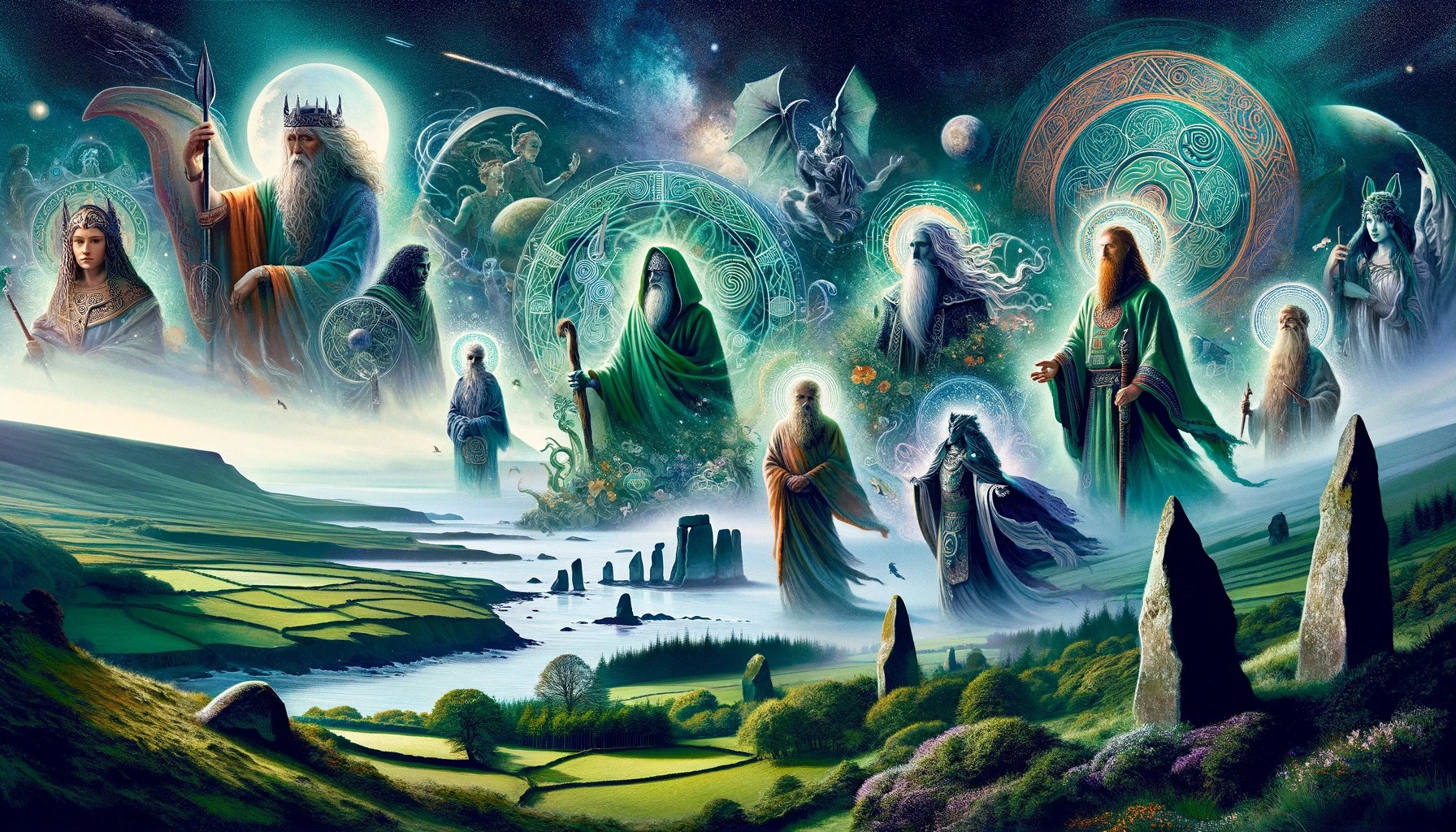
By analogy, we can compare the Tuatha Dé Danann to the Greek gods living on Olympus. Each God has his own talents,…
In the rich tableau of Irish mythology, populated by heroes, goddesses and magical creatures, Manannán mac Lir stands out as a bewitching,…
In the world of Irish Celtic mythology, few figures are as fascinating as the God Lugh, known for his versatility and expertise…
Ireland is a land of mythological tales. Among these stories, those of the Fomorians hold a special place. These mythical creatures, often…
Irish mythology, rich in epic tales and mystical characters, offers a fascinating insight into Celtic culture and spirituality. This pantheon, composed of gods and goddesses with extraordinary powers, reflects the ancient Irish’s deep connection with nature, the cosmos, and the spiritual world.
Irish mythology, like most ancient mythologies, has a fairly rich pantheon of gods and goddesses, each with their own domains of influence, legends, and characteristics. These deities reflect various aspects of life, nature, and the cosmos, such as war, the sea, fertility, poetry, and knowledge.
The gods and goddesses of Irish mythology mainly belong to two groups of mythological figures: the Tuatha Dé Danann and the Fomorians. The Tuatha Dé Danann, considered the principal gods, are often described as beings endowed with magical powers and great beauty. They include figures such as:
The Fomorians, on the other hand, were often portrayed as hostile beings and were associated with destructive and chaotic forces of nature.
In addition to these major deities, there are many other gods and goddesses, as well as semi-divine heroes, whose stories are woven into the rich tapestry of Irish mythology.
Each deity has a multitude of tales, reflecting the beliefs, hopes, and fears of the ancient Celts, and continues to inspire modern culture through literature, cinema, and other art forms.