On March 17th, Ireland and the world don green to celebrate the Saint Patrick’s Day, a national holiday in Ireland and a universal symbol of Irish culture. But behind the parades, music, and pints of beer lies an older story: that of a 5th-century man, Patrick, evangelizer of Ireland who became the country’s patron saint. Between historical facts and legendary tales, his journey embodies both the spirituality and the collective imagination of a nation.
Who was Saint Patrick?
A 5th-century man of British origins
Contrary to popular belief, Patrick was not Irish by birth. Born around 385 in Roman Britannia (probably in Wales or Scotland), he was captured as a teenager by Irish pirates. Enslaved for six years, he worked as a shepherd before escaping and returning to his family.
Marked by his experience, Patrick became a priest, then a bishop. Around 432, he returned to Ireland, this time as a missionary, aiming to evangelize an island still largely pagan. His work helped make Christianity a major force in Ireland.
The shamrock, symbol of the Trinity
The most famous metaphor
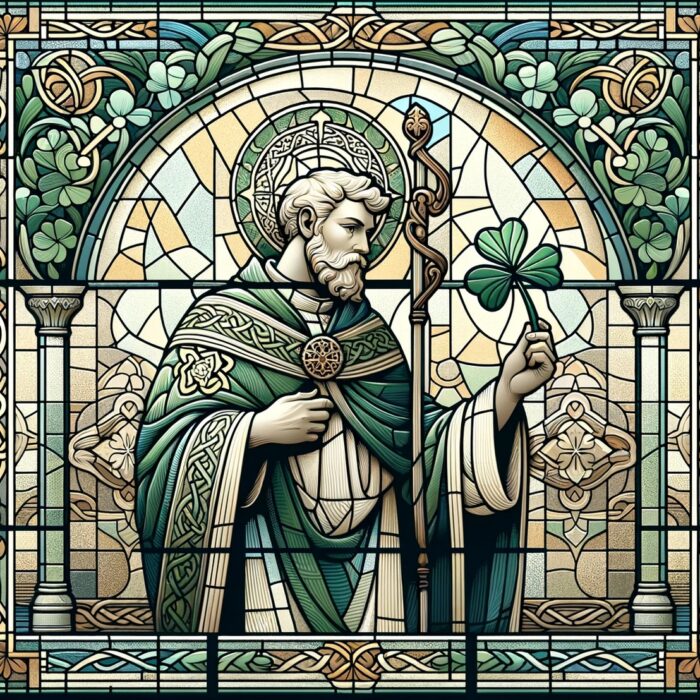
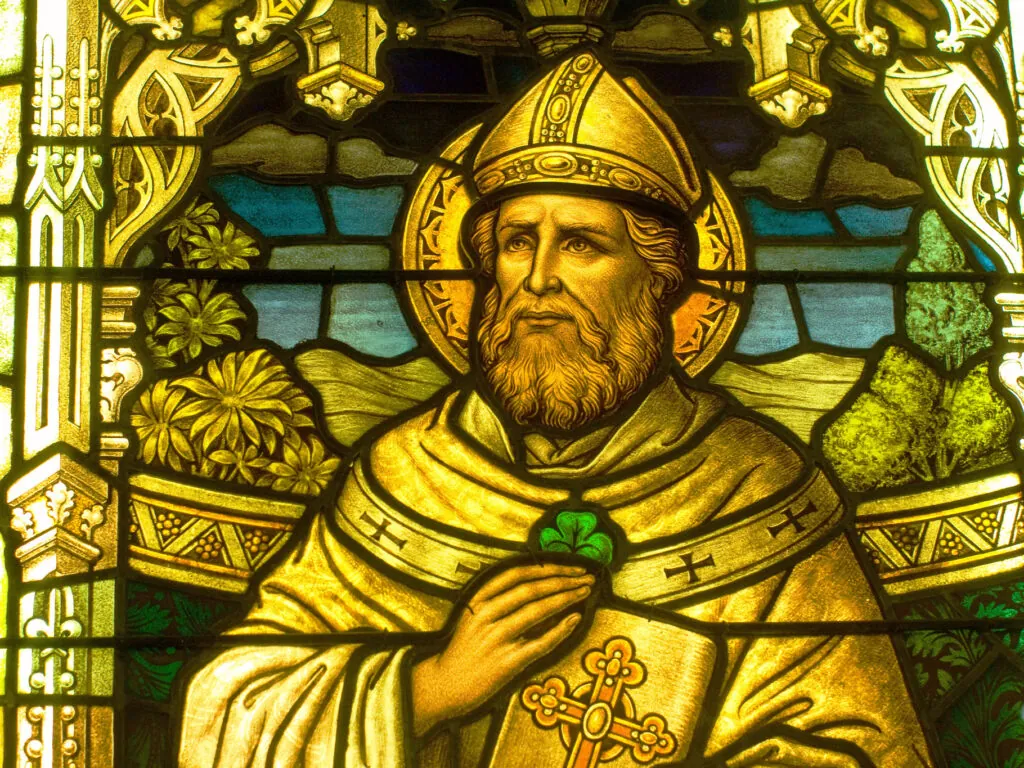
Legend has it that Patrick used a shamrock to explain to the Irish the mystery of the Holy Trinity: three distinct leaves united on a single stem, representing the Father, the Son, and the Holy Spirit.
Whether this story is true or not, it has left a lasting mark on popular imagination. Today, the shamrock (shamrock) has become one of Ireland’s national symbols, proudly worn during the March 17th celebrations.
The legend of the snakes
Ireland purified from evil
Another famous episode claims that Saint Patrick drove all the snakes out of Ireland, casting them into the sea from the top of a hill.
Historically, it is known that Ireland never had native snakes after the last glaciation. This legend is therefore symbolic: it likely represents the disappearance of pagan beliefs and the advent of Christianity on the island.
Saint Patrick’s well and cross
Symbols of faith and tradition
Many holy wells in Ireland are associated with Saint Patrick. These springs, often Christianized, were once linked to pagan cults. Even today, pilgrims visit them to pray and seek healing.
The Saint Patrick’s cross, a red saltire on a white background, is also one of his symbols. It was sometimes used as a national emblem before the shamrock became dominant.
Croagh Patrick, the sacred mountain
A major pilgrimage site
According to tradition, Patrick spent forty days of fasting and prayer on Croagh Patrick mountain, in County Mayo. This summit, nicknamed The Reek, remains a prominent pilgrimage site today. Every last Sunday of July, thousands of pilgrims climb the mountain, sometimes barefoot, to honor the saint’s memory.
This ritual testifies to the strong link between Christian spirituality and Ireland’s older traditions.
Saint Patrick and Irish identity
Between religion and national symbol
Beyond the religious dimension, Patrick has become an identity symbol for the Irish, both in Ireland and in the diaspora. Since the Middle Ages, he has been honored as the country’s patron saint, alongside Brigid of Kildare and Columba of Iona.
His feast day, March 17th, was initially religious before gradually becoming a cultural and national celebration. For Irish emigrants settled in America, it became a moment of pride and identity affirmation, giving rise to the huge parades that still exist today.
Texts attributed to Saint Patrick
The voice of a missionary
Two texts are directly attributed to Patrick:
- The Confessio, where he recounts his life, slavery, and missionary work.
- The Letter to Coroticus, in which he condemns slavery and abuses committed by warlords.
These writings, though brief, provide unique testimony on Patrick’s thoughts and 5th-century Ireland. They allow us to glimpse a simple man, driven by deep faith but also aware of the injustices of his time.
Legacy and legends
Between historical truth and collective imagination
It is difficult to separate the real history of Patrick from the legends accumulated around his name. Was he the sole evangelizer of Ireland? Probably not, other missionaries played a role. Did he truly perform the miracles attributed to him? Historians remain cautious.
But it does not matter: what counts is how Patrick became the founding story of a Christian Ireland, proud of its difference and identity.


 +
+