
On 29 September, rural Ireland once marked a festival where roast goose, the end of the harvest, bills to be settled and a notoriously unaccommodating supernatural creature all came together. Welcome to Michaelmas, Ireland’s feast of Saint Michael: a pivotal date in the rural calendar, poised between religious celebration, the changing seasons and folklore. Halloween certainly does not have a monopoly on strange traditions on the island!
Michaelmas is the English name for the feast of Saint Michael the Archangel, celebrated on 29 September. The word comes from Michael’s Mass, literally the Mass of Michael. In Christian Ireland, the day belonged to the religious calendar; in everyday life, it also served as a marker in the farming year.
By late September, the harvest work was entering its final phase, the days were drawing in and preparations for the harsh season were under way. The festival symbolically marked the shift from summer abundance into autumn. It was not celebrated in the same way everywhere: customs varied between regions, families and periods.
Michaelmas should not be confused with Samhain, traditionally associated with the turn of October and November and the history of Halloween. Both festivals belong to the world of seasonal change, but they have distinct dates, origins and traditions.
Long before digital diaries, major religious festivals were also practical landmarks. In the British Isles and Ireland, Michaelmas was one of the quarter days, dates traditionally used for certain deadlines, including rents, contracts and settlements. Their precise application, however, depended on the place and period.
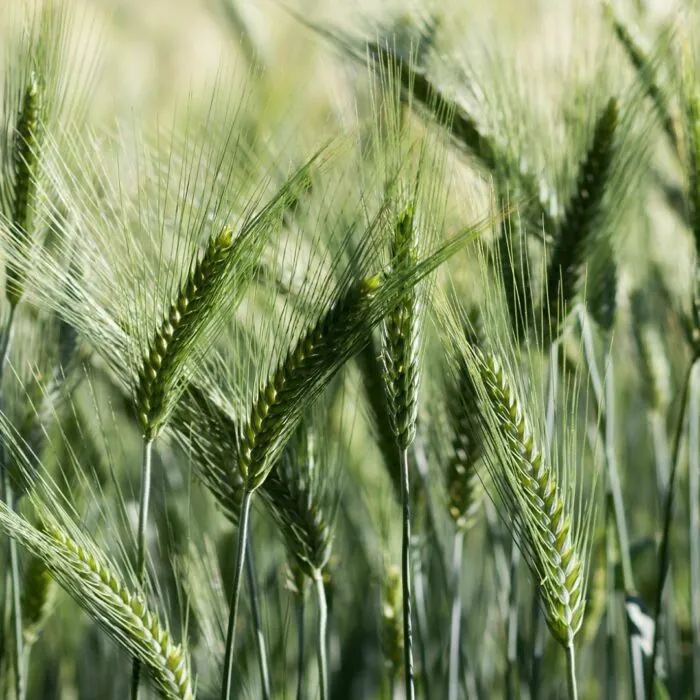
For farmers, late September above all meant bringing in whatever could still be gathered, taking stock of provisions and preparing for the cold weeks ahead. A harvest-end festival was therefore as much an opportunity to give thanks as it was a very concrete way of seeing what the year had yielded.
In folklore accounts, this was also the time when people stopped relying on wild fruit as though summer would last for ever. And this is where a character far less accommodating than a landlord calling to collect the rent enters the story.
The Púca — also spelled Pooka — is a figure from Irish folklore which, according to the tales, can take several animal forms, notably that of a dark horse. Sometimes mischievous, sometimes unsettling, it appears in stories whose details vary considerably from one area to another.
A popular belief held that in late September or early October, the Púca spoiled the blackberries left on the brambles. Depending on the version, it fouled them, spat on them or made them unfit to eat. This folkloric explanation was remarkably effective at discouraging children from extending the picking season indefinitely. Autumn weather and the fruit’s natural deterioration, meanwhile, offered a far less fantastical reason to be cautious.
A note on the date: not all accounts place this intervention precisely on 29 September. Some traditions link it to Michaelmas, others to a date in October, sometimes called Púca Day. It would therefore be misleading to present a single rule as applying across all of Ireland.
As for the Púca, it is best not to reduce it to a mere ‘Halloween monster’. It belongs to a far broader body of Irish rural legends and deserves its own story.
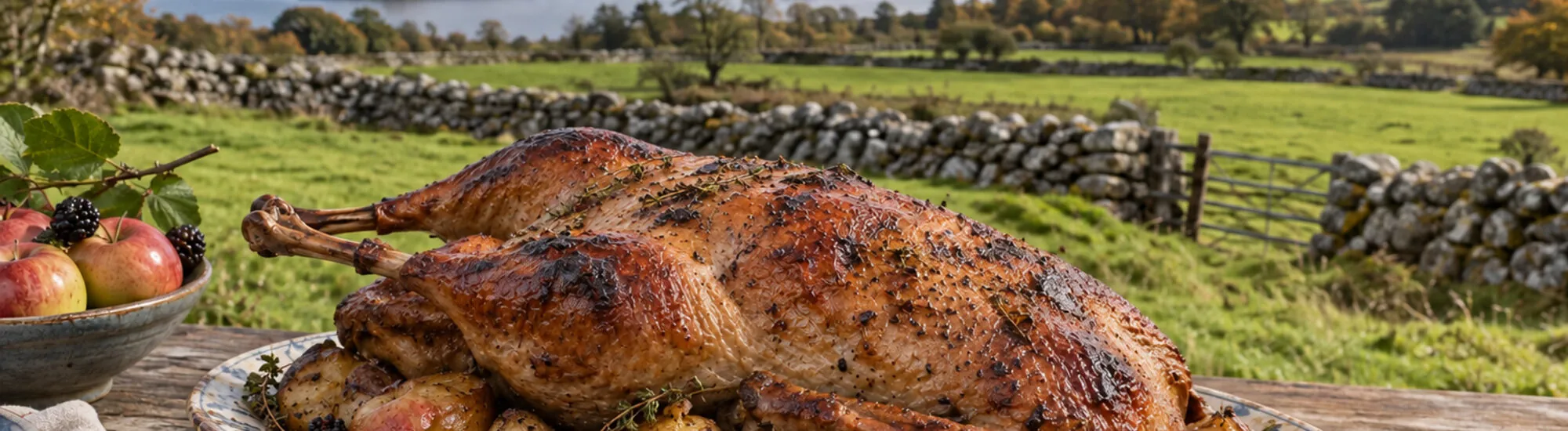
The Michaelmas goose is one of the food customs associated with Saint Michael’s Day in Ireland and Great Britain. Fattened through the warmer months, the bird could become the centrepiece of a family meal as autumn arrived. Some traditions also ascribed it an auspicious value for the year ahead.
It was neither a compulsory menu nor a universal custom, however: everything depended on a household’s means and local practices. A whole goose made a meal for the occasion, not necessarily an everyday dish for modest families.
The festival could also include other seasonal produce. Apples, harvested fruit and hearty dishes were a reminder that Michaelmas belonged to a time when the contents of the larder mattered more than table decorations. The goose, at least, had the advantage of not demanding a place by the fire after dinner.
The Michaelmas calendar was also part of a religious geography: churches dedicated to Saint Michael, local gatherings and, depending on the region, devotional practices. Fairs and agricultural transactions could also take place around this period, though not all were held on the festival day itself.
Like many pivotal dates in the folk calendar, Saint Michael’s Day gave rise to weather sayings. People watched the weather in an attempt to foresee the rest of autumn or the severity of winter. These omens belong to oral heritage; they are, of course, not scientific forecasting methods.
Michaelmas thus reveals a fascinating feature of Irish folklore: a single date could bring together Christian celebration, economic customs and beliefs that were much older or more difficult to date. It would be excessive, however, to claim that every custom descended directly from a pre-Christian rite; the sources do not always allow such a clear lineage to be traced.
Michaelmas remains a date in the Christian calendar, but it is not a national public holiday in the Republic of Ireland and does not give rise to a single tourist festival comparable to the major celebrations of Saint Patrick’s Day or Halloween. Its legacy is found chiefly in folklore accounts, archives, certain religious practices and local stories.
For curious travellers, it is an excellent gateway to rural Ireland: its harvests, fairs, hedgerows laden with blackberries and tales of elusive creatures. Irish folklore collections and research publications offer a way to explore these variations without turning every legend into historical fact.
Michaelmas falls on 29 September and is the Christian feast of Saint Michael. Its Irish folk traditions are linked in particular to autumn, the harvest, goose and, in some versions, the Púca and blackberries.
Samhain refers to a seasonal festival in the Gaelic calendar associated with the beginning of November and the transition into the darker half of the year. Halloween, celebrated on 31 October, has a complex history in which Gaelic traditions and the Christian calendar meet. The three subjects are connected, but conflating them would erase precisely what makes each one interesting.
To find out more, discover our feature on Irish festivals and the traditions that punctuate the year on the island.
Michaelmas is celebrated every year on 29 September, Saint Michael’s Day.
It is first and foremost a Christian festival. In Ireland, it became associated with popular and agricultural customs; these practices should not automatically be attributed to a pre-Christian Celtic origin.
In some traditions, the Púca was believed to spoil blackberries at the end of the season. The exact date varies between accounts: Michaelmas is not the only marker mentioned.
There is no regular, large-scale national festival dedicated to Michaelmas. Religious celebrations or local events may take place depending on the year: it is best to check local listings before planning a trip.
Reference sources: RTÉ Brainstorm, an article on Michaelmas traditions published on 14 September 2026; the National Folklore Collection / Dúchas for variations in Irish folklore. The customs described are historical and regional, and should not be understood as universal practices or events announced for 2026.