Ross Castle
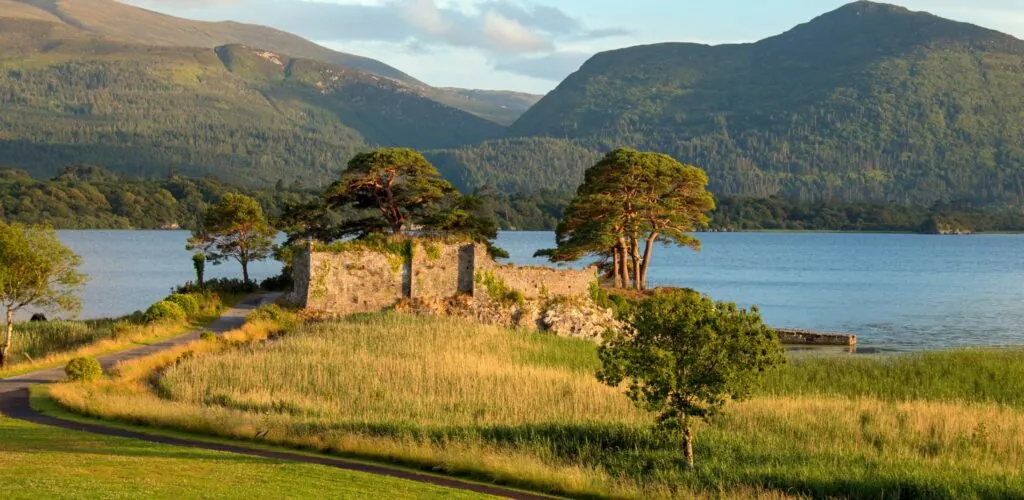
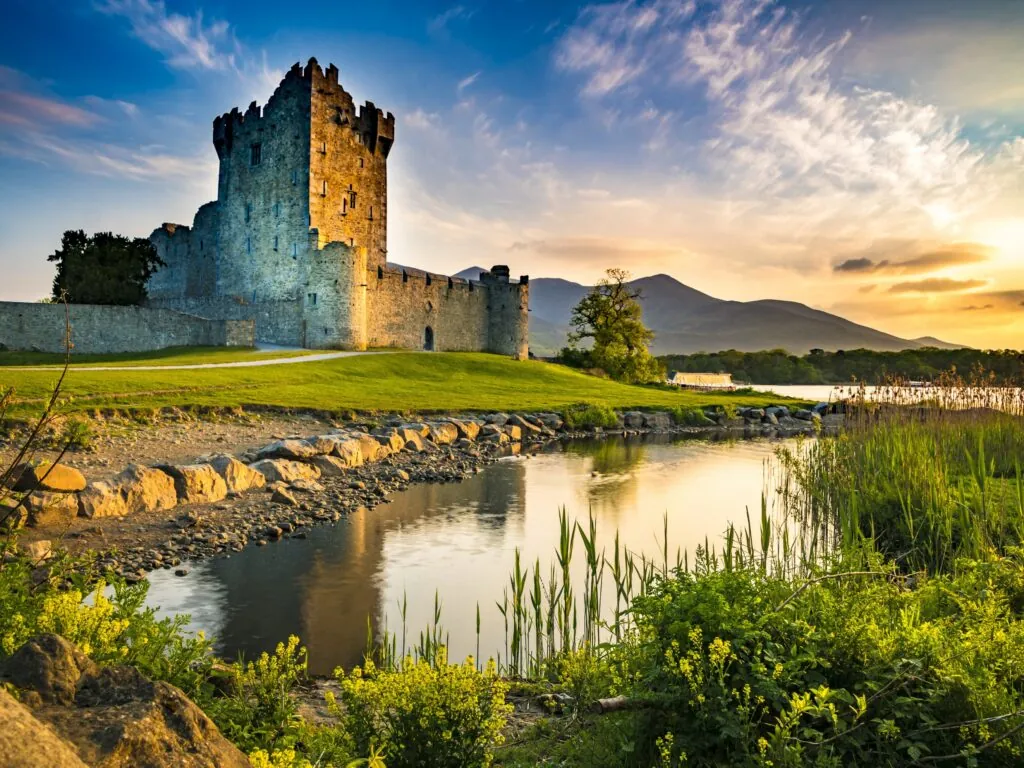
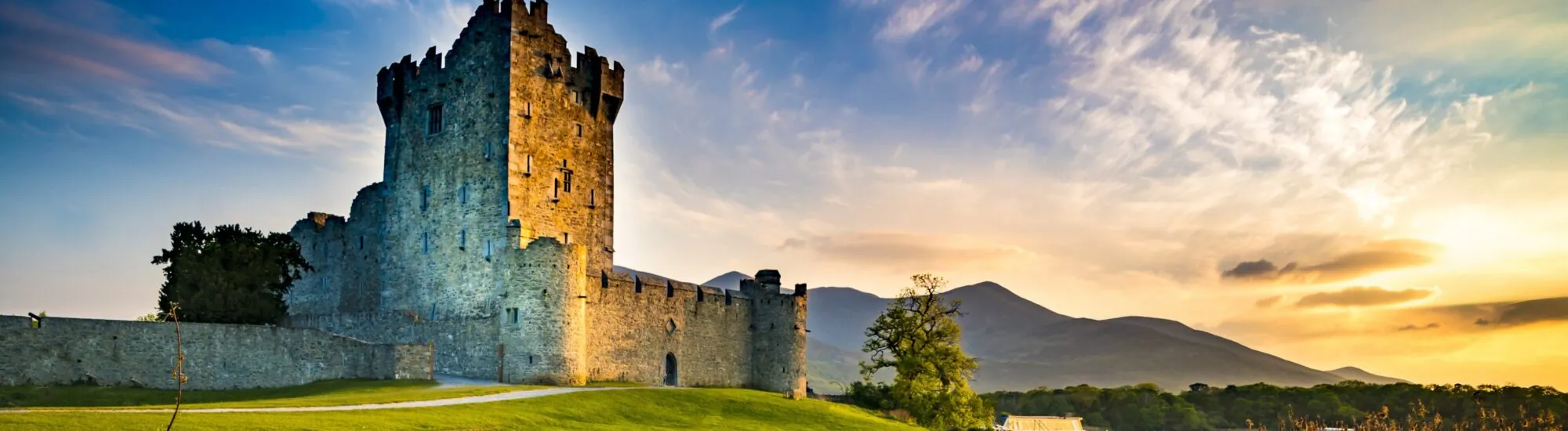
Standing on the shores of Lough Leane, Ross Castle has watched over the lakes of Killarney for more than five centuries. This…


 Tourist attractions
 Irish Restaurants and Pubs
 Partner Accommodations
 Campgrounds and Lodging
Standing on the shores of Lough Leane, Ross Castle has watched over the lakes of Killarney for more than five centuries. This…
McCarthy's Castle is a ruined castle near Killarney. Built on the edge of a magnificent lake in the middle of nature, it…
From a bend in the N71, the Kerry mountains suddenly part to reveal one of Ireland’s most famous views. Ladies View overlooks…
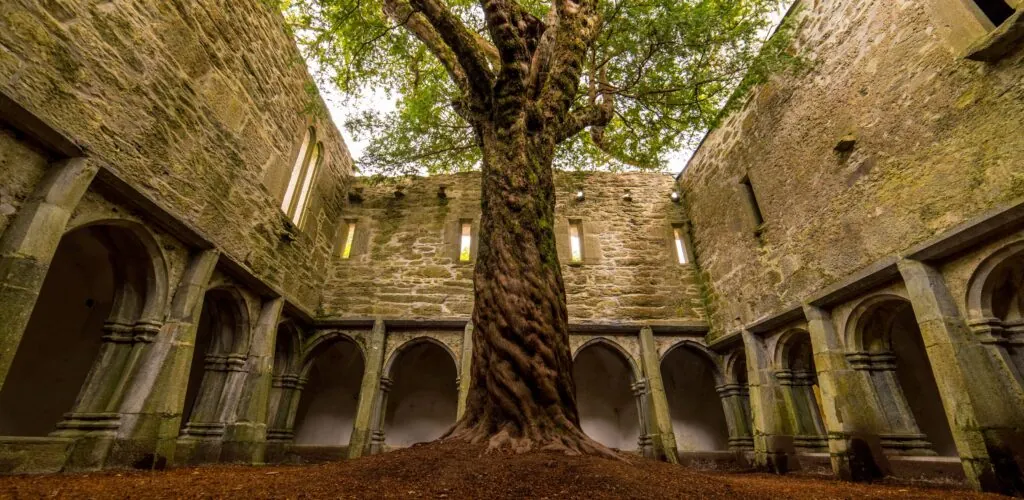
Amid the woodland of Killarney National Park, Muckross Abbey reveals its roofless walls, vaulted cloister and a striking ancient yew growing at…
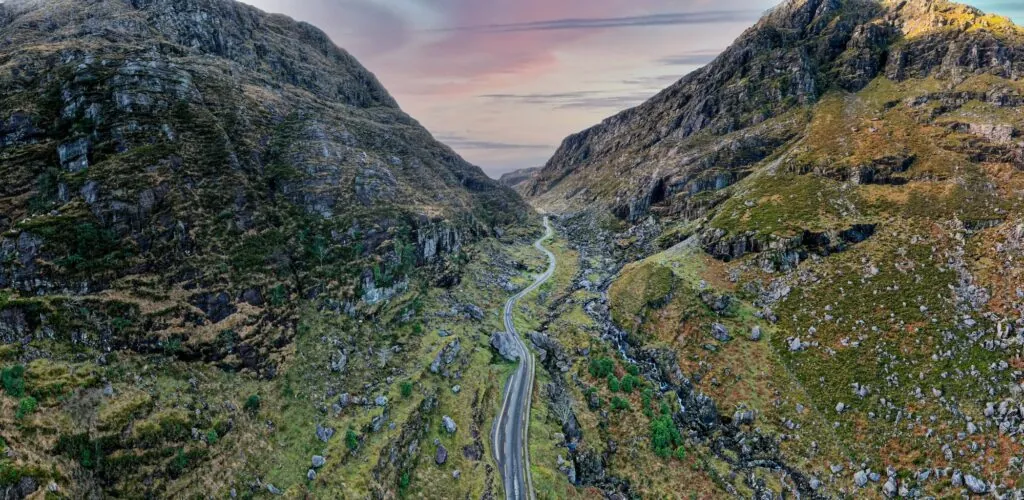
Between the MacGillycuddy’s Reeks and Purple Mountain, a narrow road winds past five small lakes, crosses old stone bridges and climbs to…
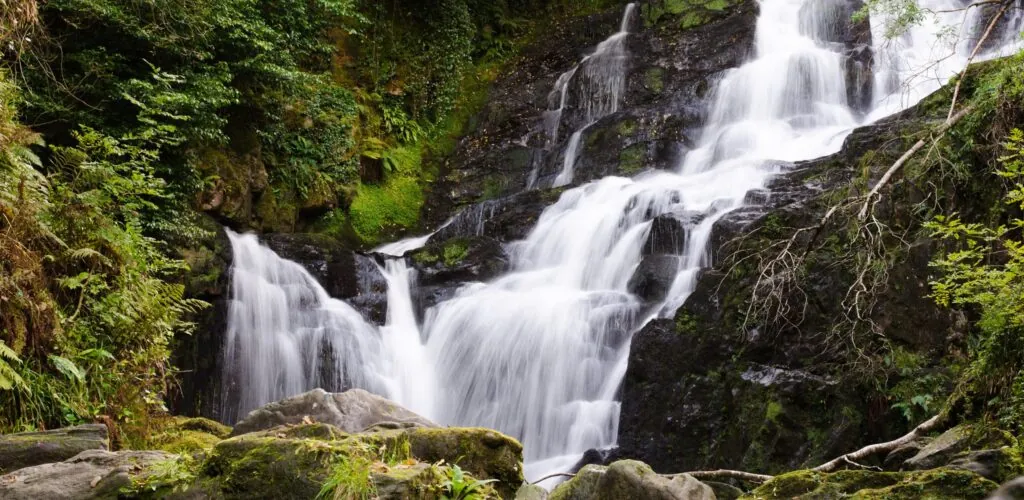
Torc Waterfall is a beautiful Irish waterfall located in Killarney National Park in County Kerry, Ireland. A grandiose tourist attraction that's sure…
The Kerry Way is a hiking trail located in County Kerry, Ireland. The 214-kilometre route offers walkers a loop through the beauty…
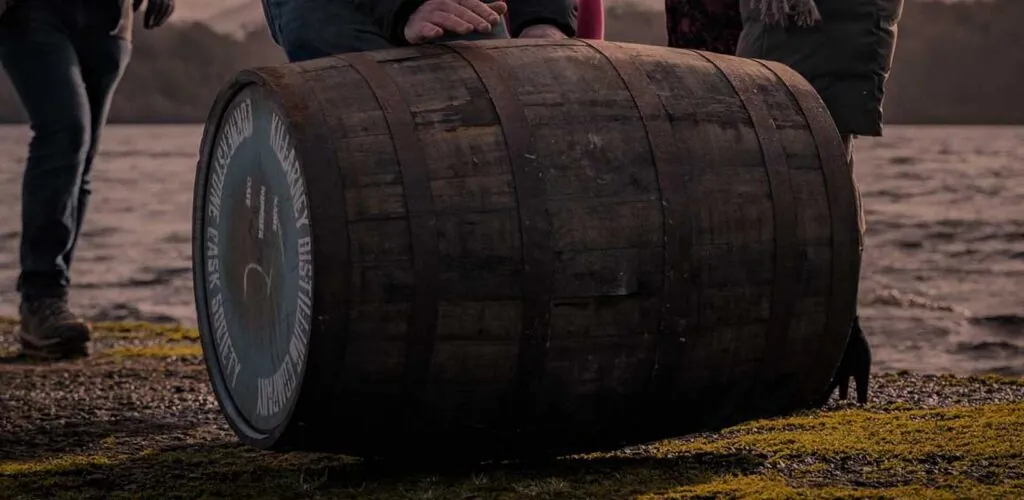
Killarney Brewing & Distilling is an Irish brewery and distillery located in Killarney in southwest Ireland. It’s known for its craft beers,…
The Lough Googh Loop Walk is one of the most challenging walks in County Kerry. It’s definitely for more experienced hikers! Magnificent…
Want to discover Killarney National Park on horseback? Visit Killarney Riding Stables, an equestrian center where you can discover Ireland on horseback!…
Monsignor Hugh O'Flaherty is an Irishman famous for having saved 6,500 people from the Nazis during the Second World War. An Irish hero!
Find a comfortable place to stay and make the most of your trip to Ireland.

On 18 September 2026, Ross Castle will reclaim for one evening some of the atmosphere that once filled its Great Hall. As…
In Killarney, the town seems to end exactly where nature begins. A few lively streets, colourful façades, hotels and pubs; then, almost without transition, the lakes, forests and mountains of Kerry take over the landscape. Killarney is one of Ireland’s most popular tourist destinations, but it is also one of the best located for discovering the great outdoors of the country’s south-west.
Its location explains much of its success. The town stands at the gateway to Killarney National Park, on the route of the famous Ring of Kerry and close to some of the county’s most spectacular landscapes. It is therefore an ideal base for exploring the region, while enjoying a lively town centre, numerous restaurants and a strong pub and music tradition in the evening.
On its own, Killarney would probably be a pleasant little Irish town. But its surroundings change everything.
To the west and south lies Killarney National Park, a vast protected area where the lakes of Killarney, ancient forests and the rugged slopes of the McGillycuddy’s Reeks meet. Created from the Muckross estate in the 20th century, it is Ireland’s oldest national park and now covers almost 10,000 hectares.
This proximity gives Killarney a rather unusual atmosphere. Simply leaving the town centre quickly brings you to paths, woodland and open landscapes. The boundary between town and countryside is remarkably thin here.
This is also why Killarney suits very different types of travellers: hikers, cyclists, families, heritage enthusiasts and visitors simply there to enjoy the scenery can all use the town as a starting point.
Tourism is not a recent phenomenon in Killarney. As early as the 18th and 19th centuries, the region’s lakes and mountains attracted British artists, writers and travellers seeking the romantic landscapes that were especially fashionable at the time.
The arrival of the railway in the 19th century further accelerated this transformation. Visitor numbers grew, hotels developed and Killarney gradually established itself as one of Ireland’s first major tourist destinations.
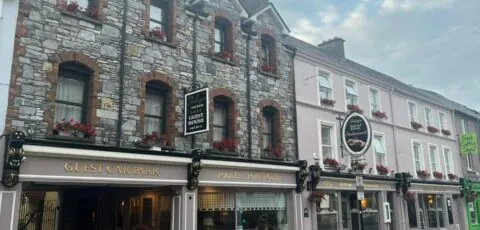
This history partly explains the town’s appearance today. Killarney has considerable accommodation capacity for a town of its size, with numerous hotels, guesthouses, restaurants and services for travellers.
This popularity can give the town centre a very touristy atmosphere during the summer. But it does not entirely erase its local identity: Killarney remains a lively town all year round and an important centre for this part of Kerry.
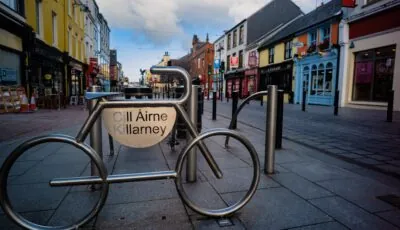
Killarney town centre is relatively small. There is no need to plan a complicated itinerary: the essentials can be discovered on foot.
The shopping streets are home to independent shops, cafés, restaurants, pubs and many businesses aimed at travellers. In fine weather, flower-filled façades and terraces give the centre a particularly lively atmosphere.
However, Killarney is not a destination visited solely for its architecture. Its main appeal lies in how easily it allows visitors to alternate between town life and the great outdoors.
A morning can begin in the streets of the centre, continue in the forests or beside the lakes, and end a few hours later over a meal or at a music session. This constant proximity to nature is probably Killarney’s greatest asset.
Killarney has a particularly lively nightlife for a town of its size. Once excursions are over, the streets of the centre remain bustling and the pubs gradually fill up.
Music naturally plays an important role. Some venues regularly offer traditional sessions or concerts, while others cultivate a more contemporary atmosphere.
High visitor numbers mean that the experience can sometimes feel less intimate than in an isolated Kerry village. Nevertheless, it would be a shame to reduce Killarney to a town designed for visitors. Residents, seasonal workers, students, hikers and travellers mingle here every day, creating a surprisingly cosmopolitan atmosphere at the gateway to a deeply rural area.
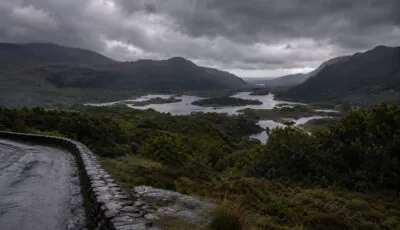
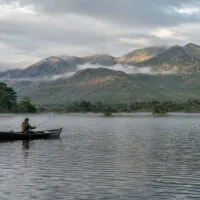
The landscapes around Killarney are among Kerry’s most characteristic. Mountains descend almost directly to the lakes, while temperate forests benefit from the humid climate of western Ireland.
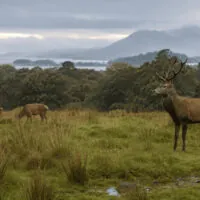
The national park protects, in particular, a remarkable part of the region’s native oak woods, as well as an especially emblematic population of red deer. These animals have belonged to the Killarney landscape for centuries and can sometimes be seen in the park’s more open areas.
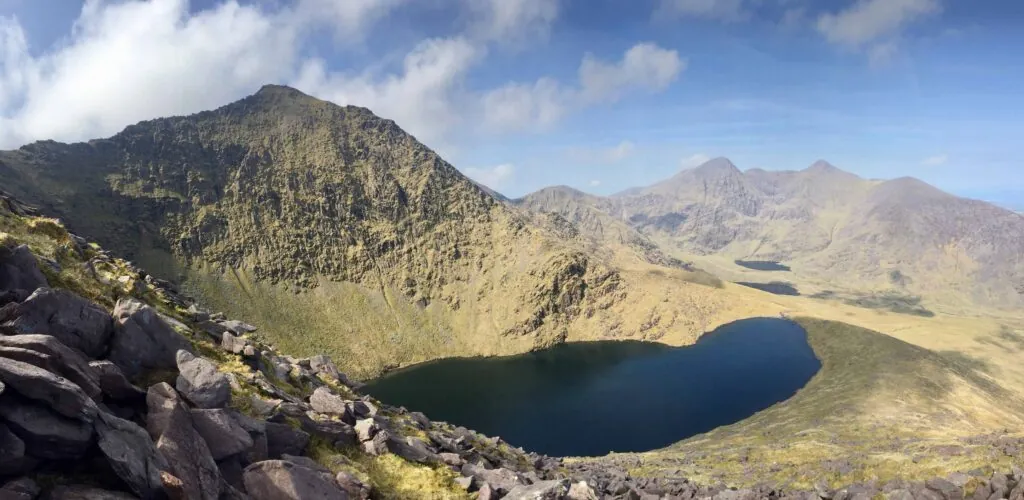
On the horizon rise the McGillycuddy’s Reeks, Ireland’s highest mountain range. Their presence gives the landscape a particular depth and reminds visitors that Killarney lies at the meeting point of several worlds: lakes, mountains, forests and the Kerry countryside.
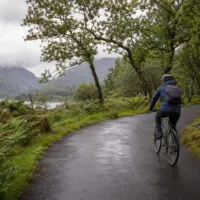
This setting also explains why the region is so well suited to hiking, cycling and outdoor activities. Ireland’s official tourism website now presents Killarney as a destination particularly suited to exploring without a car, especially within the national park. Discover Ireland offers several routes and practical information to help plan your stay.
Killarney is also one of the main starting points for the Ring of Kerry, the great road loop that passes through some of the best-known landscapes of the Iveragh Peninsula.
This position makes it a particularly convenient base for a road trip. You can stay several nights in the same place and devote different days to the landscapes of the national park, Kerry’s roads or the surrounding valleys.
This is a real advantage compared with a stop on a travelling itinerary: after a full day on sometimes narrow roads, returning to the same accommodation and being able to reach restaurants and pubs on foot is welcome.
In high season, however, this popularity has its downside. Traffic can become heavy and the main streets in the centre are particularly busy during the day. If you are travelling by car, it is best to plan ahead for parking and set off fairly early for the most popular excursions.
One day is enough to discover the atmosphere of the town centre and make a first foray into the surrounding landscapes. But Killarney ideally deserves two or three nights.
Two nights allow you to devote a full day to the national park or the surrounding area. With three nights, it becomes possible to add a longer excursion in Kerry without turning the stay into a constant rush.
Hiking enthusiasts can easily stay longer. The region has enough trails and varied landscapes to fill several days.
From May to September, the long days allow visitors to make the most of the landscapes and outdoor activities. This is also when Killarney is at its liveliest.
July and August are the busiest months, however. Hotels, streets in the centre and Kerry’s main routes can then become particularly crowded.
May, June and September often offer an excellent compromise: days are still long, vegetation is spectacular and visitor numbers are generally more manageable.
Autumn transforms the forests around the lakes, while winter offers a much quieter version of Killarney. The weather then becomes more unpredictable, but Kerry’s landscapes also take on a wilder dimension when clouds descend over the mountains.
Whatever the season, bring waterproof clothing and several layers. In this part of Ireland, a bright morning can quickly give way to a shower before the sun reappears a few kilometres further on.
A car remains very convenient for exploring all of Kerry, but it is not essential for enjoying Killarney.
The town centre is easy to explore on foot, and several natural areas are directly accessible from town. Bike hire, organised excursions and transport also make it possible to go further without having your own vehicle.
This is a real advantage for travellers wishing to discover south-west Ireland without driving on Kerry’s small roads. Killarney is one of those rural Irish destinations where a car-free stay is genuinely possible.
Killarney does not claim to be a secret village forgotten by travellers. Its reputation is long-established, and its centre welcomes a considerable number of visitors every year.
But its popularity is no accident.
Few Irish towns offer such a rapid transition between lively streets and wild nature. Within minutes, shop windows and pubs give way to lakes, woodland and the dark outlines of the mountains.
It is this proximity that truly makes the difference. Killarney is not just a town to visit: it is a base from which Kerry becomes immediately accessible.