
Let us warn you straight away: Ireland is not a destination where you can bask under a blazing sun. The weather in Ireland is fairly unpredictable depending on the time of your stay. Its oceanic and temperate climate makes it, above all, a country with a damp, often rainy and changeable climate. From insignificant drizzle to heavy rain, the Irish climate is a true abundance of weather phenomena. You can also enjoy pleasant sunny spells, fabulous rainbows (very frequent in Ireland), thick fog, as well as tremendous downpours that deeply soak the Irish soil. Do not forget your umbrella: you will soon need it!
The four seasons in a single day
A rainy and changeable climate

Classiebawn Castle – © Bruno Biancardi
An Irish proverb claims that you can experience all 4 seasons of the year in a single day in Ireland!
So do not get caught out by heading out one morning without the essentials: morning sunshine can very well herald a rainy afternoon! (An umbrella or a good windbreaker will save you from unpleasant surprises.)
Do not be fooled: although Ireland is a damp and rainy country, it nevertheless benefits from fairly mild temperatures. Although it is far from the high summer heat, temperatures range from 0°C to a maximum of 25°C, in winter as well as in summer. And it is worth knowing that 25°C in Ireland can sometimes feel much warmer than elsewhere!
So, if you are travelling to Ireland, do not hesitate to bring a full suitcase, containing warm clothes and lighter clothing. In Ireland, people use the “onion technique”, which involves removing layers of clothing when necessary! Indeed, it is easier to uncover yourself than to wrap up when you do not have enough clothes!
There is also hardly any temperature variation depending on the geographical area where you are: Ireland has a fairly uniform climate.
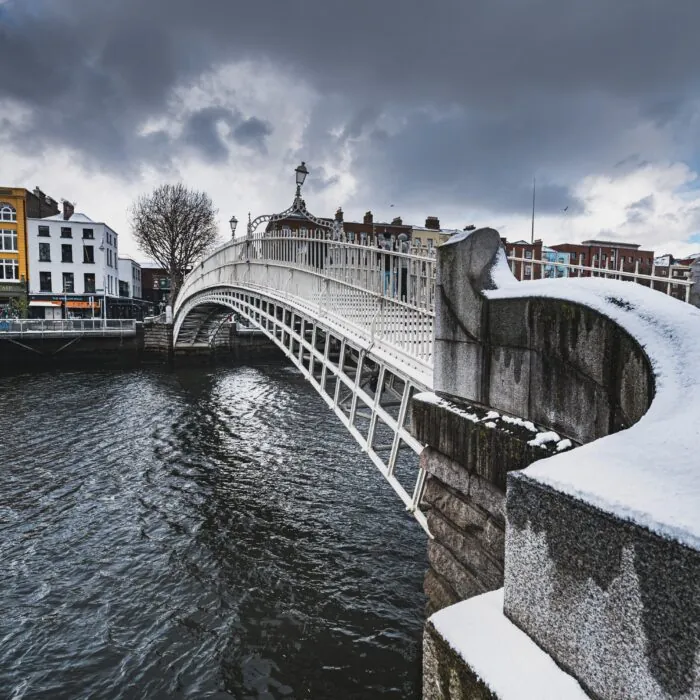
It should be noted that snow falls increasingly regularly on the island in winter. Most areas are affected: cities as well as the countryside. It can even happen that some remote roads are closed due to a lack of infrastructure to clear them of snow.
Getting to know the Irish climate… and avoiding its pitfalls
1. Check Met Eireann, the local weather service, regularly

A rainy day in Ireland – Lucy Fisher – cc
Admittedly, it is not always easy to find your way around when it comes to a changeable climate. But the Irish weather specialist, known as “Met Eireann”, is fairly reliable.
It can therefore predict, hour by hour, how the weather will develop in a specific geographical area.
To follow its forecasts, we recommend downloading its smartphone app. Available on Android and the Apple Store, this app, called “Met Eireann”, will allow you to consult its daily database according to where you are. Its website is also a good alternative for checking its information.
Finally, there are of course other weather services. It is up to you to choose the one that suits you and to make sure of its reliability rating. Using such a service will allow you to plan your day’s programme without worry (museums in bad weather and outdoor exploration in fine weather!)!
2. Wrap up, and use the onion technique!

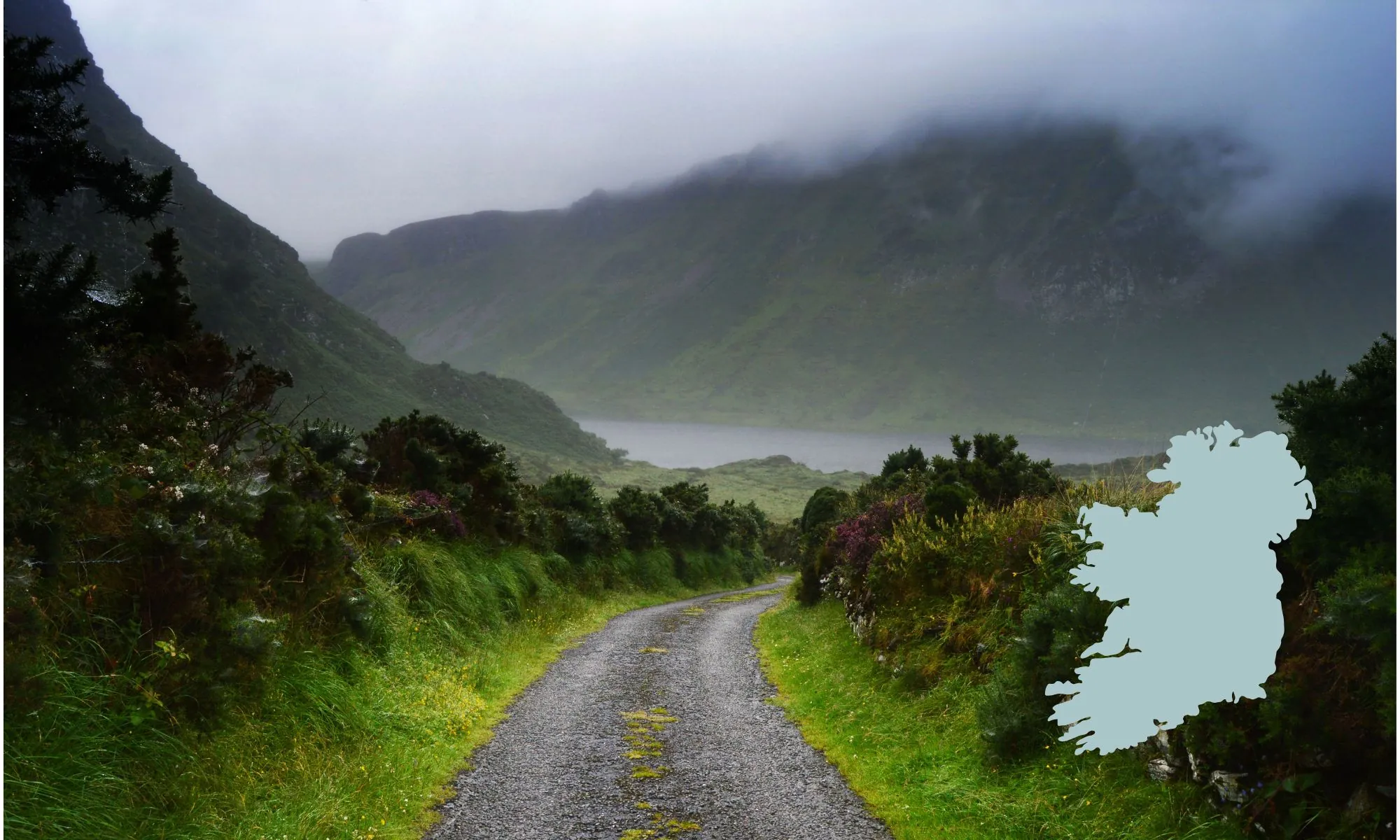
Torc Mountain – © gabriel12
In Ireland, it is better to dress warmly and remove layers of clothing if the weather allows. This is what is known as the “onion technique”! We therefore recommend bringing what you need to survive the cold and rain: a jumper, windbreaker, hood…
Nothing then stops you from taking everything off layer by layer, should you wish to enjoy a lovely ray of sunshine! (Be careful though, as the sun can be strong in Ireland!)
It should be noted that in summer, the climate is generally more stable: the Irish even experience rather stifling heatwaves. So put clothing suitable for all seasons in your suitcase: this will prevent you from being stuck with unsuitable clothes once you are there!
3. Avoid risk areas in bad weather

The Cliffs of Moher in the middle of a storm
Climate disruption continues to affect Ireland. This is why the Emerald Isle regularly faces impressive storms. When winds are strong and rainfall is heavy, certain areas of the Irish coastline prove particularly dangerous.
There is a risk of “overtopping waves”, where the ocean can literally flood the Irish coast, particularly around local harbours and beaches.
For your safety, we therefore recommend visiting the coast only in normal weather (storms do not occur every week in Ireland: you should therefore be fine if you choose your travel period carefully!).
We grant you that the sight of the raging ocean is magnificent, but it can pose a real danger to everyone. It should therefore be avoided.