
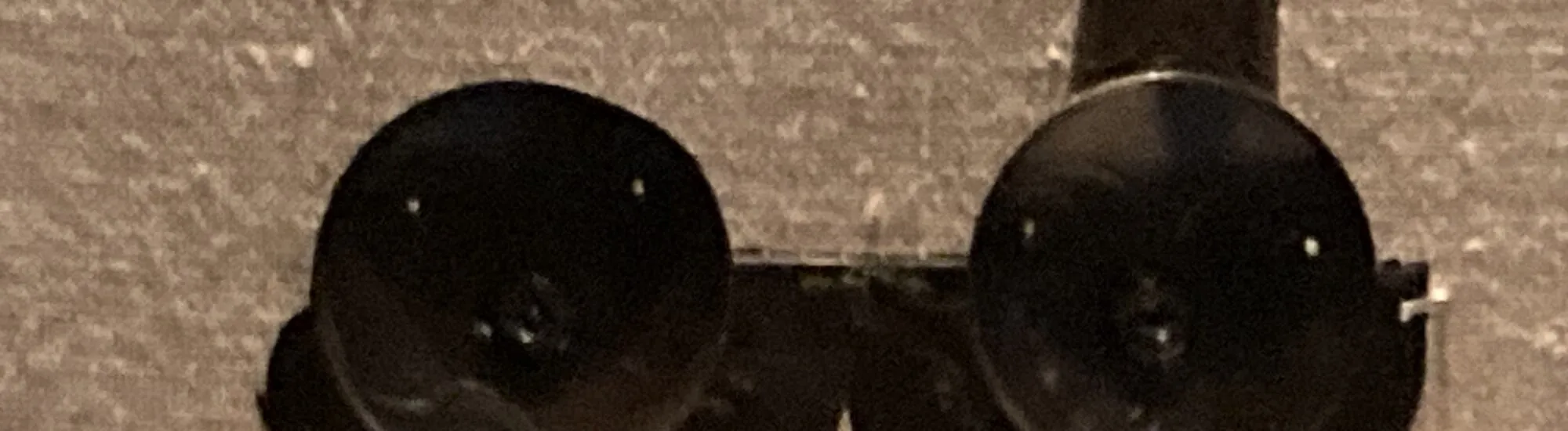
A bronze spike, two ornate discs, curves concealing bird heads: the Petrie Crown is one of the most unusual objects from ancient Ireland. Held at the National Museum of Ireland in Dublin, this horned headdress is dated by the museum to the 2nd century AD. Its decoration reveals great skill in metalworking. Its history, however, retains a crucial gap: no one knows where it was found.
Its English name, Petrie Crown, suggests a royal insignia. More precisely, the object consists of the metal elements of an elaborate headdress, part of whose backing has disappeared. Two discs and one conical horn survive; traces of a second horn show that the whole once had a different silhouette.
Look at the joins as closely as the decoration. Several pieces were carefully brought together by riveting and soldering. The perforations suggest that it was attached to leather or textile: this flexible backing would have made it possible to wear the assembly. The reconstruction therefore remains incomplete. In front of the display case, you are looking both at a remarkable creation and at the fragments of an object that once had more material, volume and colour.
On the discs, lines unfold into flared curves, spirals and small rounded reliefs. Some ends take the form of stylised bird heads. The motifs belong to the La Tène repertoire, an Iron Age decorative language recognisable by its flowing movement and its transformations between abstract forms and animal figures.
To spot them, choose a curve and follow it to its end. What appears to be a simple curl may become a beak or a head. Settings intended for enamel also remind us that the bronze’s present appearance does not fully recreate the effect originally sought.
The crown takes its name from George Petrie, the 19th-century Irish antiquarian and collector in whose collection it appeared. The name therefore tells us about one stage in its modern history of preservation. It refers neither to its maker nor to its ancient owner.
Its findspot was not recorded. It is therefore impossible to link it with certainty to a grave, settlement or ritual deposit. This absence limits interpretation: an object found alongside other remains can offer clues to its use; here, that association is missing. The museum’s 2nd-century date should likewise be read as an archaeological attribution, with no precise year of manufacture known.
The National Museum of Ireland presents the crown among horned headdresses in its study of insignia of sovereignty. The Kingship and Sacrifice exhibition explores possible links between power, rites and object deposits in the Iron Age. This interpretation provides a context for such an elaborate ornament.
It does not, however, make it possible to identify the person who wore it or the precise ceremony in which it featured. The term “crown” does not prove that it was worn by a known king. No name can be attributed to it with confidence. The sophistication of its craftsmanship supports the hypothesis of a prestigious ornament; its exact function remains debated.
The crown belongs to the collections of the National Museum of Archaeology in Dublin, on Kildare Street. The museum includes it in the Kingship and Sacrifice trail. To find it on the labels, remember its English name: Petrie Crown. Check the museum’s information before your visit, as displays may change.
Start with the silhouette, then examine the discs and joins. With children, looking for the birds in the decoration offers a simple introduction to this ancient art. You can then continue exploring Irish ornaments with the Tara Brooch, from a different period: an opportunity to see how, centuries apart, craftspeople turned metal into a mark of distinction.