Ireland, a land of legends and ancient stories, is home to age-old secrets, some of which are buried in its peat bogs. Among these mysteries is the Cashel Man, an exceptional archaeological find that offers a rare insight into Bronze Age life and beliefs in Ireland. Discovered in an Irish peat bog, his body was naturally mummified thanks to the exceptional biotope in which it lay. An archaeological treasure trove that never ceases to fascinate history and archaeology enthusiasts!
Discover Cashel Man
First identifications
The discovery of Cashel Man dates back to 2011, when Bord na Mona employee Jason Phelan spotted a strange body in the bog at Cúl na Móna, County Laois, Ireland.
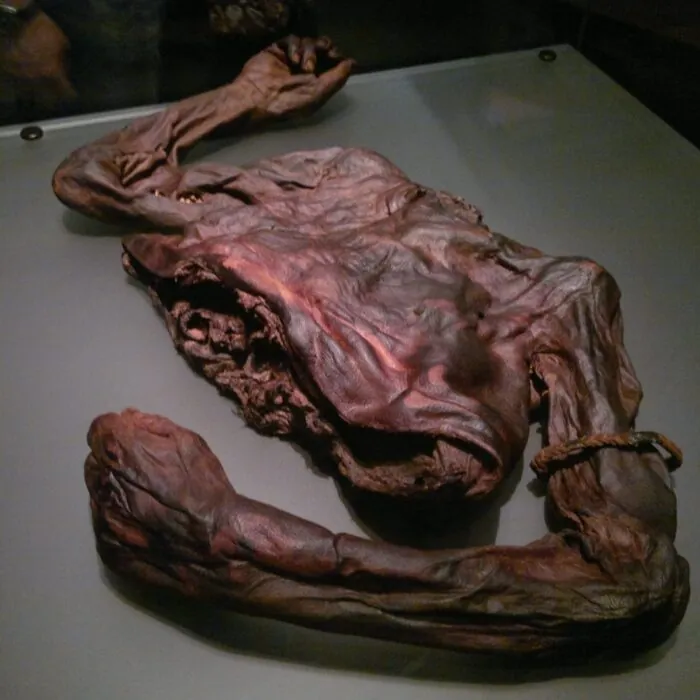
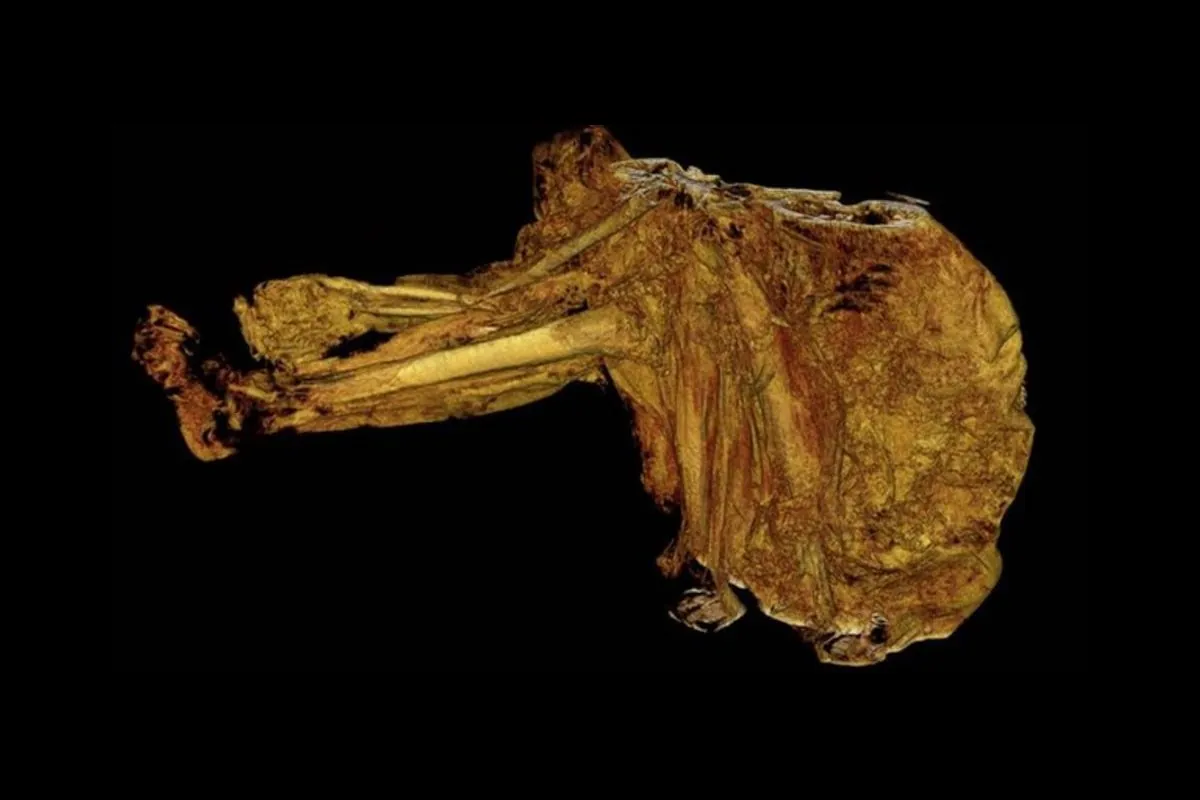
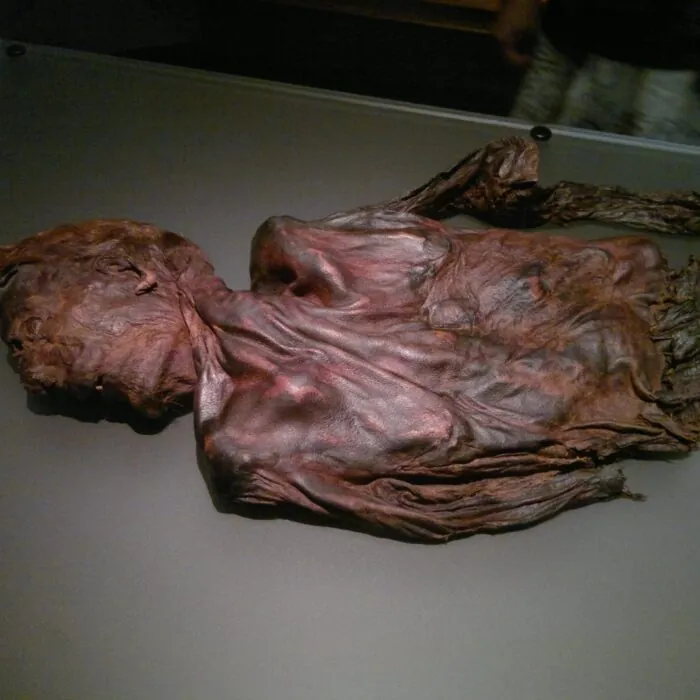
After further investigation, a corpse is extracted from the sphagnum moss: it appears to be lying on its right side in a foetal position. The head is missing and the torso has been severely damaged by compression in the peat bog. The legs are curled up, and the body is encircled by two hazel stems.
The skin is surprisingly well preserved!
For the researchers, there is no doubt: this body is very old, and will join the collection of Bog Men already on display at the National Museum in Dublin!
Exciting findings on this man of the peat bogs
And so begins a long and arduous task: the scientists take samples and investigate this mysterious body.
Who is he? Why was he there in the Cashel bog?
After months of research, and using today’s technologies, the researchers have managed to solve part of the mystery.
Thus, we learn that the Cashel Man was between 20 and 25 years old and lived around 2000 BC during the Bronze Age, making him one of the oldest bog bodies in Europe.
He was a king: there’s plenty of evidence for this, including the way he was buried, and his diet, which consisted mainly of meat.
He is said to have been murdered by his own subjects, following a poor harvest. Indeed, pagan Ireland of the time deeply believed that agricultural success depended on the goodwill of a goddess… A poor harvest meant that the goddess was unhappy… and that the King had to be sacrificed to satisfy the divinity!
Sadly, this is what happened to Cashel Man, who was violently murdered for a harvest he was not responsible for.
According to the researchers, Ireland underwent a profound climatic change at this time, making it difficult to cultivate the land. The whole island would then have gone through a period of famine and great difficulty in subsisting.
This phenomenon, coupled with the discontent of the people, is said to have precipitated the death of the Man of Cashel during a ritual sacrifice.
And this death would have been particularly violent!
CT scans revealed a clean fracture on his right arm, which probably occurred shortly before his death. But most of the damage would have been seen on the neck and chest, rendering some areas almost unrecognizable.
According to the scientists, the body was deliberately plunged into an Irish peat bog after his death. A pagan rite already observed in other peat bogs.
As a reminder, this organic medium was considered a place between the world of the living and that of the dead. It therefore played a particularly important role in ancient rituals. It probably symbolized the passage to the afterlife.
The peat bog, a naturally mummifying environment
In addition to its significance for the pagans of the time, the peat bog possessed important conservatory virtues. This is what enabled the body of the Cashel Man to be preserved, even after 4,000 years!
Thus, the mummification of a body in a peat bog, such as Cashel Man, is a process resulting from the combination of many factors such as :
- Peat bog acidity: Peat bogs are extremely acidic, often with a pH similar to that of vinegar. This high acidity helps preserve the body by slowing down the decomposition of soft tissue.
- Low oxygen content: Peat bogs are anaerobic environments, meaning they contain very little oxygen. The absence of oxygen prevents the growth of most of the bacteria and fungi normally responsible for decomposing bodies after death.
- Cold temperature: Bogs tend to be cold, which slows down decomposition even more. Low temperatures help preserve bodies by limiting biological activity that might otherwise degrade the fabric.
- Tannins and other chemical compounds: Peatlands are rich in tannins and other natural chemical compounds derived from decomposed vegetation, such as sphagnum moss. These substances act as natural preservatives, helping to preserve the body’s skin and soft tissues.
- Pressure: The pressure exerted by the layers of vegetation and water in the bog can also play a role in preservation, compressing the body and limiting its decomposition.
Through this process, the skin and internal organs of the body can be remarkably preserved for millennia, offering a unique insight into past life. It’s this combination of factors that has kept bodies like Cashel Man in a condition that fascinates and informs researchers and the public alike.
The oldest bog man ever discovered
Although many bog men have been discovered in Ireland, the Man of Cashel remains special. Firstly, its carbon-14 dating makes it the oldest bog corpse ever discovered in Europe.
But that’s not all: he’s also said to be the only bog man with such well-preserved skin.
The discovery of Cashel Man has also had a significant impact on our understanding of Ireland’s pre-Christian history. By providing invaluable information on the eating habits, health and even fashion of the period, Cashel Man has helped historians and archaeologists reconstruct a clearer picture of ancient society.
Where to see the Man from Cashel?
Cashel Man is preserved and exhibited at the National Museum of Ireland in Dublin. This museum, dedicated to history and archaeology, offers visitors a unique opportunity to get up close and personal with this exceptionally well-preserved peat bog.
Please note: this show is not suitable for children. The sight of this body can be impressive.
Other bodies of this type can also be admired on the premises. A complete overview of these strange mummified bodies, and a better understanding of the remarkable power of peat bogs on the human body!
Free guide
Planning a trip to Ireland?
Receive our free travel guide and discover the very best places, itineraries and practical tips to prepare your stay.
Culture, history, must-see attractions and local advice delivered directly to your inbox.