

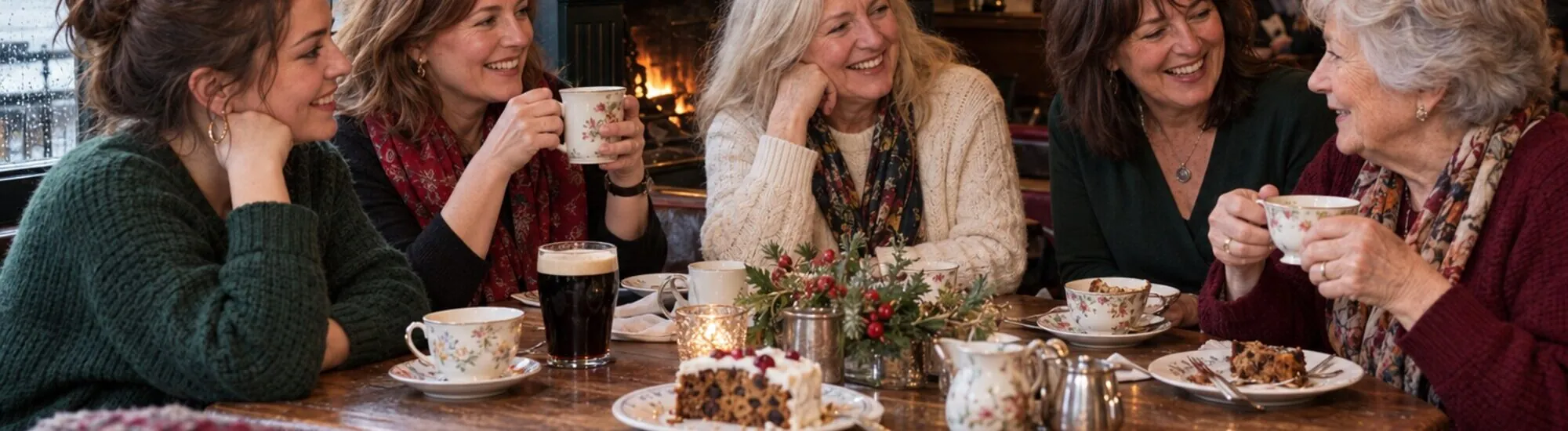
6 January marks more than just Epiphany in Ireland. The date also marks “Nollaig na mBan”, or Women’s Little Christmas, an Irish tradition known in English as “Women’s Christmas” and often translated into French as « Noël des femmes ». It coincides with the twelfth and final day of Christmas and traditionally marks the end of the festive season.
In the past, the day gave women a well-earned rest after several weeks spent preparing, cooking and organising family celebrations. Household tasks were handed over to the men, while women visited female relatives, friends and neighbours. They shared tea, the last slices of Christmas cake and, when circumstances allowed, a small drink.
The tradition was particularly vibrant in south-west Ireland, especially in Counties Cork and Kerry. It subsequently lost importance in some areas before enjoying a revival. Today, “Nollaig na mBan” is no longer really based on a strict reversal of roles within the home. Above all, it has become a celebration of female friendship, solidarity and women’s contribution to both family life and Irish society.

Women’s Little Christmas – Public domain
“Nollaig na mBan” literally means “Women’s Christmas” in Irish. The celebration takes place every year on 6 January, Epiphany in the Christian calendar and the last of the traditional twelve days of Christmas.
The day is also commonly known as “Women’s Christmas” or “Little Christmas”. These expressions can, however, be confusing. In Ireland, Little Christmas does indeed fall on 6 January: it is not a period before Christmas Eve on 24 December.
6 January also marks the symbolic end of the festive season. In many homes, this is the time to take down the tree, put away the decorations and return to the usual routine after Christmas and New Year. An old belief even holds that it brings bad luck to keep decorations up beyond this date.
To understand “Nollaig na mBan”, the tradition must be viewed in the context of rural Irish society in the 19th and 20th centuries. At that time, the preparations for Christmas fell largely to women. They cleaned and decorated the house, prepared meals, welcomed visitors and looked after the children, often with limited means and in large families.
6 January therefore offered them a form of symbolic compensation. Domestic roles were temporarily reversed: men were expected to look after the house, prepare the meal and care for the children, while women could rest or spend time with those close to them.
This was not an official ban on doing household chores, but a social custom. Its observance varied from family to family and from region to region. Like many folk traditions, it was governed by no precise rules and was passed down mainly from one generation to the next.
For women who worked in the home all year round, without a genuine day of rest, this break held particular value. However modest, it gave them time of their own in a society where opportunities for women to socialise were rarer than they are today.
The traditional form of Nollaig na mBan was often much simpler than the modern image of a big night out at the pub. Women visited friends, sisters or neighbours and gathered in one another’s homes to chat over a cup of tea.
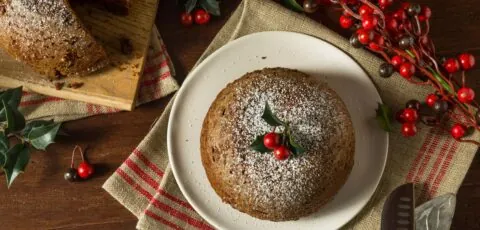
It was an opportunity to finish the provisions prepared for Christmas: Christmas Cake, biscuits, dried fruit, sweets and other treats that were not meant to remain once the festive season had ended. In some households, a little wine, sherry or porter might accompany this final Christmas snack.
These gatherings offered a chance to catch one’s breath after a particularly busy period. They also encouraged the sharing of news, confidences and mutual support among women from the same family or neighbourhood.
Celebrations were not the same everywhere. In some places, women stayed in private homes; in others, they met in public venues. Accounts collected by Irish folklore specialists show above all that the custom has always had many regional variations.
Nollaig na mBan is often associated with Counties Cork and Kerry, where the tradition remained particularly vibrant during the 20th century. Accounts preserved in Irish folklore collections also mention celebrations in other parts of the country, but the custom appears to have endured better in the south-west.
It would, however, be reductive to present Cork and Kerry as the undisputed birthplace of the tradition. The precise origins of Nollaig na mBan remain difficult to establish. Like many popular customs, it probably developed gradually from the Christian calendar, the end of the twelve days of Christmas and the social habits of rural communities.
Today, Cork remains one of the cities where Women’s Christmas is most readily celebrated. Restaurants, hotels and cultural venues regularly offer meals or events dedicated to the day.
In contemporary Ireland, domestic roles have evolved profoundly, and Nollaig na mBan is no longer limited to a day on which men take women’s place in the kitchen. The tradition has adapted to modern society.
6 January is now an opportunity to organise lunch with friends, a family dinner, a cultural outing or an evening at the pub. Some women choose to gather several generations of their family, while others simply celebrate the day with colleagues or loved ones.
Restaurants offer special menus, while associations organise charity events, gatherings, talks and performances. The date also serves to highlight Irish women artists, entrepreneurs, activists and other female figures.
This evolution does not erase the historical meaning of the celebration. On the contrary, it gives it new significance. What was once a short break granted to women after the work of Christmas has become a day dedicated to their contribution, their connections and their achievements.
6 January is not a public holiday in the Republic of Ireland. Shops, businesses and services operate as usual, except when the date falls on a Sunday or an establishment chooses to organise a special event.
“Nollaig na mBan” therefore has no official status. Its continued existence depends on families, local communities, associations and establishments that choose to keep the tradition alive.
Not all Irish women celebrate the day, and its importance varies considerably between regions and generations. Nevertheless, it is becoming increasingly well known, particularly thanks to renewed interest in the Irish language, cultural heritage and women’s history.
Nollaig na mBan holds a distinctive place among Irish traditions. It belongs at once to the Christian calendar, rural folklore and the country’s social history. Its longevity probably lies in its ability to evolve without entirely losing its meaning.
The day should not be reduced to a simple winter “Mother’s Day” or to an outing that must necessarily take place in a pub. Rather, it is a moment of recognition and conviviality, historically intended for women after the considerable work of the festive season.
On 6 January, when the last decorations are put away and the final slices of Christmas Cake disappear, Ireland brings the Christmas season to a close with a tradition that is as warm as it is symbolic: giving women time to come together, rest and celebrate.