
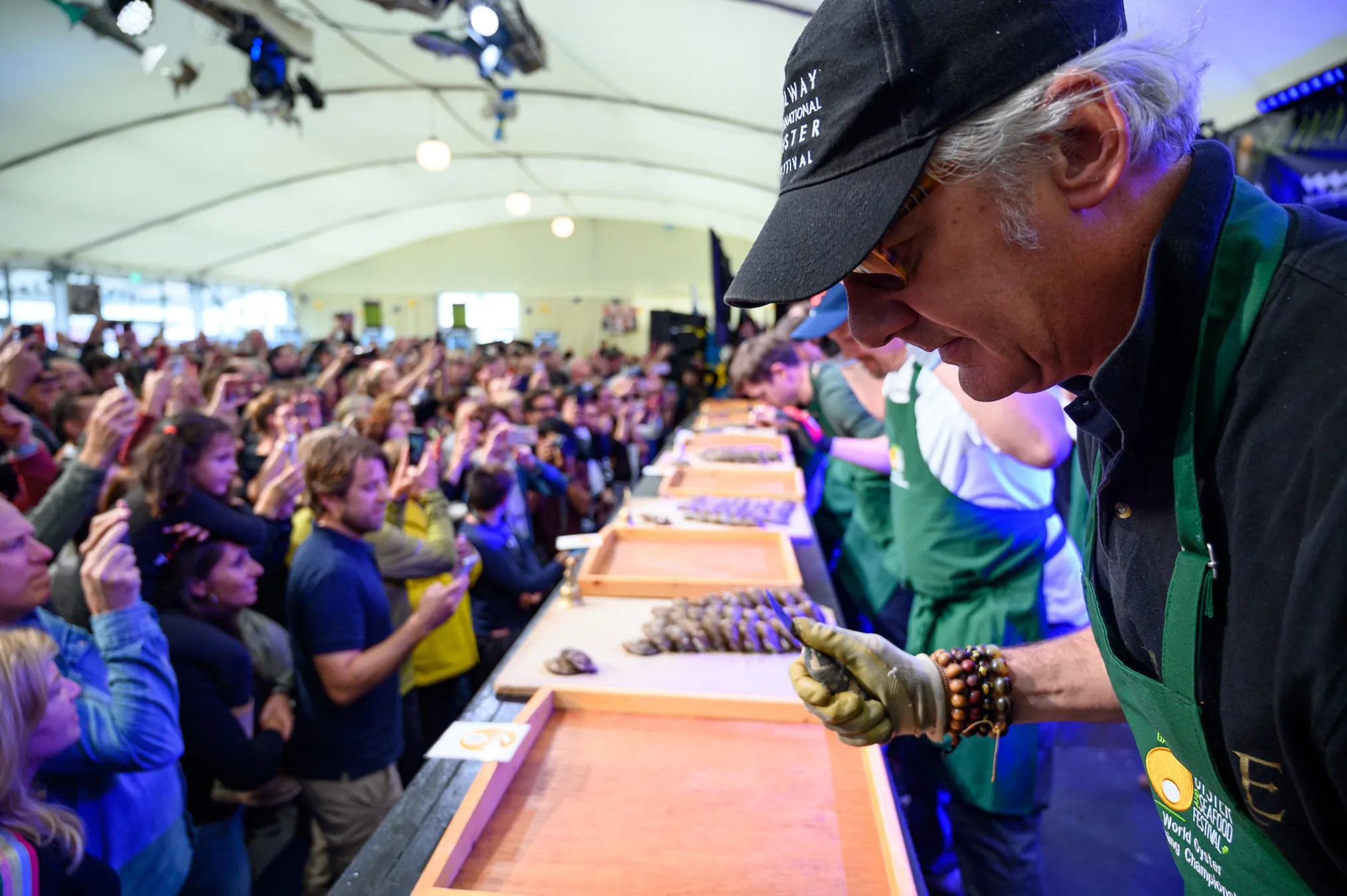
The Galway International Oyster & Seafood Festival is one of the west coast of Ireland’s leading food events. Every year, at the end of September, Galway celebrates its oysters, seafood and a maritime tradition closely bound up with the bay. The event is more than a tasting: for an entire weekend, the city’s streets, pubs, restaurants and markets host shucking competitions, demonstrations, live music, special menus and food experiences.
The Galway International Oyster & Seafood Festival draws both seafood lovers and travellers keen to discover the atmosphere of Galway. Spread widely across the city centre, it lets visitors move from one venue to another, watch the finest shuckers compete and sample different preparations without being confined to a single site.
The first festival was held in 1954 at the initiative of Brian Collins, then manager of the Great Southern Hotel, now known as The Hardiman. The idea was simple: to draw visitors to Galway at the start of the native flat oyster season, traditionally harvested from September to April. The first banquet brought together only around 30 guests, but the event quickly grew in scale.
Over the decades, the gathering has become one of Ireland’s longest-running and most recognisable food festivals. Its history also traces the evolution of tourism in Galway: from a hotel banquet, it has grown into a city-wide celebration bringing together producers, restaurateurs, residents, musicians and international visitors. Its longevity gives it a distinctive place in the city’s cultural calendar.
Galway Bay has a long oyster-farming tradition, encouraged by the meeting of Atlantic waters and freshwater inflows. The festival particularly celebrates the European flat oyster, or Ostrea edulis, often called the “native oyster” in Ireland. Its slow growth gives it firm flesh and a mineral, briny, complex flavour. Pacific oysters farmed along the west coast also feature on the menus of many venues.
This distinction is useful when ordering: not all oysters served over the weekend necessarily come from the same farm, nor do they offer the same flavour profile. The festival is an excellent opportunity to compare origins, species and accompaniments. To explore the subject further, our guide to Irish oysters explains how they are cultivated and what sets them apart.
The most spectacular highlight is the World Oyster Opening Championship. Competitors from several countries must open a tray of oysters quickly, but speed alone is not enough: presentation, cleanliness and the integrity of every shell are also assessed. Penalties can alter the rankings, turning a technical demonstration into a true test of precision.
The Irish championship, meanwhile, selects the national representative ahead of the world competition. For visitors, these contests offer a very tangible way to appreciate the skill needed to open an oyster neatly, without shell fragments and without damaging the flesh.
The Oyster Trail links venues across several parts of Galway, from the Eyre Square area to the Latin Quarter, via the West End, Salthill and the docks. Each participating venue offers its own interpretation: oysters served natural, cooked recipes, pairings with stout, whiskey, cocktails or sparkling wine, pop-up markets and shucking demonstrations.
The trail does not prescribe a single route. You can focus on the historic centre on foot or plan a few stops further afield. Some offerings are available without booking, while brunches, workshops, guided tours and special meals often have limited capacity. Check the official programme and book any experiences that require it before your trip.
Galway knows how to turn a food event into a popular celebration. Alongside the tastings, the festival programmes concerts, entertainment and demonstrations at venues across the city. The Parade of Flags traditionally accompanies international competitors through the centre ahead of the world championship. The atmosphere then continues in the pubs, where live music naturally plays an important part.
Sunday 2026 broadens the programme further with a family event devoted to the ocean, sustainability and responsible aquaculture practices. Talks, guided coastal walks and stalls offer a better understanding of the ecosystem on which oyster farming depends, beyond the simple pleasure of tasting.
The festival takes place across several venues rather than on one single site. The Latin Quarter and neighbouring streets host much of the activity, while the Oyster Trail extends throughout the city and into the county. This arrangement makes for a lively weekend, but it calls for a little preparation: identify your priority events, check their exact addresses and allow time between bookings.
For a first visit, the easiest option is to stay within walking distance of Eyre Square or the Latin Quarter. You will be able to reach most of the central activities without a car and get back easily after an evening in the pubs. Accommodation is in high demand during the festival; it is best to book several months ahead and check the cancellation terms.
Galway’s weather can change quickly in September. A lightweight waterproof jacket and comfortable shoes are more useful than an overly smart outfit, particularly if you are following the Oyster Trail. The centre is easy to explore on foot, but venues in Salthill, the docks or the county may take more time to reach.
If you are eating raw oysters, choose professional vendors and disclose any allergies. Pregnant people, those who are immunocompromised or living with certain chronic illnesses should seek advice from a healthcare professional before eating them. Finally, the festival now showcases many other seafood products: it remains worthwhile even for a companion who is not especially fond of oysters.
Food enthusiasts will find local produce and technical skills rarely showcased on this scale. Curious travellers can enjoy a lively immersion in Galway culture, while lovers of music and pubs can soak up the atmosphere without organising their entire stay around tastings. Some events are suitable for families, but the liveliest evenings are more geared towards adults.
Essential information to help you plan your visit, including key landmarks, access information, and booking options.
Cross Street Lower, Galway, Galway (County Galway) - Republic of Ireland
53.2716, -9.0532
2026 edition: Friday 25 to Sunday 27 September.
As the programme is spread across several Galway venues, check the time and address of each activity on the official website before your visit.
Check the opening hours and admission requirements before you leave, especially during peak season or on Irish public holidays.
Admission to the main festival area and the oyster-opening championships is free in 2026.
As prices for partner experiences may change, check the official ticket office before booking.