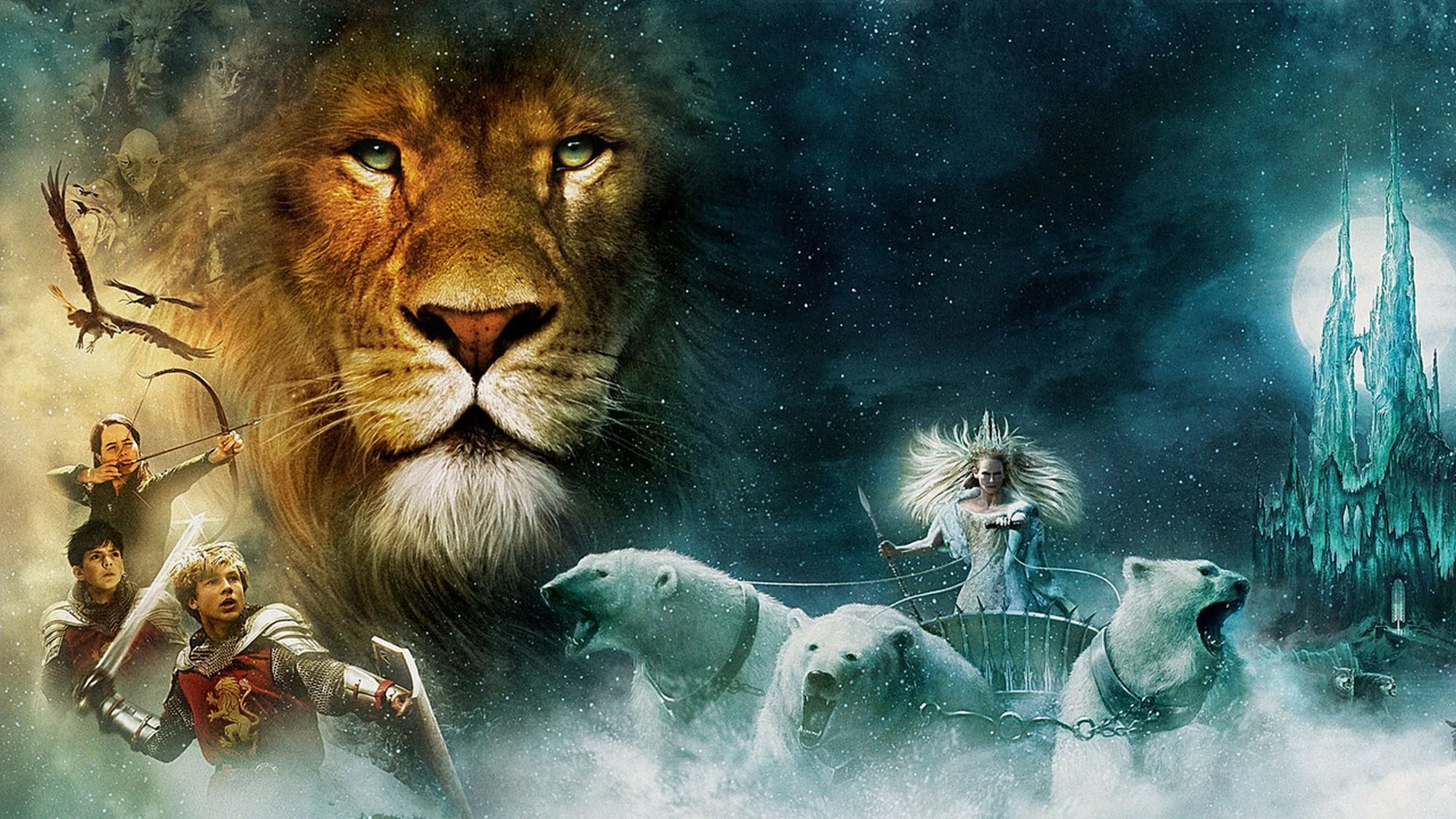
The World of Narnia
Did you know that “The World of Narnia” is an Irish literary work, written by C.S. Lewis, a writer from Belfast? The…

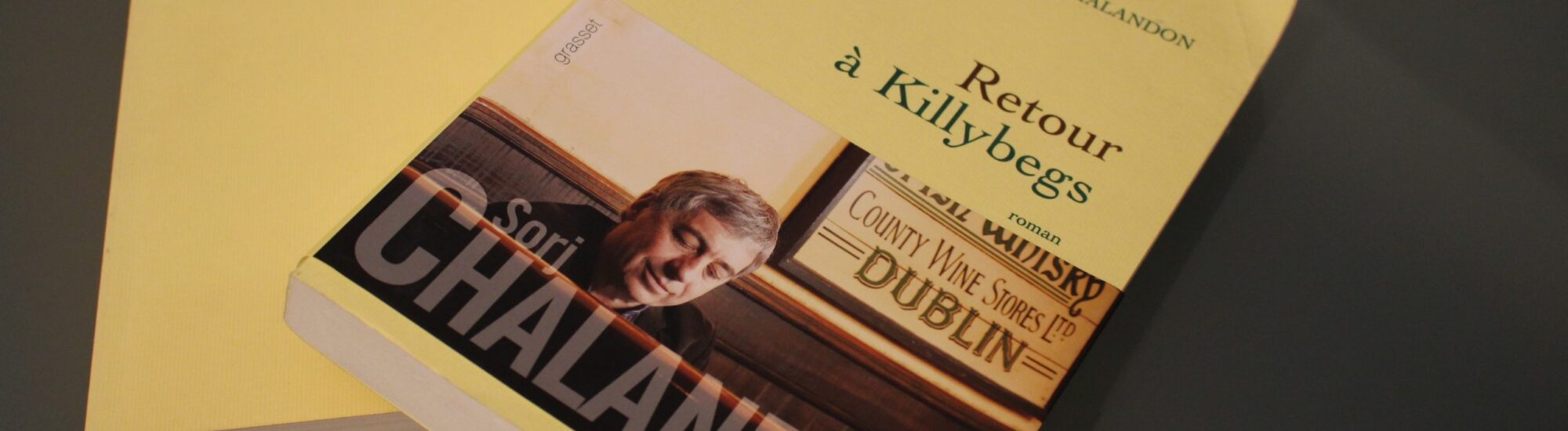
Did you know that “The World of Narnia” is an Irish literary work, written by C.S. Lewis, a writer from Belfast? The…
Imagine a bloodless Northern Ireland, trapped in a dirty war of armor and barbed wire. A context torn by community wars, ideals…
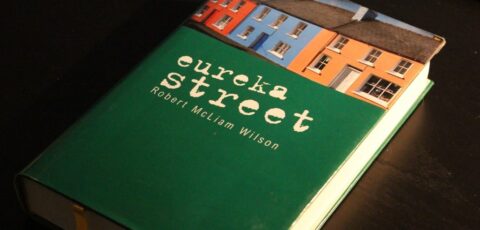
Eureka Street is a novel by Irish writer Robert McLiam Wilson. Critically acclaimed, it was a huge international success in 1996! The…
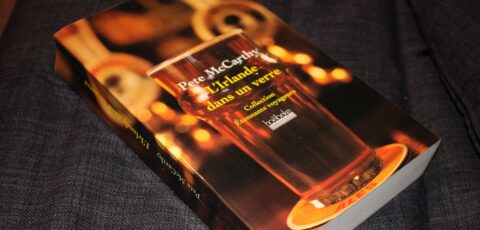
If you're a fan of humorous literature depicting Ireland from every angle, then Pete McCarthy's "Ireland in a Glass" is just the…
Irish literary works Tales and legends in Ireland
Cooley's Razzia des Vaches is a text based on Irish mythology. Although its origins date back to protohistoric times, the manuscript version…
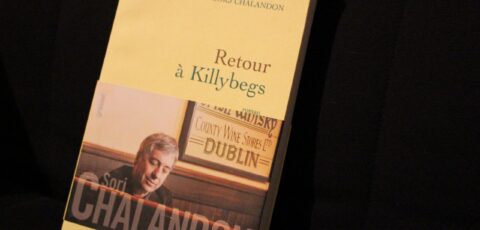
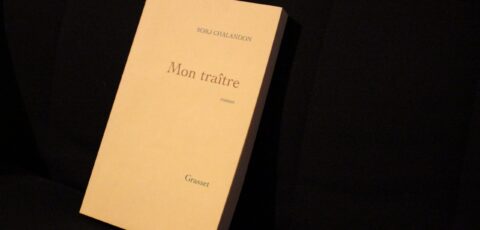
Sorj Chalandon’s 2008 novel “Mon Traître” (My Traitor) tells the true, auto-biographical story of a betrayed friendship, in which the author befriends…
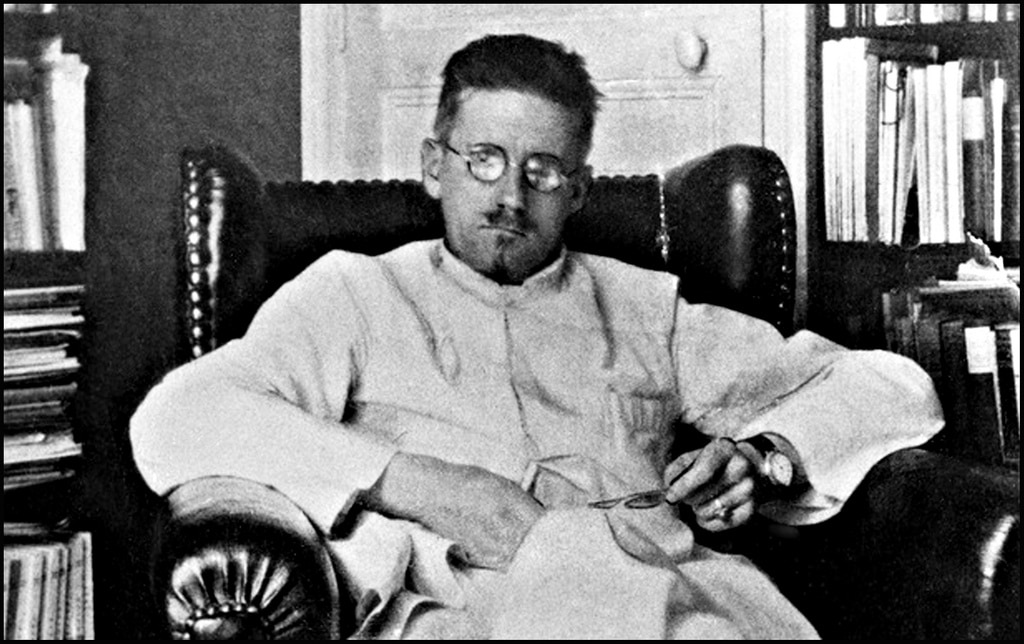
Finnegans Wake is a novel written by James Joyce and published in 1939. Considered a great monument of Irish literature, it is…
Halloween in Ireland Irish literary works
When we think of the novel “Dracula”, we often think of Transylvania, Romania or even English Gothic culture. What many people don’t…
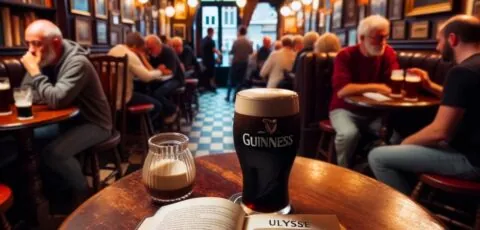
Bloomsday Irish literary works
At the heart of 20th-century literature stands a literary masterpiece that defies convention. James Joyce’s “Ulysse”, published in 1922, is a bold…
Irish literature is not only rich in its authors; it is also enriched by its works, which have marked both the country’s history and that of world literature. From medieval tales passed down by bards to internationally acclaimed contemporary novels, the great Irish works reflect the memory, humor, pain, and creativity of a people.
Long before the era of modern novels and poems, Ireland already told its story through great oral sagas, later written down by monks. The Ulster Cycle, featuring the exploits of Cú Chulainn, and the Mythological Cycle, inhabited by the Tuatha Dé Danann, are the first major Irish narratives.
These texts, such as the Táin Bó Cúailnge (The Cattle Raid of Cooley), are more than mere legends: they mirror warrior values, honor, loyalty, and tragedy. They are also an inexhaustible source for modern Irish literature, which continues to draw inspiration from them.
Among medieval masterpieces, the Book of Kells (8th century) stands as a treasure. This illuminated manuscript of the Gospels, created by Irish monks, combines Celtic art and Christian tradition. More than a religious text, it is a work of universal beauty where writing becomes painting and symbol.
Preserved at Trinity College Dublin, the Book of Kells remains a global reference and illustrates Ireland’s role as a cultural beacon of medieval Europe.
Among the great theatrical works of the 19th century, those of Oscar Wilde stand out for their brilliant wit and refined humor. His play The Importance of Being Earnest (1895) is one of the most famous comedies in English-language theatre.
Through sharp dialogues and a satire of Victorian society, Wilde left a lasting mark on theatrical art. This work is still performed worldwide, symbolizing Irish elegance and spirit.
Nobel laureate William Butler Yeats embodies the Irish poetic renewal. His poem The Lake Isle of Innisfree (1890) has become an essential reference, where the quest for inner peace meets the Irish landscape.
His collection The Tower (1928) is also considered a major work, reflecting his relationship with time, death, and national memory. Through his poems, Yeats transformed Irish poetry into a universal language.
It is impossible to discuss great Irish works without mentioning James Joyce. His novel Ulysses (1922) revolutionized modern literature. Through his use of interior monologue, labyrinthine structure, and deep anchoring in Dublin, Joyce ushered the novel into a new era.
His ultimate work, Finnegans Wake (1939), is even more experimental, playing with languages and myths. Although challenging to access, it remains an essential reference, proof of Joyce’s boldness.
The theatre of Samuel Beckett marked the 20th century. Waiting for Godot (1953) is one of the most famous plays worldwide. Two characters wait for a mysterious Godot who never arrives, in a stripped-down and absurd universe.
This work, translated and performed on all stages, questions the meaning of existence, the human condition, and waiting. Beckett, Nobel laureate in literature in 1969, made this play a monument of modern theatrical art.
Seamus Heaney, Nobel laureate in literature in 1995, is one of the most important poets of the 20th century. His first collection, Death of a Naturalist (1966), intensely captures rural Irish life and the memory of a childhood marked by nature and history.
His later work, such as District and Circle (2006), blends personal memory and universal reflection. Heaney made poetry a space for reconciliation between tradition and modernity, between Ireland and the world.
Recent Irish literature abounds with remarkable works. Roddy Doyle, with The Commitments (1987), offered a funny and incisive portrait of working-class Dublin. His novel Paddy Clarke Ha Ha Ha (1993), winner of the Booker Prize, showcased his talent for capturing the voice of childhood.
Colm Tóibín, with Brooklyn (2009), tells the story of a young woman emigrating to America, between uprooting and identity. The film adaptation enhanced its international reach.
Finally, Sally Rooney, a new voice in Irish literature, has marked her era with Normal People (2018) and Conversations with Friends (2017). Her novels explore contemporary relationships, youth, and the contradictions of modern Ireland, while captivating a global audience.
From mythological tales to contemporary novels, the great Irish literary works testify to the country’s ability to transform its history into universal creations. They bear the marks of exile, memory, humor, and formal invention.
Ireland, often called “the island of saints and scholars,” also deserves the title of “island of writers.” Its masterpieces, whether ancient or modern, remind us that in a country where orality has always mattered, literature remains the living reflection of a collective identity.