Languages in Ireland : the must-haves
How to pronounce Samhain?
The expression Pinch me I’m Irish
Where does the expression “Kiss me I’m Irish!” come from?
The Gaelic League
The Irish first name “Aoife
Slagging in Ireland
Most popular Irish first names
Derry or Londonderry? Why does the town have 2 names?
The Gaelic term “Erin go Bragh
News irish
Languages in Ireland
Ireland is a land where language is not just a simple tool of communication: it is a marker of identity, memory, and culture. From ancient Gaelic tales to contemporary novels in English, from local dialects to the languages of recent immigration, the Irish linguistic landscape is rich, complex, and revealing of the island’s turbulent history.
Irish Gaelic
An ancient and official language
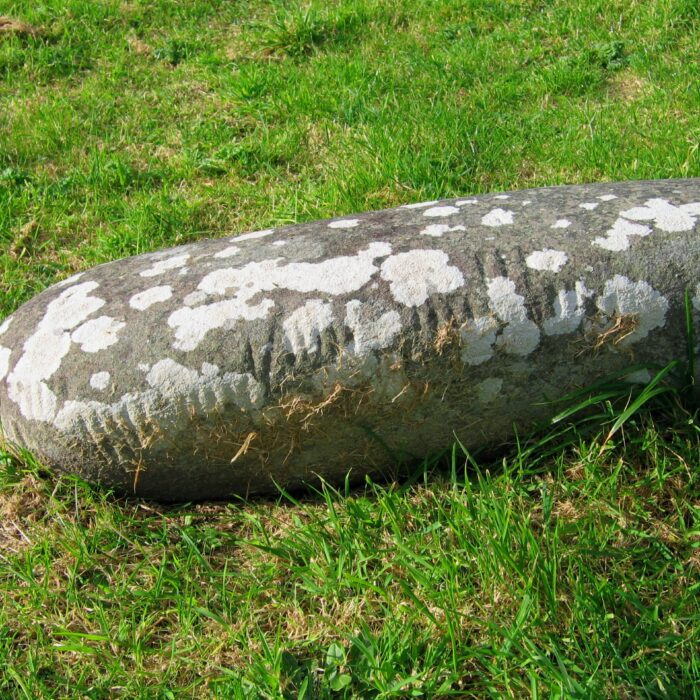
Irish Gaelic (Gaeilge) is the ancestral Celtic language of Ireland. It belongs to the Gaelic branch of Celtic languages, closely related to Scottish Gaelic and Manx (Isle of Man). Its earliest written traces date back to ogham, an alphabet carved on stones as early as the 4th century.
Gaelic was for centuries the dominant language of the island, used in daily life, poetry, songs, and oral transmission. But from the 17th century, English colonization led to its gradual decline in favor of English.
Today, Gaelic is an official language of the Republic of Ireland alongside English. It is taught in schools, used in some administrations, and remains the primary language in the Gaeltacht, predominantly Gaelic-speaking regions located in the west of the country (Connemara, Donegal, Kerry).
English in Ireland
From colonial language to national language
English arrived in Ireland as early as the Middle Ages with Norman settlers, but it was only from the 17th century that it truly established itself, driven by British domination. It became the language of administration, commerce, justice, and education.
In the 19th century, after the Great Famine (1845–1852), Gaelic declined sharply, as many Irish adopted English to emigrate, find work, and integrate. English thus became the mother tongue of the vast majority of Irish people.
However, the English spoken in Ireland is not a simple British copy: it evolved into Hiberno-English, rich in original turns of phrase, distinctive accents, and expressions directly influenced by Gaelic.
Hiberno-English
A variant with local flavors
Hiberno-English refers to the peculiarities of English spoken in Ireland. It is a distinct linguistic variety influenced by the syntax and structures of Gaelic.
Some typical examples:
- I’m after eating (I have just eaten), modeled on a Gaelic construction.
- Frequent use of sure or grand to express an affective nuance.
- Very different accents depending on the region: the melodic Cork accent, the musicality of Donegal, or the urban Dublin accent.
This Hiberno-English is today a strong identity marker, valued in literature, theater, and music. Writers like James Joyce or Roddy Doyle have made it a powerful literary instrument.
Ulster Scots
A minority language linked to history
In the north of Ireland, notably in Ulster, another language is present: Ulster Scots (or Ullans). It is a variant of Scots, itself derived from medieval English, brought by Scottish settlers during the colonization of Ulster in the 17th century.
Today, Ulster Scots is spoken by a minority, mainly in Northern Ireland. It enjoys some institutional recognition thanks to the 1998 peace agreements but remains a fragile language often controversial in identity debates.
Languages of modern immigration
A new linguistic face
Contemporary Ireland, marked by the economic boom of the Celtic Tiger in the 1990s–2000s, has welcomed many migrants from Europe and beyond. This immigration has enriched the linguistic landscape.
Polish is today the second most spoken language in Ireland after English, with over 120,000 speakers. There are also communities speaking Lithuanian, Romanian, Spanish, French, as well as non-European languages like Mandarin or Arabic.
These languages do not replace English or Gaelic but add a cosmopolitan dimension to modern Ireland, especially in large cities like Dublin, Cork, and Galway.
The role of languages in Irish identity
Between memory and national pride
Multilingualism in Ireland is not just a practical reality: it is a matter of identity. Gaelic symbolizes the national heritage, English embodies openness to the world, and the languages of migrants reflect contemporary diversity.
This linguistic richness is found in culture: traditional music preserves Gaelic songs, theater exploits the humor of Hiberno-English, and contemporary literature testifies to a multilingual Ireland.
Irish literature and languages
Creativity born of diversity
Great Irish literary works illustrate the linguistic vitality of the island. James Joyce, in Ulysses, uses English with turns influenced by Gaelic. Samuel Beckett wrote both in English and French. Contemporary poets like Nuala Ní Dhomhnaill write in Gaelic, contributing to renewing Irish poetry in its original language.
The coexistence of several languages is thus a source of creativity and cultural richness rather than an obstacle.
Languages in Ireland today
A dynamic coexistence
Today, the Republic of Ireland officially recognizes two languages: Gaelic and English. The former remains a strong identity language, taught everywhere and alive in the Gaeltacht, while the latter dominates public and economic life.
In Northern Ireland, the situation is more complex: English is predominant, but Gaelic is experiencing a revival, supported by educational and cultural initiatives, and Ulster Scots benefits from a protective status.
This linguistic landscape shows that Ireland is not static: it constantly evolves, between ancient traditions and contemporary realities.


3.33/5 (3 votes)