 +
+
World War II and Ireland : the must-haves
+

World War II was a major conflict that also had profound repercussions on Ireland. Although the Emerald Isle remained officially neutral, this did not prevent it from experiencing significant turmoil…
During World War II, Ireland was in a position similar to Switzerland as a neutral country. It was situated between the warring powers: the Allies – the United Kingdom, France, and their allies – and the Axis – Nazi Germany, Fascist Italy, and Imperial Japan.
This choice of neutrality was upheld by the Irish government of the time, led by Éamon de Valera, who had taken office in 1937.
The “absolute neutrality” defended by Valera was a constant source of criticism both inside and outside the country.
Due to its strategic geographic position, Ireland had to endure drastic military restrictions imposed by the Allies to limit its potential support to Germany.
Thus, the United Kingdom imposed a maritime blockade on the country to prevent repairs on German or Italian ships, as well as financial transfers to them.
Faced with growing tensions between the United Kingdom and Germany, de Valera persisted in his policy of total and absolute neutrality. In 1939, after the signing of the German-Soviet pact and the invasion of Poland, he issued an official declaration proclaiming that “Ireland will take no part in any war.”
Despite this, measures were taken to ensure the country’s internal security: special armed units were created to monitor ports and coasts. The military budget expected in 1941 increased by 50%, reaching 30 million pounds sterling (approximately 4 billion euros today).
Irish citizens were also encouraged to produce civilian goods intended for British forces, including medical supplies for Allied soldiers.
During the global conflict, incursions occurred almost daily along the land borders between Ireland and the United Kingdom. British vessels often patrolled Irish waters, forcing German and Italian ships to hide in safe ports.
Despite Ireland’s neutral position, it was not respected by all: the British government intensified surveillance of the Free State on their land and maritime borders.
Relations between Ireland and the Allies were therefore very complicated. De Valera refused to openly acknowledge British military efforts, arguing that they “violated its neutrality.”
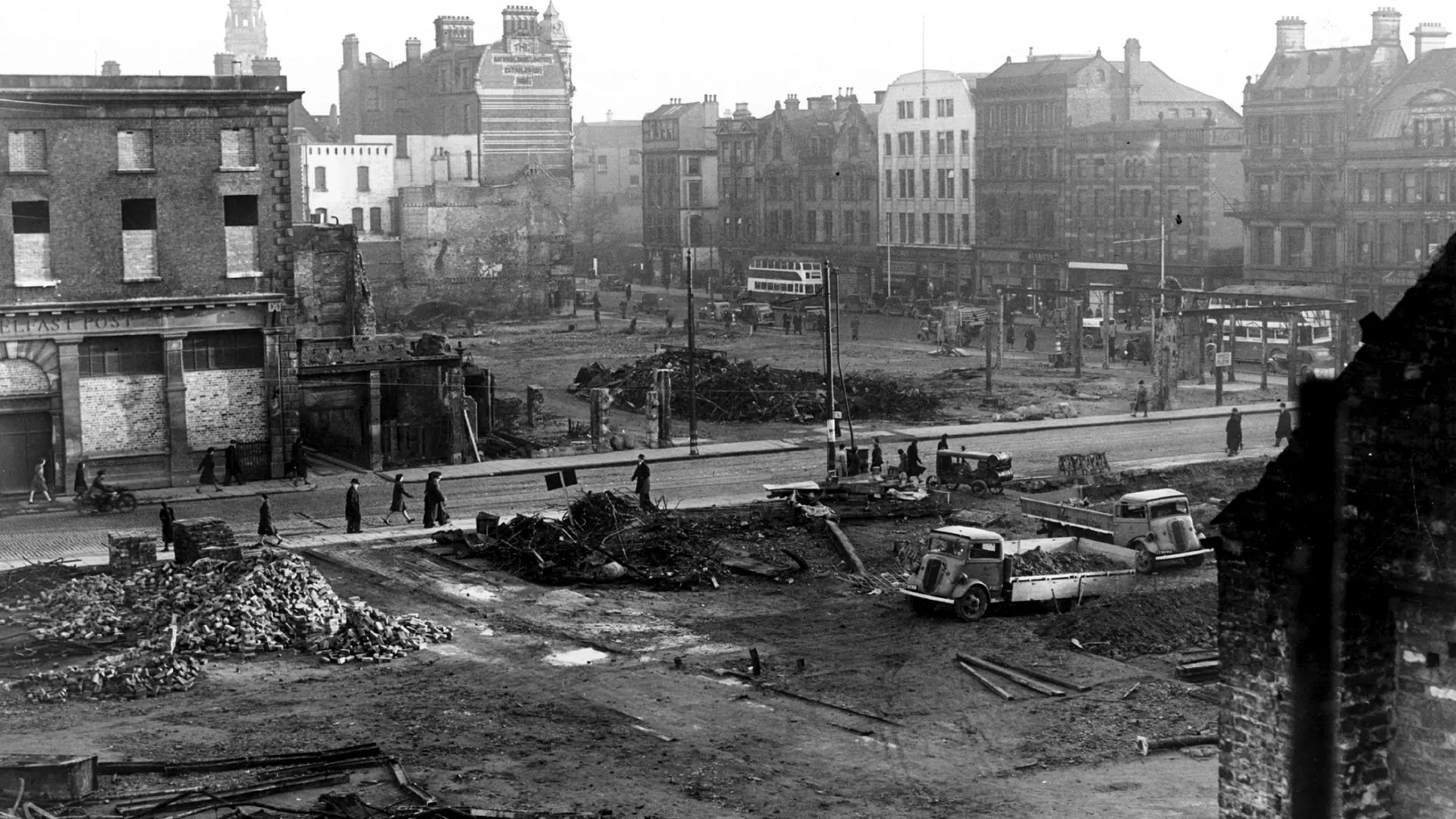
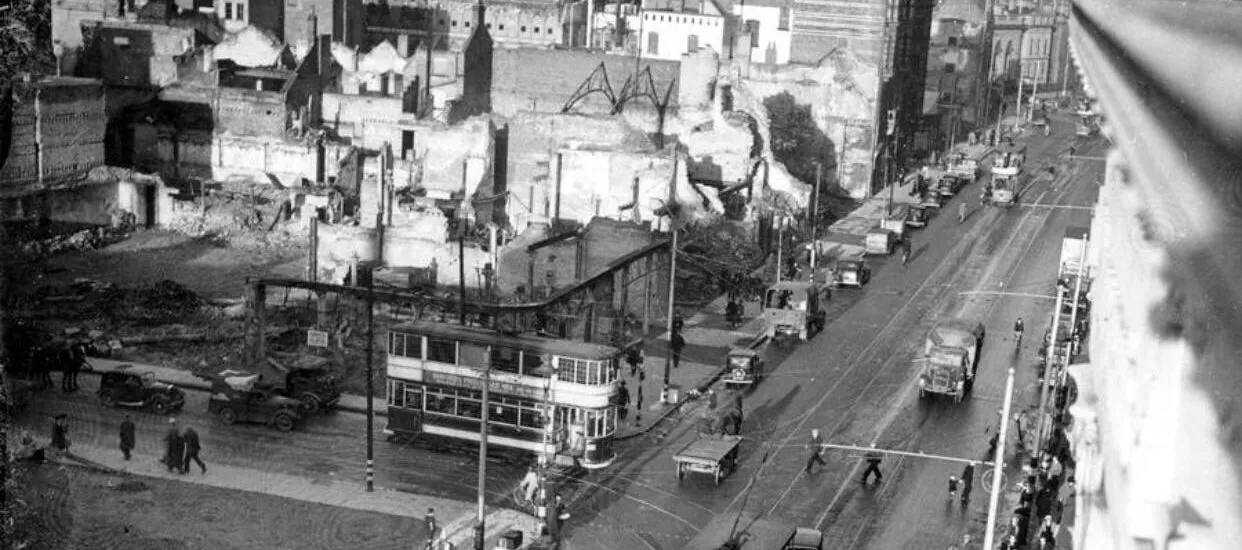
The Belfast BlitzLuftwaffe planes in full bombing
During the conflict, the island of Ireland attempted to support the war effort. A strategy that led to the Belfast Blitz, a series of four air raids resulting in the bombing of Belfast in Northern Ireland.
These offensives caused the deaths of more than 1,000 people, destroying nearly 52% of the city.