Irish whiskeys : the must-haves
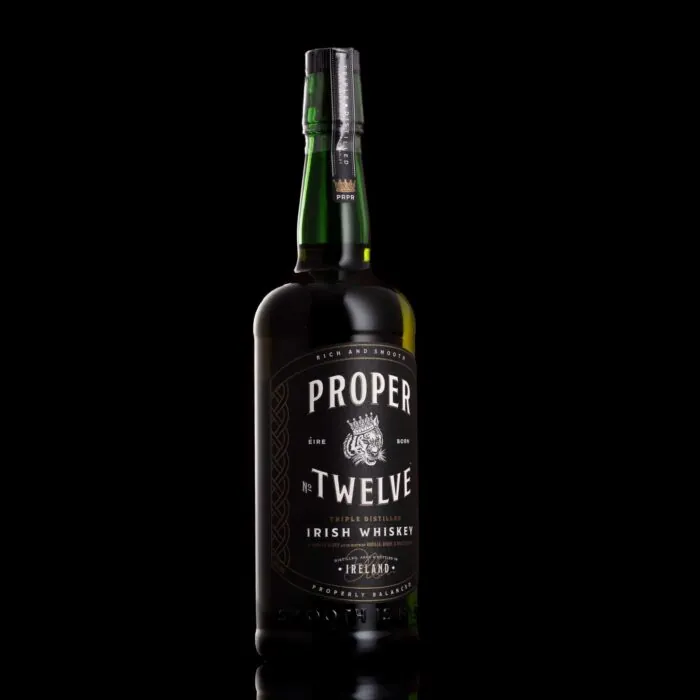
The Proper No. Twelve
Whisky in Ireland and Scotland: which country is better?
News irish
Irish whiskeys
It is impossible to think of Ireland without thinking of its exceptional expertise in Irish whiskey! This typically Irish invention has literally conquered the rest of the world…
A true pioneer of the genre, it was the Irish whisky (or whiskey) that later inspired the Scots to produce the same beverage. Today, local distilleries, some centuries old, still strive to produce high-quality drinks… and are open to visitors wishing to uncover the secrets of Triple Distillation and taste the country’s emblematic beverages!
History of Irish whiskey
An invention dating back to the 5th century, quickly repressed by the British!

Saint Patrick – jaqian – cc
Although little information exists on the exact origin of the drink, many suggest that it was Saint Patrick who, in 432 and after a journey to Egypt, brought a still to the island of Ireland. He thus spread the use of this equipment around him, giving birth to a now very famous beverage: whisky!
Unfortunately, the drink quickly faced turmoil throughout its history. From the 12th century, the British invaded Ireland and discovered this strange Irish beverage. Known by the Gaelic name “l’Uisce Beatha”, this alcohol with a formidable name greatly frightened the British. They were convinced it gave Irish fighters powers, granting them increased strength and courage.
It is indeed to the English that we owe the name Whiskey through deformation: uisce, fuisce, uiskie, whisky (or whiskey).
Noticing the growing popularity of the drink, Elizabeth I (1533-1603) imposed a tax on it. Sir Thomas Philips then obtained one of the first official licenses in 1608 and immediately opened his Old Bushmills distillery.
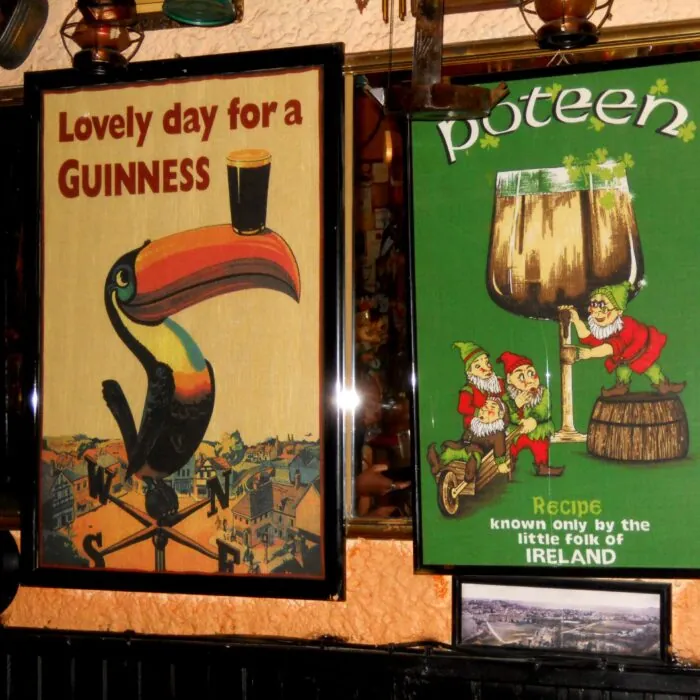
In 1661, the government raised the tax to 4 pence per gallon of Whiskey, which caused a considerable increase in illicit whiskeys (called poteen or poitin) to such an extent that the “Excise Department”, a British-origin cell responsible for collecting alcohol tax, was ordered in 1761 to stop the multiplication of Poteens.
The time of repression

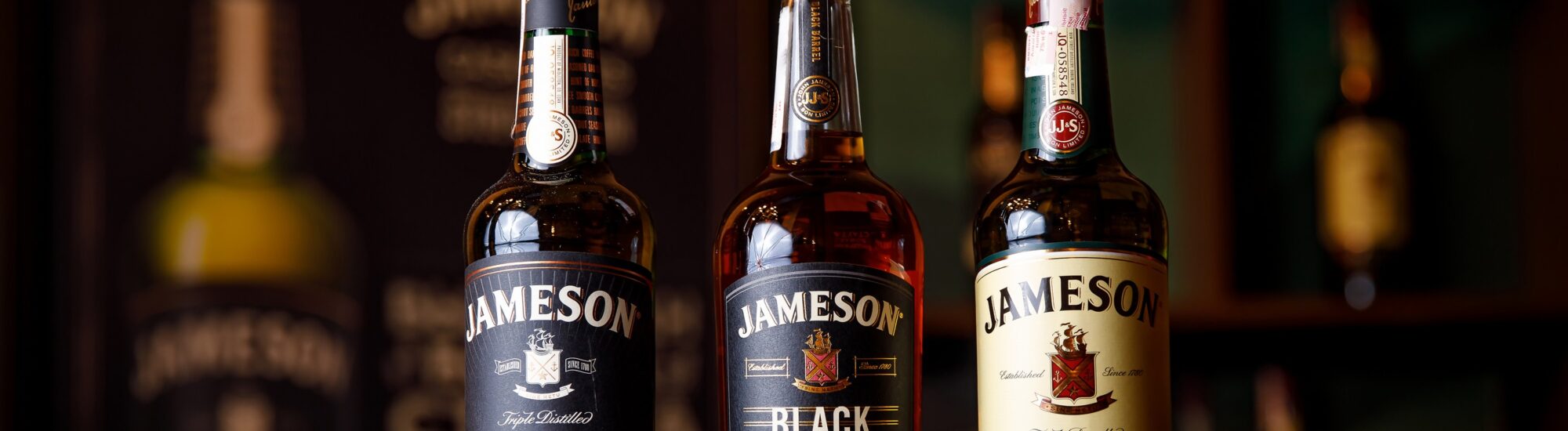
Jameson whiskey – © bizoo_n – stock.adobe.com
A great wave of repression then began, lasting several centuries, aiming to severely suppress illicit whiskey production. It was then that some major houses decided to regularize their situation, including those of John Power, John Jameson, George Roe, and William Jameson.
The effects of repression significantly slowed the production of both legal and illegal whiskey and clearly disadvantaged the Irish product. Very quickly, whiskey lost its notoriety following the “Immature Spirit (Restriction) Act” which required distillers to age their product for 3 years to obtain the official Irish Whiskey label. This measure forced many establishments to close due to lack of means and loss of many markets such as the United States, then in the midst of Prohibition.
The recovery
On the occasion of Eire’s entry into the European Common Market in 1966, 4 distilleries on the brink of collapse decided to unite around Irish Distillers, a new group composed of Jameson, Cork Distilleries, Power, and Old Bushmills (in 1972). The strategy paid off and Irish whiskey quickly gained market shares worldwide, to the point that 2 major British houses tried to take over the group. Allied-Lyons and Grand Metropolitan even launched a hostile takeover bid in 1988 which failed in favor of the French group Pernod Ricard.
At the same time, the Cooley distillery was born. It is an independent distillery located about 80 km north of Dublin that produces whiskey distilled only twice, unlike the triple distillation techniques used in other Irish distilleries.
Since then, Irish whiskey is again consumed worldwide and appreciated by great whiskey enthusiasts.
The must-try Irish whiskeys
Drinks to try at the Pub or distillery!

The Old Bushmills Distillery – Yves Cosentino – cc
If you want to discover the best Irish whiskeys as well as local know-how, we invite you to visit the Irish pubs on the island, but also the local distilleries.
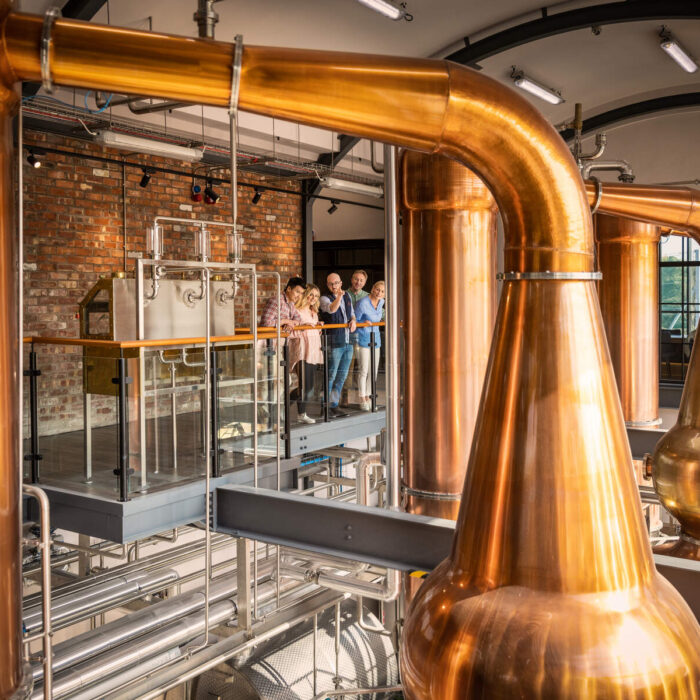
This will be your opportunity to discover the manufacturing processes of this alcohol. You will also have the chance to get advice and taste the most famous drinks of the country!
For this, do not hesitate to ask bartenders or tour guides for advice. You will learn a lot and expand your knowledge on the subject!
Good to know: the difference between whiskey and whisky
Many ask about the difference between whiskey and whisky. It is not just a spelling issue but a matter of manufacturing process.
Generally, whiskey is of Irish origin, as it is made using a triple distillation technique (a typically Irish technique), often from a Pure Pot Still: a mix of malted and unmalted barley.
Whisky, on the other hand, is often of Scottish origin. It is not distilled three times, and single malt uses only malted barley.
This leads to very marked taste differences. Whiskey is often lighter and fruitier than whisky. A phenomenon amplified by the triple distillation technique.
Alcohol abuse is harmful to your health. Please drink in moderation.


3.72/5 (18 votes)