The Great Famine
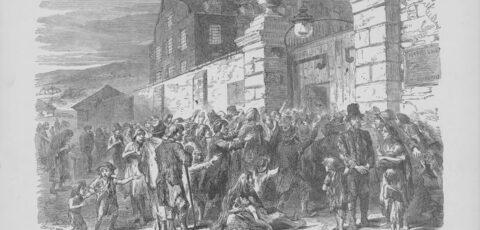
Thousands of children lose their parents and end up in workhouses, dependent on public aid.


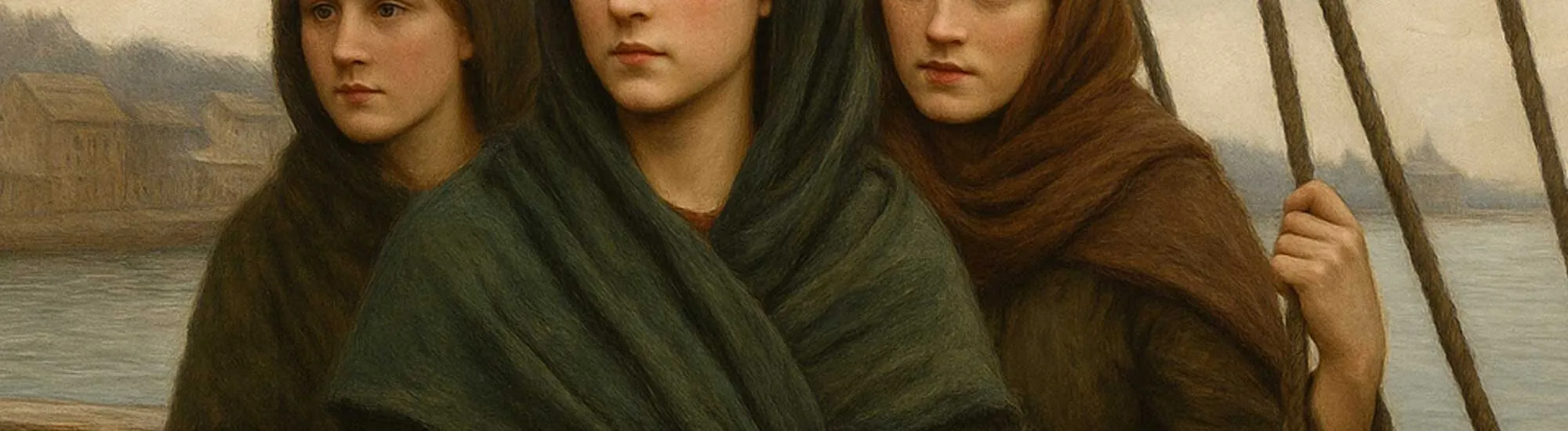
Among the most poignant stories of Irish emigration is that of the Irish Orphan Girls. These thousands of young girls, torn from Ireland in the 19th century, were sent to Australia as part of a government program aimed at populating the colony and providing domestic labor. Long forgotten, they now embody both the distress of famine and the resilience of Irish women in exile.
The Great Famine (1845–1852) plunged Ireland into an unprecedented humanitarian disaster. The potato blight wiped out the main food source for the rural population, leading to the death of over a million people.
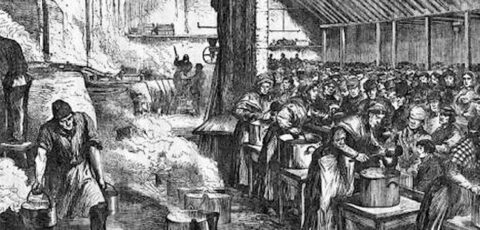
Thousands of children were left orphaned or abandoned in workhouses, poorhouses managed by local authorities. These overcrowded institutions struggled to cope with the influx of destitute children. For the British government, a radical solution was necessary: transferring some of these orphans to the colonies.
In 1848, the Secretary of State for the Colonies, Earl Grey, launched a program to send young Irish orphan girls to Australia. The idea was twofold: to relieve the workhouses in Ireland and to address the demographic imbalance in the Australian colonies, where men greatly outnumbered women.
Between 1848 and 1850, about 4,000 young girls, aged 14 to 20, were selected from workhouses across Ireland. Many had lost their parents due to famine or came from families unable to feed them.
The girls boarded specially chartered ships such as the Earl Grey, the Tippoo Saib, and the Digby. The voyage to Australia lasted over three months, marked by illness, storms, and hardships.
For many of these teenagers, it was their first time leaving their home county. Some didn’t even speak English, having only spoken Irish Gaelic. Misunderstanding and fear were integral parts of the journey.
Landing in Sydney, Melbourne, or Adelaide, the orphans were met with suspicion. Newspapers portrayed them as ignorant, coarse, and undisciplined. The stigma of coming from workhouses followed them, and many faced persistent prejudice.
Yet, the demand for labor was real. The girls were placed as domestic servants, seamstresses, or nurses. Many married quickly, often to modest settlers or laborers. Some found happy unions, while others suffered violence or exploitation.
Despite the hardships, the Irish Orphan Girls played a crucial role in developing Australian colonial society. They helped stabilize the population by founding families and giving birth to a new generation of Australians of Irish descent.
They were also carriers of cultural transmission. Through their songs, stories, and Catholic faith, they brought a piece of Ireland into Australian homes. Some achieved remarkable social mobility, becoming wives of prosperous merchants or established farmers.
The Orphan Girls program was not universally accepted. Criticism against these young girls, accused of being “undesirable” or coming from overly impoverished backgrounds, grew louder. Newspapers spread exaggerated stories of scandalous behavior, fueling existing anti-Irish stereotypes in the colonies.
Under this social and political pressure, the program was halted in 1850 after only two years.
For a long time, the story of the Orphan Girls was forgotten. But since the late 20th century, researchers and associations have explored their fate. Memorials and genealogy projects have been established in Australia, allowing descendants to trace their heritage.
In Sydney, a monument honors the Irish Orphan Girls, recognizing their role in founding modern Australian society. Their individual stories, sometimes tragic, sometimes triumphant, embody the courage of women facing adversity.
Today, hundreds of thousands of Australians can claim descent from the Orphan Girls. Their memory has become a symbol of resilience: young girls torn from famine who transformed their uprooting into a new life.
Their story also highlights the central role of women in Irish emigration. Often invisible in official accounts, they were the silent builders of a lasting legacy.
Thousands of children lose their parents and end up in workhouses, dependent on public aid.
The British government organizes the emigration of young orphan girls to Australia to relieve the workhouses.
About 4,000 young girls leave Ireland and board ships bound for Sydney, Melbourne, and Adelaide.
Facing criticism and prejudice, the Orphan Girls program is discontinued after two years.
The story of the Orphan Girls falls into obscurity, little studied in official Irish emigration narratives.
Monuments and research projects celebrate the memory of these young girls, unwitting pioneers of modern Australia.