First Domestic Workers in England and America
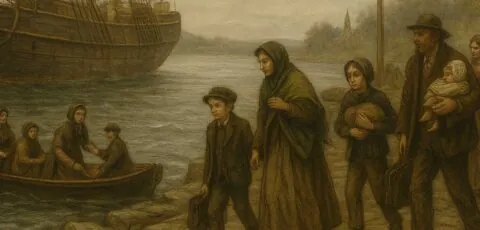
Young Irish women travel alone to work as domestic servants or nurses, sending money to their families back home.

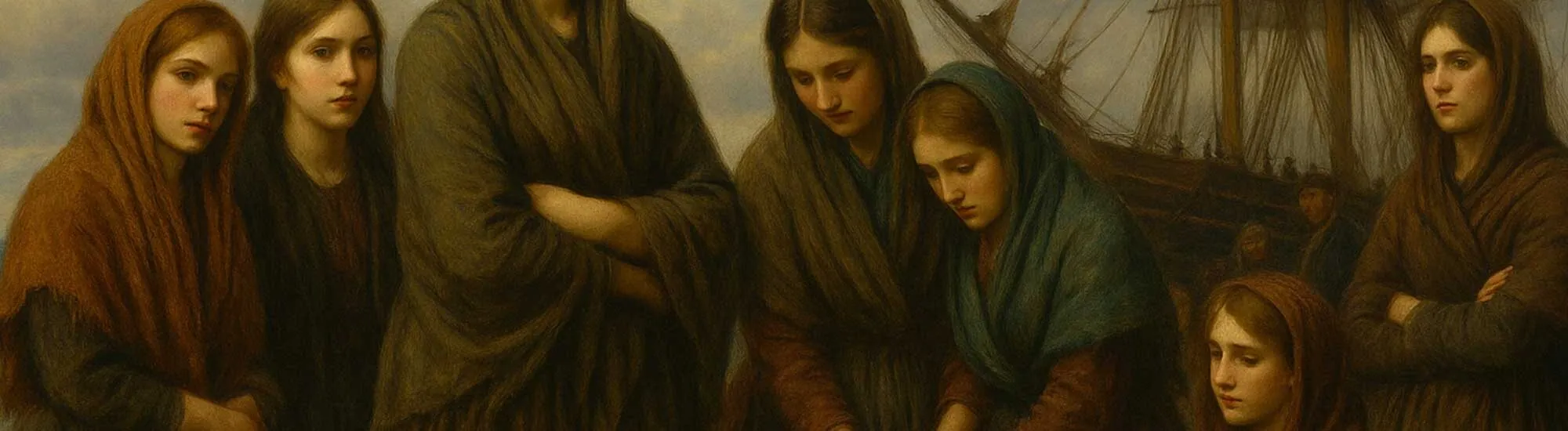
The history of Irish emigration is often told through massive numbers, crowded “coffin ships,” and uprooted communities. But behind these population movements lies an essential dimension: that of women. Their role was decisive, both in departures and in integration and cultural transmission. Without them, the story of the Irish diaspora would be very different.
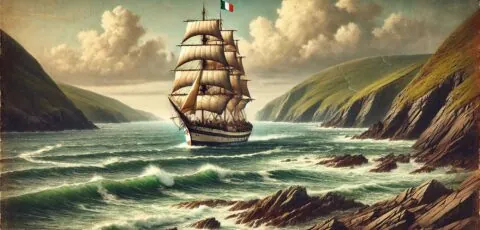
Even before the Great Famine, some Irish women were already setting out into exile. In the 18th century, Irish domestic workers were found in England and North America, traveling alone to earn income and send money back to their families. Chronic poverty and lack of opportunities for women in Ireland made emigration not only possible but often necessary.
These pioneers, sometimes very young, paved the way for their relatives. They formed the first links in a migration chain where money transfers allowed other family members to follow.
The famine from 1845 to 1852 changed everything. Male mortality was very high, leaving thousands of widows and orphans. For many, exile became the only survival option. It was in this context that organized emigration programs specifically targeted young women.
Between 1848 and 1850, about 4,000 “Orphan Girls” were sent to Australia from Irish workhouses. These teenage girls, often without family, were destined to work as domestic servants and marry settlers. Although their arrival was met with suspicion and sometimes disdain, they played a crucial role in establishing a stable female population in Australia.
In the Americas, many Irish women traveled alone, without male protection, which was unusual for the time. Their courage and independence set them apart in the migration landscape.
Once they arrived at their destinations, most Irish women worked in domestic service. In Boston, New York, Montreal, or Sydney, they became cooks, nurses, or chambermaids in middle-class households.
Although these jobs were poorly paid and socially undervalued, they provided shelter, some stability, and especially the chance to save money. Many of these women sent part of their wages back to Ireland, thus contributing to the economy of families left behind. These money remittances became a vital resource for 19th-century Ireland.
Other women found opportunities in the textile industry, factories, or commerce. Their ability to work and manage a budget made them pillars of community survival.
Women were not only workers and survivors. They were also the keepers of Irish culture in exile. In immigrant homes, they maintained the use of Gaelic, religious traditions, and customs.
Songs, stories told to children, traditional recipes, religious festivals: all these elements were passed down through generations thanks to women. They helped the diaspora avoid completely dissolving into the host society.
In Irish neighborhoods of major American cities, mothers and grandmothers also played a unifying role. They organized communal meals, supported parish associations, and ensured religious education.
Although public spaces were often male-dominated, women in the diaspora did not remain passive. Their involvement in Catholic associations, charity circles, and later unions was significant.
In New York and Boston, some engaged in labor movements, demanding better working conditions for domestic workers and textile laborers.
Irish nationalism also found support among women in the diaspora. Activists participated in fundraising to support independence movements in Ireland, and some helped spread a proud and combative Irish identity.
Many Irish women remained anonymous, blending into the mass of migrants. Yet, some individual stories stand out. Preserved letters testify to their loneliness, harsh lives, but also their hope for social advancement for their children.
Irish diaspora mothers often bore the heaviest burden: working hard, raising families in sometimes hostile environments, and keeping a collective identity alive. Without their endurance, the history of the Irish abroad would have been very different.
Today, the legacy of these women is immense. The large Irish communities of Boston, New York, Toronto, Sydney, or Buenos Aires still bear the mark of their influence. Irish surnames appear across all social classes, but behind every lineage is a woman who held firm, passed on traditions, and built foundations.
In emigration museums, their role is increasingly recognized. The EPIC Museum in Dublin, for example, dedicates several sections to the history of women in exile, highlighting their letters, testimonies, and courage.
For a long time, historical accounts of emigration focused on numbers, great leaders, and spectacular events. But in recent decades, researchers have given voice back to women. Their personal experiences, sacrifices, and resilience offer a fuller and more human view of Irish emigration.
This female memory enriches the overall narrative. It shows that emigration was not just a mass movement but a collection of individual stories where women played a central role.
Young Irish women travel alone to work as domestic servants or nurses, sending money to their families back home.
Thousands of widows and orphans leave Ireland. Women become pillars of economic survival through money remittances.
Nearly 4,000 young girls from Irish workhouses are sent to Australia to work and integrate into the colony.
In Boston, New York, or Montreal, women work as servants and nurses, sending part of their wages back to Ireland.
Women get involved in parishes, preserving traditions, and sometimes in union and nationalist movements.
Museums and researchers restore women’s place as guardians of Irish culture and pillars of the diaspora.