Reservations are recommended
Powered by GetYourGuide


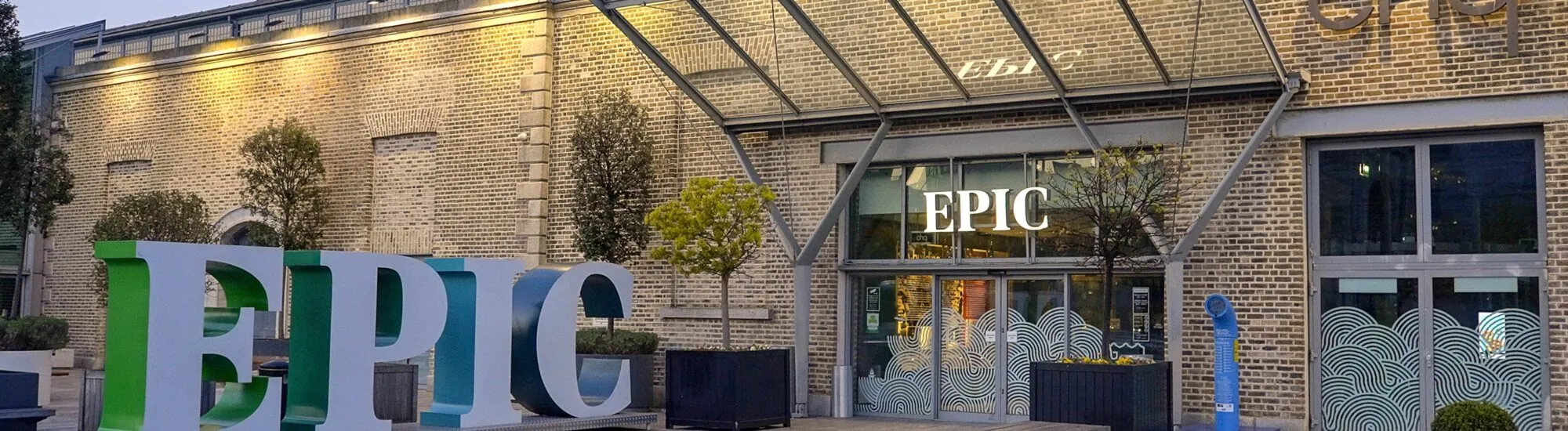
In the stone vaults of the CHQ Building, overlooking the Liffey, EPIC The Irish Emigration Museum tells one of Ireland’s great stories: that of the millions of women and men who left the island over the centuries. Some were fleeing famine, poverty or persecution. Others left to work, study, trade or seek a new life.
Located at Custom House Quay in Dublin’s Docklands, this immersive museum traces the routes of the Irish diaspora to the United Kingdom, the United States, Canada, Australia and far beyond. There are few traditional display cases here: individual stories, archives and digital installations put a face to emigration and reveal the considerable influence of the Irish around the world.
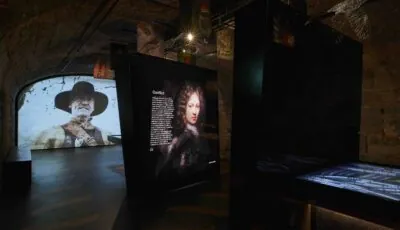
An interactive gallery at EPIC The Irish Emigration Museum – EPIC Ireland CHQ Limited
EPIC offers a self-guided route through 20 interactive galleries. The visit begins with the presentation of a symbolic passport, which can be stamped as you move through the galleries. This playful thread is particularly popular with families, without ever reducing the subject to a mere attraction.
Touchscreens, projections, testimonies, archival documents, games, sound sequences and audiovisual installations create a thoroughly contemporary exhibition design. The museum focuses on personal stories: behind the broad statistics are separated families, one-way departures, as well as stories of success and inheritance.
EPIC does not only present the difficulties faced by emigrants. It also explains how their descendants contributed to the political, scientific, economic, artistic and sporting life of their adopted countries.
Irish emigration was not confined to the Great Famine of the 19th century. For more than 1,500 years, religious figures, soldiers, merchants, workers, writers, missionaries and adventurers have left the island for other lands.
There were many reasons for these departures: political conflicts, religious discrimination, lack of land, unemployment, poverty or the desire for independence. Some journeys were forced, particularly during penal deportations to Australia. Others were voluntary decisions, driven by the hope of a career or a better life.
This diversity is one of the museum’s strengths. EPIC avoids portraying emigrants as a uniform group, placing each wave of departures in its historical, economic and social context.
Between 1845 and 1852, the Irish Great Famine profoundly transformed the country. Repeated destruction of potato crops, combined with poverty and the political choices of the time, caused a human catastrophe. Hundreds of thousands of people died, while a significant proportion of the population sought refuge abroad.
Many families then boarded overcrowded vessels, sometimes known as coffin ships. A lack of drinking water, malnutrition and disease made some crossings particularly deadly.
EPIC’s installations help visitors understand what such a departure entailed: leaving one’s village, crossing the Atlantic and arriving in an unfamiliar society with few resources. The museum also examines the reception given to new arrivals, who often faced prejudice, unhealthy housing and the most arduous jobs.
To mark its tenth anniversary, EPIC unveiled a major transformation of its visitor route in March 2026. This €2 million investment is the museum’s largest development since it opened in 2016.
The new Isle of the Senses gallery evokes the landscapes that emigrants carried with them in their memories. Images, sounds and scents bring back to life the hills of Kerry, the Cliffs of Moher, the waterfalls of Wicklow and the Giant’s Causeway.
The route also includes a 28 m² interactive LED floor, presented as the largest installation of its kind in an Irish museum. Visitors follow 1,500 years of journeys, from the currachs of the earliest navigators to ocean liners, steamships and modern aircraft.
These installations reinforce the emotional dimension of the visit without losing its historical content. A new app also offers additional stories, several languages, transcripts and routes tailored for children.
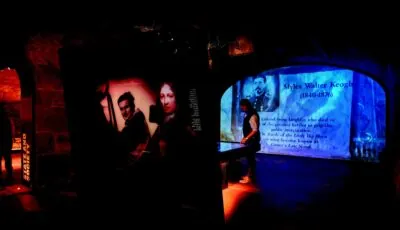
Digital exhibition design at the EPIC museum – EPIC Ireland CHQ Limited
The history of Irish Americans naturally occupies an important place in the museum. New York, Boston and Chicago became major centres of the diaspora in particular. But EPIC extends its narrative to many other destinations, including Great Britain, Canada, Australia, New Zealand, Latin America and the Caribbean.
The museum shows how these communities retained and then transformed their identity. Traditional music, dance, literature, St Patrick’s Day celebrations and Gaelic games thus spread far beyond Ireland’s shores.
The route also presents figures of Irish descent who made their mark in science, the arts, cinema, politics and sport. This broader perspective gives the museum its full meaning: EPIC tells not only why the Irish left, but also what they brought to the societies where they settled.
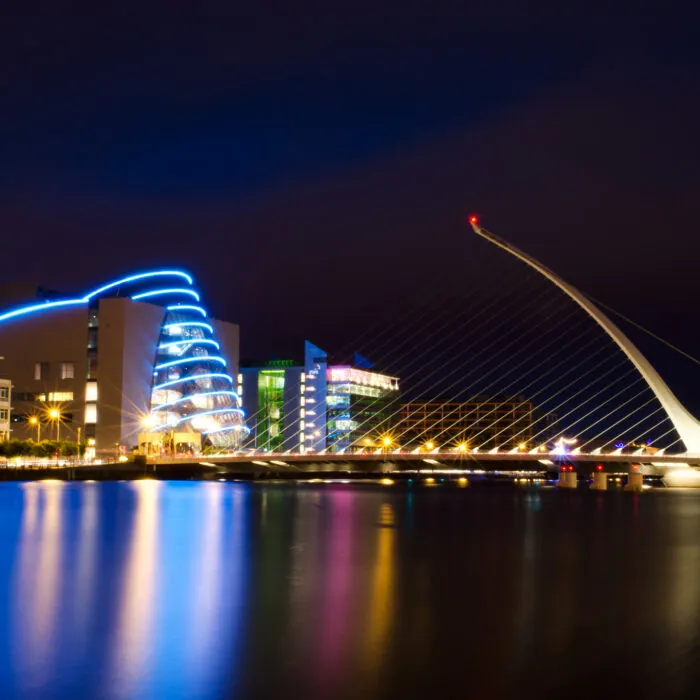
EPIC occupies the vaults of the CHQ Building, a former 19th-century warehouse in Dublin’s historic port. Its stone walls and vaulted galleries recall the commercial activity of the Docklands, once busy with goods, sailors and travellers.
The choice of this building carries strong symbolic value. Just metres from the Liffey, the museum stands in an area from which many ships carrying emigrants departed. Here, contemporary exhibition design engages with Dublin’s industrial architecture and maritime memory.
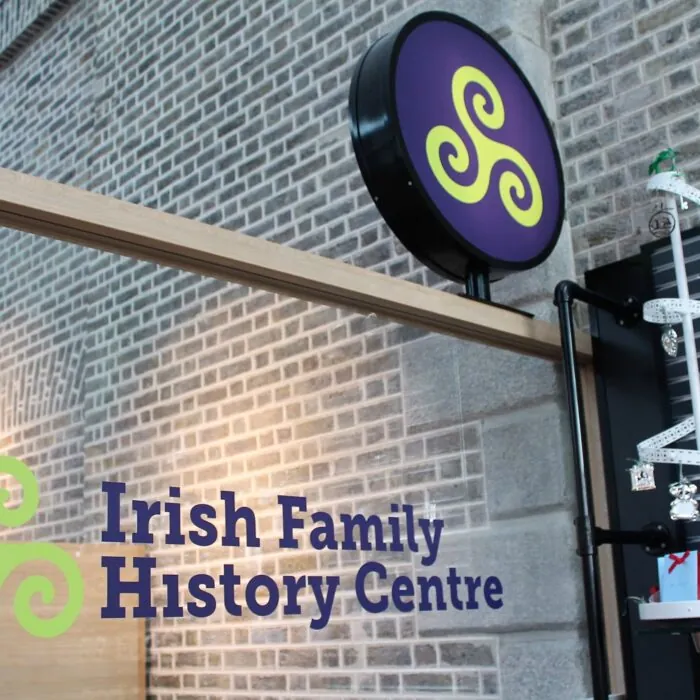
The CHQ Building also houses the Irish Family History Centre, which specialises in Irish genealogy. Professional genealogists can help visitors examine their family records, identify a parish of origin or search for birth, marriage and death certificates.
Consultations are available by appointment, on site or remotely. They are charged separately and are not included with an EPIC admission ticket. To make research genuinely productive, it is best to bring any full names, dates, places and documents already known.
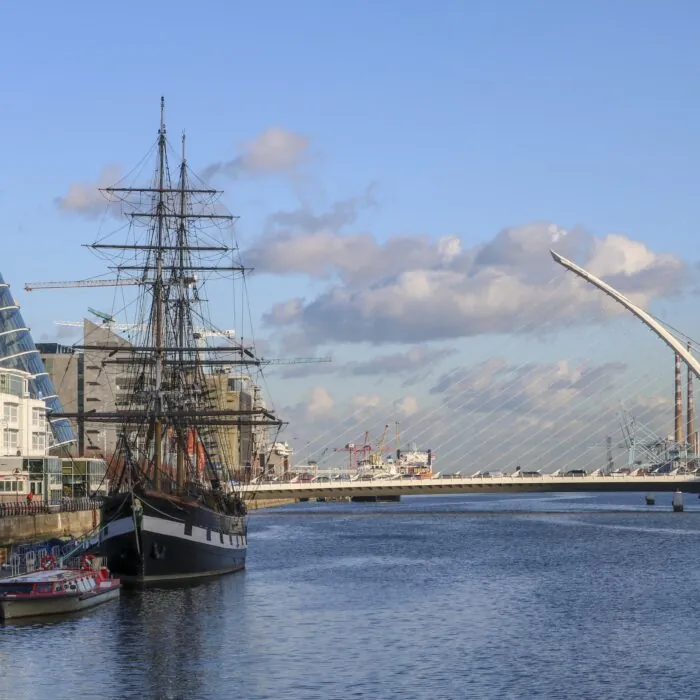
A few minutes’ walk from the museum, the Jeanie Johnston Tall Ship & Famine Museum is an ideal complement to the visit. This replica of a 19th-century three-masted ship offers an insight into passengers’ living conditions during crossings to North America.
EPIC provides an overview of emigration and the diaspora, while the Jeanie Johnston focuses on the practical experience of sea travel. The two sites can easily be visited on the same day, and combined tickets are available.
A visit takes around 90 minutes on average. Two hours is preferable to read the testimonies, try the installations and stamp the entire passport. Visitors particularly interested in Irish history can easily spend longer there.
The route is indoors, making it an excellent activity in Dublin when it rains. Its interactive content makes it accessible to families, although some sections on famine, discrimination and separation may raise questions for younger visitors.
Today, EPIC is one of Dublin’s best museums for understanding how a small Atlantic island left a profound mark on the rest of the world.
Essential information to help you plan your visit, including key landmarks, access information, and booking options.
The Chq Building, Custom House Quay, North Dock, Docklands District, Dublin, County Dublin, Republic of Ireland, Tourist sites in Ireland
53.348330, -6.248076
3h00
Booking a timed slot online is recommended, particularly at weekends, during school holidays and in the peak tourist season.
As opening hours may change, check the official EPIC website before your visit.
Check the opening hours and admission requirements before you leave, especially during peak season or on Irish public holidays.
Standard online prices:
Family tickets available online:
Good to know:
As prices may change, check the amounts and conditions on the official EPIC ticket office.
Compare tickets, guided tours, and excursions available through our partner platforms.