
In County Meath, not far from the famous Hill of Tara, stands a lesser-known yet equally fascinating site: Tlachtga Hill, near the small town of Athboy. For the Celts, this place was sacred. It was here, every year, that the first fires of Samhain were lit, marking the end of the harvest and the beginning of the dark season.
The hill takes its name from a mythological figure: Tlachtga, daughter of the druid Mug Ruith, to whom tradition attributes extraordinary powers. According to the stories, she gave her name to this land after her tragic death, and her memory remained linked to powerful and magical ceremonies.
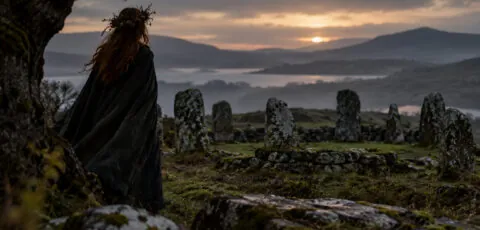
Today, Tlachtga is far from a monumental tourist site: a green hill, fields, and a few circular remnants barely visible in the grass. Yet beneath this modest appearance, the ground witnessed druidic rituals that both terrified and inspired hope in an entire people.
In Celtic cosmology, fire was not just a source of warmth. It symbolized purification, the connection between humans and gods, and light against darkness. At Samhain, the time when the year shifted towards winter, all hearths across the land were extinguished and then relit from the sacred fire of Tlachtga.
This ritual had both symbolic and practical dimensions. Symbolic, as it united the community around a single flame. Practical, because families rekindled their own hearths from this common fire, ensuring protection and prosperity for the coming dark season.
Samhain was the moment when the veil between the living and the dead thinned. Spirits could cross over, not always with good intentions. The fires of Tlachtga also served a protective function: they kept harmful forces at bay and guided benevolent ancestors.
Stories about Tlachtga vary, but all portray her as a powerful and tragic figure. Daughter of the druid Mug Ruith, she is said to have traveled the world to learn magic. Upon returning to Ireland, she supposedly built the Wheel of Mug Ruith, a magical artifact capable of controlling sky and earth.
But her fate was marked by suffering: a victim of abuse, she died young giving birth to triplets. Before passing, she requested that her name remain attached to the hill where she died. Thus, the site of Tlachtga became a spiritual landmark, charged with memory and power.
This figure perfectly embodies the spirit of Samhain: from death springs new life, from tragedy comes continuity. Lighting fires on her hill was a way to honor Tlachtga and embed the community in this eternal cycle.
Every year, at nightfall on October 31st, druids lit the sacred fire of Tlachtga. From there, torches were carried to other hills and villages, creating a network of light across the country. Clans came to offer sacrifices, sometimes animals, to secure the gods’ protection.
The fire symbolized continuity: the year ended, a new one began. The spirits of ancestors were invited, but protection against chaotic forces was also essential.
While Tara is known as the center of royal power, Tlachtga was the center of spiritual renewal. The two hills worked in harmony: the king received his legitimacy at Tara, but the kingdom’s protection came through Tlachtga’s fire.
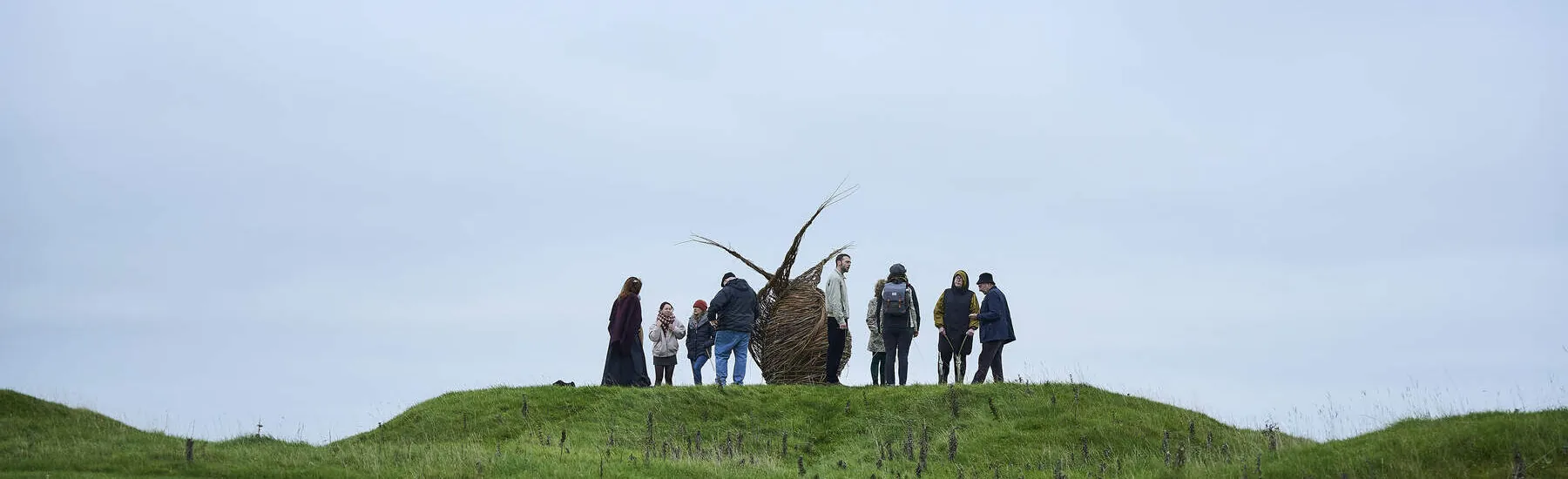
For a long time, the site of Tlachtga was forgotten, overshadowed by the fame of Tara or Newgrange. But in recent years, historians and local communities have revived this tradition. Symbolic ceremonies take place every Halloween, attracting travelers, folklore enthusiasts, and families who come to share a moment of remembrance.
The Púca Festival, held between Trim and Athboy, has brought a festive and cultural dimension to modern Samhain. Among the highlights is a walk to Tlachtga Hill and the lighting of a commemorative fire, recalling the strength of this tradition. While not an exact reenactment of ancient rituals, it’s a way to reconnect with the past and restore Tlachtga’s place in the collective imagination.
Tlachtga Hill is located a few kilometers from Athboy, in County Meath. Access is by car, via small country roads. The site itself is discreet, on private farmland, but accessible during public ceremonies at the festival.
The Halloween period (late October – early November) is ideal, especially if you want to attend events organized as part of the Púca Festival. Outside this time, the visit is more symbolic, but the peaceful atmosphere of the place remains striking.
Tlachtga is not a developed site like Newgrange or Tara: no visitor center, no explanatory panels. Visiting requires a bit of imagination, but that’s also part of its charm: a raw, almost secret place that has preserved its mysterious aura.