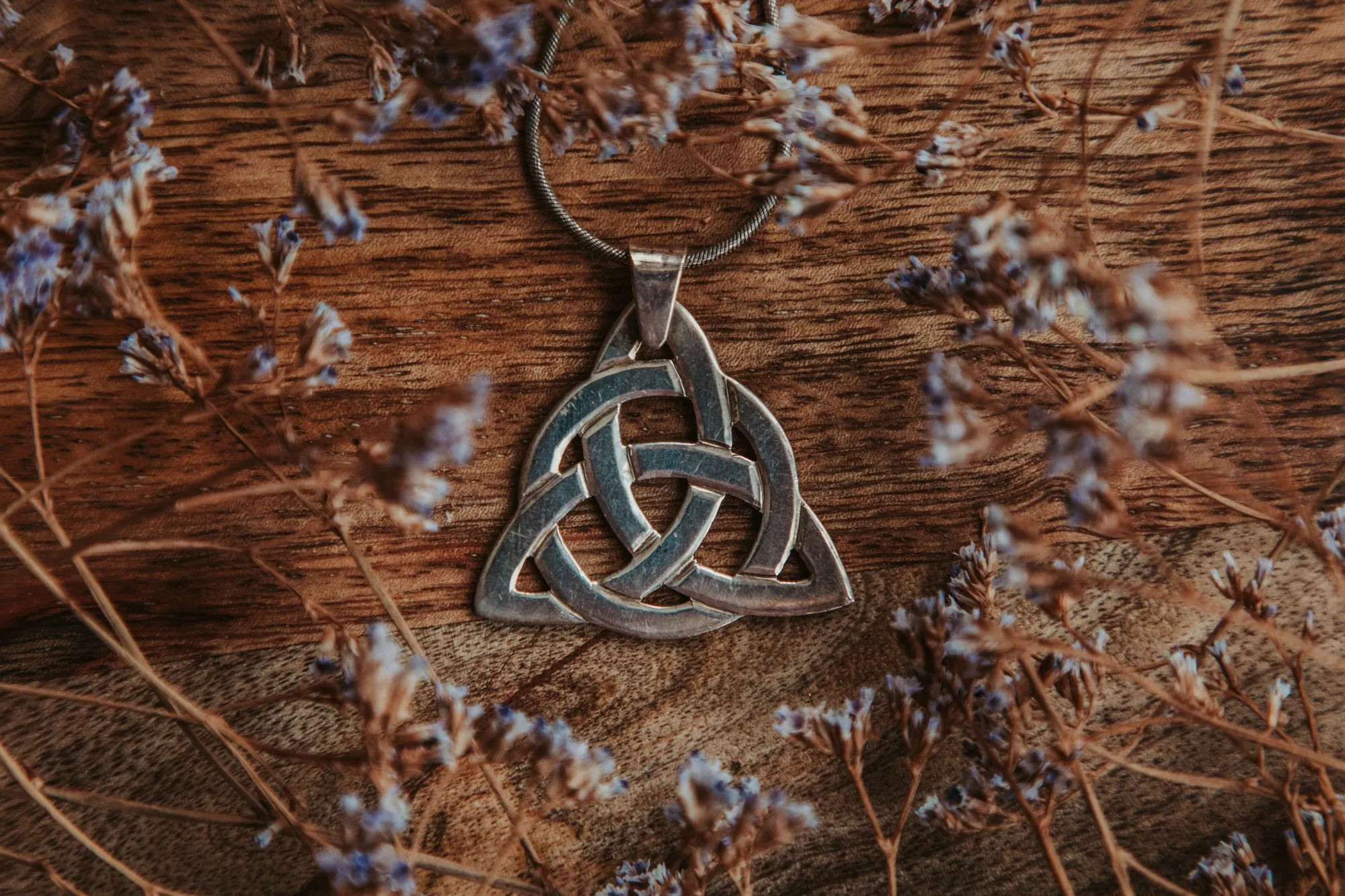
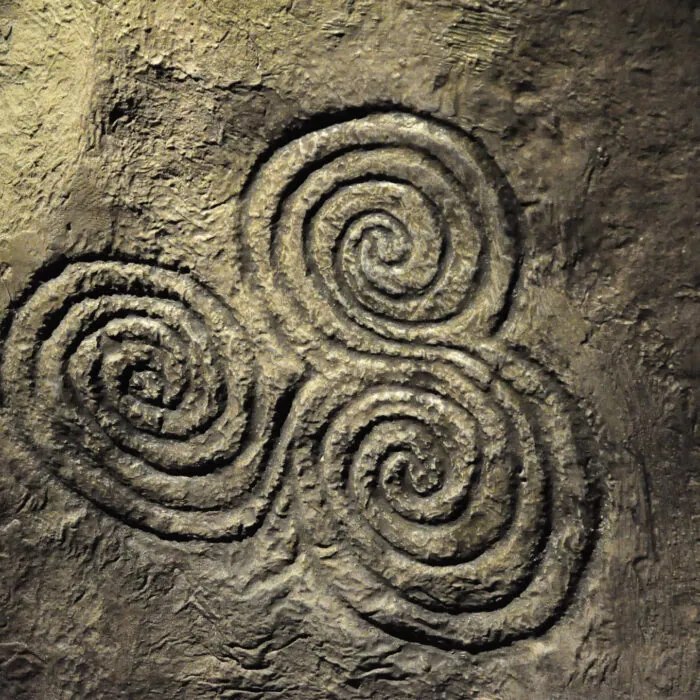
The Triquetra, also known as the Celtic Trinity, is an ancient symbol whose origins predate Christianity. This symbol is characterized by three interlaced arcs forming a knot. Although often associated with Irish and Celtic culture, its roots can be traced back to more ancient civilizations. The Triquetra generally symbolizes themes of three interconnected elements or aspects, such as the natural elements or metaphysical concepts like life, death and rebirth.
History of Triquetra
A symbol of the Holy Trinity in Ireland
With the introduction of Christianity to Ireland, the Triquetra was adopted to symbolize the Holy Trinity – Father, Son and Holy Spirit, illustrating the integration of Christian traditions with local pagan beliefs and symbols.
This symbol is widely present in Celtic art, particularly in illuminated manuscripts such as the Book of Kells, and is popular in jewelry and tattoos, reflecting aesthetic and personal or spiritual meanings.
Triquetra symbolism in Ireland
A sign associated with Irish Christianity
In Ireland, the Triquetra, also known as the Trinity Knot, is an important part of cultural and spiritual heritage. It symbolizes several key aspects of Irish and Celtic tradition.
The Triquetra is often linked to themes of strength, eternity and interconnection, and is an important symbol in various subcultures and neo-pagan beliefs. It is frequently interpreted as a symbol of nature, femininity and spirit.
The Triquetra, with its various interpretations and combinations with other Celtic symbols, remains a fascinating symbol that has evolved while retaining an important place in Irish and Celtic cultural heritage.
Nevertheless, here’s a look at what it means in Ireland:
- Interconnection and balance: Triquetra is often interpreted as a symbol of life’s interconnectedness, representing a balance between body, mind and soul. This idea of interdependence is a recurring theme in Celtic philosophy.
- Natural elements and cycles of life: In Celtic tradition, the Triquetra can also represent natural elements (such as water, earth and air) or the cycles of life (birth, death and rebirth). These interpretations underline the importance of nature and natural cycles in Celtic culture.
- Christian symbol: After the arrival of Christianity in Ireland, the Triquetra was adopted as a symbol of the Holy Trinity (Father, Son and Holy Spirit), illustrating the fusion of Christian beliefs with local traditions. This blend of religious symbolism is an example of how Irish culture has integrated new beliefs while preserving its ancient roots.
- Art and Decoration: The Triquetra is also a popular motif in Irish art, notably in ancient manuscript illuminations and church ornaments. It is also commonly used in contemporary jewelry and tattoos, reflecting both an attractive aesthetic and a link to Irish cultural heritage.