

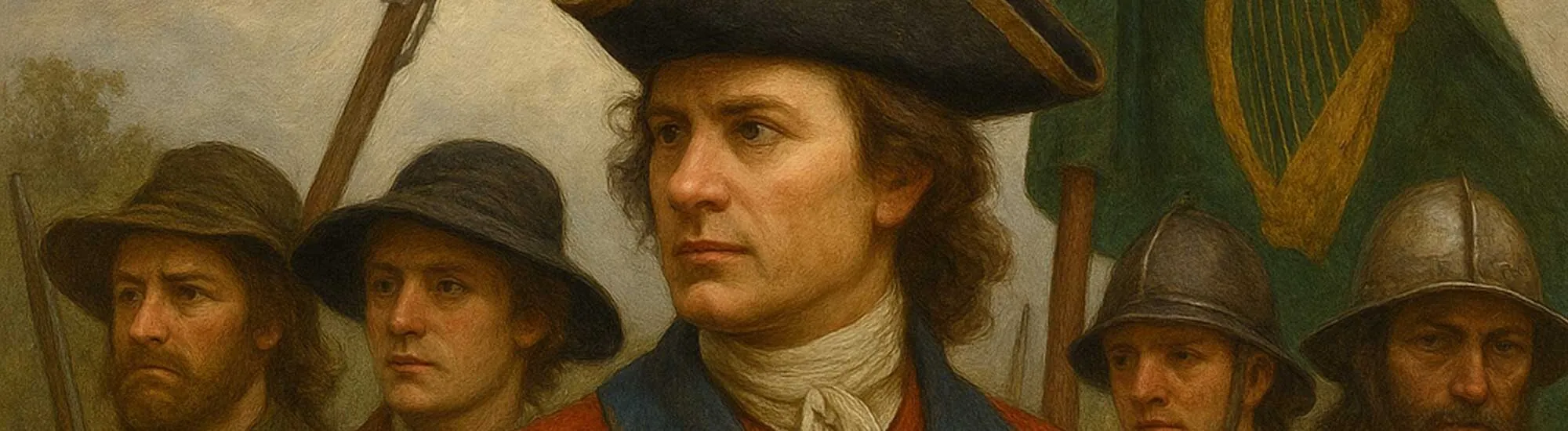
The term “Wild Geese”, literally meaning “wild geese,” refers to the thousands of Irish Catholic soldiers forced to leave their country from the late 17th century onward to serve in European armies. The expression became widely used after the Treaty of Limerick in 1691, which ended the Williamite War in Ireland, a conflict between the Catholic supporters of James II and the Protestant forces of William of Orange.
Refusing to live under English rule and stripped of their rights, these soldiers chose exile. Like migrating geese, they flew to continental Europe, mainly to France, Spain, and Austria, where they continued fighting in the service of foreign powers.
The defeat of the Irish Jacobite forces in 1691 dashed hopes of a Catholic reconquest of power. The Treaty of Limerick promised an honorable surrender, but in practice, it paved the way for Protestant domination.
Rather than submit, about 14,000 Irish soldiers left the island under the command of Patrick Sarsfield to join France. This mass departure marked the beginning of the Wild Geese phenomenon, a symbol of Irish military exile.
In France, the exiles formed Irish regiments integrated into the royal army. The most famous was the Irish Brigade, which took part in major European battles such as Fontenoy (1745), where Irish soldiers earned great glory.
In Spain, other regiments were created, playing important roles in wars against Great Britain. Austria, Prussia, and even Russia also welcomed Irish officers renowned for their bravery.
These soldiers did more than serve; they became respected figures, sometimes rising to command positions.
The Wild Geese were more than mercenaries. They became cultural ambassadors of Ireland, keeping Gaelic identity alive through their networks, families, and traditions.
Many held onto the dream of returning home and supported political and military movements aimed at freeing Ireland. Some Irish regiments were mobilized during French attempts to invade England and Ireland in the 18th century.
Today, the term Wild Geese remains a powerful metaphor for Irish exile. It symbolizes both the pain of displacement and the pride in the Irish contribution to Europe’s great armies.
In the history of Irish emigration, the Wild Geese represent a unique chapter: that of military exile, where honor and loyalty to a cause drove thousands of men to cross the seas. Their legacy lives on in memorials, museums, and the collective memory of Ireland.