Nearly four centuries after it was made, one of County Cork’s most precious religious objects is symbolically returning to its home territory. The Hurley Chalice, a gilded silver Catholic chalice dating from 1633, is on display in Dunmanway on an exceptional loan from Cork Cathedral.
The Hurley Chalice returns to Dunmanway
An Irish treasure nearly four centuries old
Usually kept at the Cathedral of St Mary and St Anne in Cork, also known as the North Cathedral, the Hurley Chalice is making a particularly symbolic return to the west of the county.
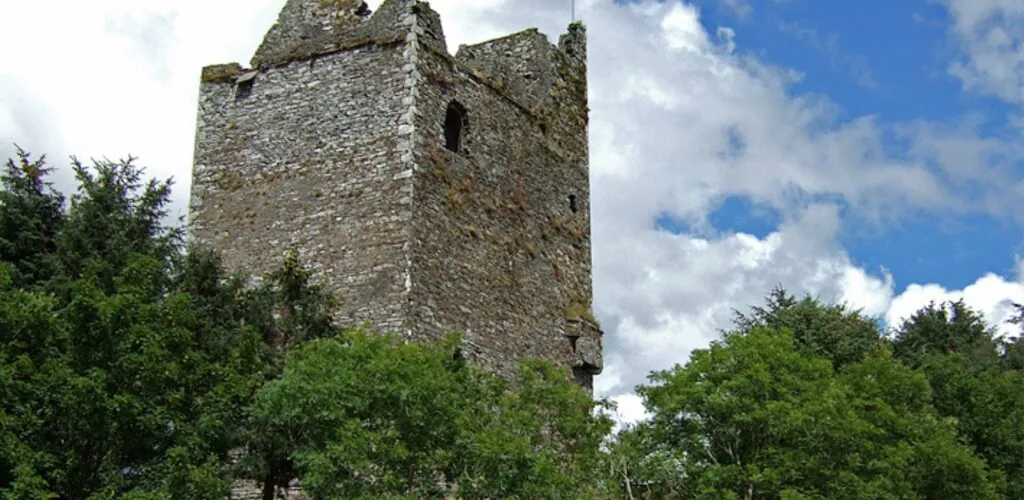
The object is traditionally associated with the Hurley, or Ó Muirthile, family, who were once based at Ballinacarriga Castle, around nine kilometres from Dunmanway. The chalice is believed to have been donated in 1633 by Randal Hurley and his wife, Ellen de Courcy.
More than a simple liturgical object, it is a rare testament to 17th-century Irish society. It was made just a few years before the Irish Confederate Wars, a period of political and religious violence during which many Catholic objects were confiscated, destroyed or concealed.
A masterpiece of religious silversmithing
Inscriptions that tell the story of its origins
Made of gilded silver, the Hurley Chalice stands out for its finely worked cup, richly decorated central knop and polygonal base. It features several motifs: a cross, the Virgin Mary beneath three stars, a palm tree, the IHS monogram and the double eagles associated with the de Courcy family coat of arms.
The inscriptions engraved on its base name Randal Hurley and Ellen de Courcy, along with the year 1633. Another inscription, added inside the foot, states that a certain J. Coppinger is said to have presented the chalice to St Mary’s parish in 1722.
These details were already described in 1906 in the Journal of the Cork Historical and Archaeological Society. They link the object to the history of the Hurleys of Ballinacarriga, an important Gaelic family in west Cork, connected by marriage to the Anglo-Norman de Courcy family.
A return steeped in memory in west Cork
A religious object that has become a witness to local history
The chalice’s return to Dunmanway forms part of a gathering for descendants of families originating from the area. Several members of the Hurley line, including some from the United States, were able to view the object alongside local historians.
It would, however, be inaccurate to say that the chalice is returning to Dunmanway for the first time since 1633: its full journey over the centuries is not sufficiently documented. Rather, the event marks a symbolic return to the land with which its history is connected.
Ballinacarriga Castle, the former residence of the Hurleys, can still be seen in the countryside south-east of Dunmanway. Its 16th-century tower and carved decoration offer further testimony to the power once wielded by this family in the region.
Bringing together family history, religious heritage and craftsmanship, the Hurley Chalice gives tangible form to the eventful past of west Cork. Small enough to hold in two hands, it is nevertheless capable of telling nearly four hundred years of Irish history.