 ALA TechSource / Wikimedia Commons,
In Ireland, around 12,000 books once banned are due to be transferred to the National Archives and made accessible to the public. Until now held by the Department of Justice, the collection brings together works the State deemed unfit to read. Their transfer offers a window into the ideas, stories and lives that censorship sought to keep at a distance.
The announcement was reported on 10 November 2026. It does not mean an exhibition of 12,000 volumes has just opened in Dublin: the move is planned for the end of the year, with access to follow at a later date. As of 19 November, the information consulted does not make it possible to give an opening date or details of how the collection will be available for consultation.
A collection barred from the public, held by the State
Thousands of books gathered in a room at the Department
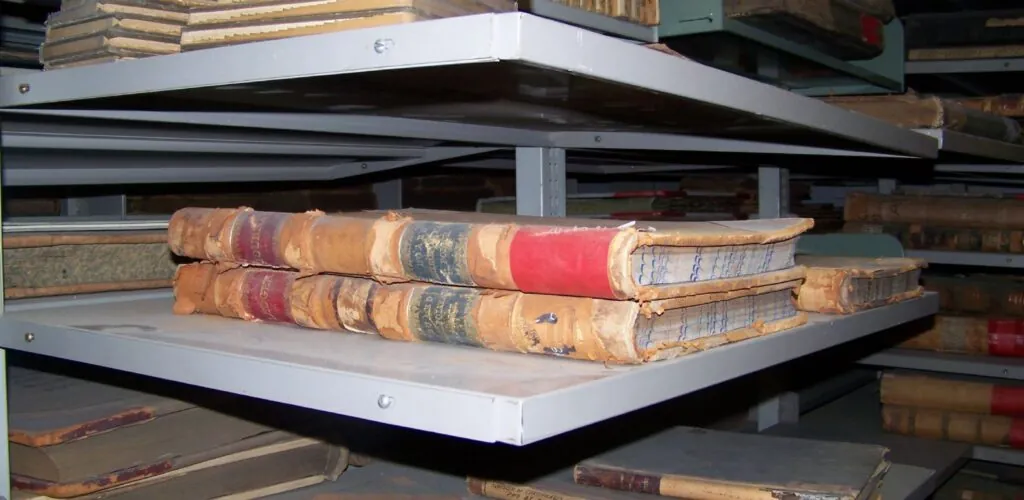
According to a report by Rosita Boland published on 10 November, the copies were accumulated over decades by the Censorship of Publications Board. They occupy a room in the Department building on St Stephen’s Green and have not been accessible to the public.
The contrast is striking: works removed from circulation survived in the very hands of the institution that excluded them. They can now help illuminate that system. The figure of 12,000 refers to the collection being held; it should not be assumed that each volume is a different title or that it remains banned today.
The censors’ records will accompany the books
Mary Immaculate College, whose historian Brian Hughes appears in the RTÉ report, confirms that the records setting out the reasons for the bans are also due to become accessible. This is an essential part of the collection: alongside the works themselves, researchers will be able to examine the recorded grounds for condemning them.
A banned book and the record of its prohibition tell two different stories. The first carries an author’s voice; the second reveals the view an authority took of it. Bringing them together makes it possible to ask specific questions: which passages troubled official readers? Which themes recurred? How was the decision justified?
What Ireland did not want people to read
Classics and less familiar publications
The collection includes works by Edna O’Brien and Brendan Behan, alongside thousands of less well-known publications. The report also mentions international authors, including Ernest Hemingway and Iris Murdoch. This mix prevents the collection from being reduced to a library of Irish writers alone: it also documents reading matter from beyond Ireland.
For visitors who know Ireland mainly through its great literary names, this heritage offers another perspective. Celebrating a country’s writers does not mean forgetting the resistance they encountered. In history, recognition of a work can coexist with its exclusion by the institutions of its time.
Morality as a boundary on reading
Brian Hughes places the bans in the history of the relationship between literature, morality and the influence of the Catholic Church. Divorce, adultery and sexuality were among the subjects that could draw the censors’ attention. The books held in the collection, his institution explains, date from the 1930s to 1996.
These dates describe the collection presented and should not be confused with the end of all censorship activity: The Irish Times reports that the Board’s last meeting to ban a book was held in 2016. The collection therefore makes it possible to examine a history whose legacy is more recent than might be expected.
How can you discover this literary history in Dublin?
A planned transfer, not yet a visit to book
Before planning a detour to see these works, wait for an announcement from the National Archives of Ireland setting out access to the collection. Preservation, cataloguing and consultation are not the same as a permanent exhibition. An announcement that material will be made available in future does not guarantee a room open to passing visitors.
To explore Irish literature during a stay, the Museum of Literature Ireland, or MoLI, offers another starting point. It is a separate institution: nothing in the announcements consulted indicates that the 12,000 banned books will be displayed there. A visit can accompany the reading of a work, then prompt a return to this question: how does a country choose the stories it passes on, and those it prefers to keep silent?