Ireland’s history is not only made up of revolts, poetry, and exile. It is also marked by laws that have shaped its political, social, and cultural destiny. From the medieval Brehon Laws to the 1937 Constitution, including British colonial laws and contemporary peace agreements, legislative texts bear witness to the struggles and compromises of a people seeking recognition and autonomy.
The Brehon Laws
The ancient law of Gaelic Ireland
Before the English conquest, medieval Ireland was governed by a complex legal system known as the Brehon Laws. These laws, applied for over a millennium until the 17th century, covered all aspects of life: property, marriage, compensation for crimes, or social status.
The Brehon Laws were distinguished by their restorative rather than punitive nature. Instead of imposing prison sentences, they provided for financial or social compensation. Although abolished after the English conquest, they remain a reference in Irish legal history and testify to the originality of Gaelic society.
The Penal Laws
The repression of Catholics
In the 17th and 18th centuries, after the English victory over Catholic forces, Ireland was subjected to the Penal Laws. These laws aimed to weaken Catholics, who constituted the majority of the population, and to strengthen Protestant domination.
The Penal Laws forbade Catholics from owning weapons, sitting in Parliament, accessing certain professions, or owning large land properties. These laws established systematic discrimination, deeply marking Irish society. Their gradual dismantling in the 19th century accompanied the political awakening of Catholics.
The Act of Union 1801
The forced merger with Great Britain
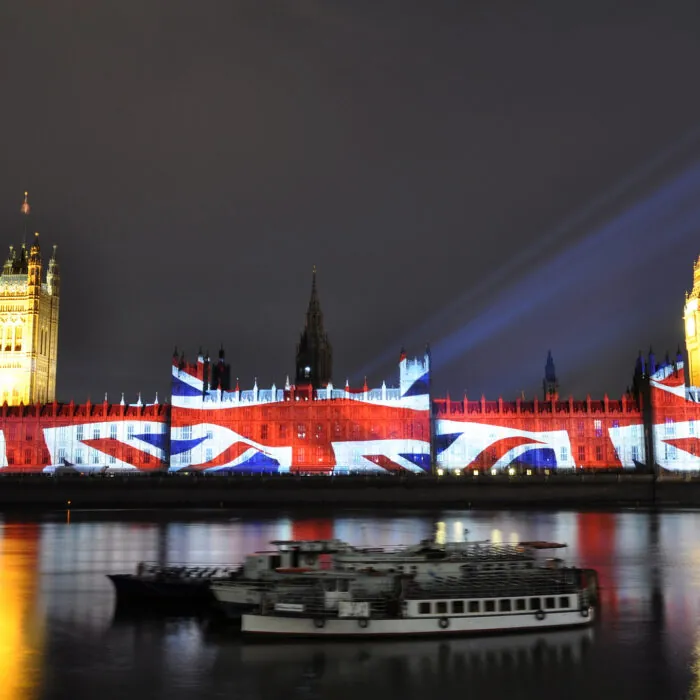
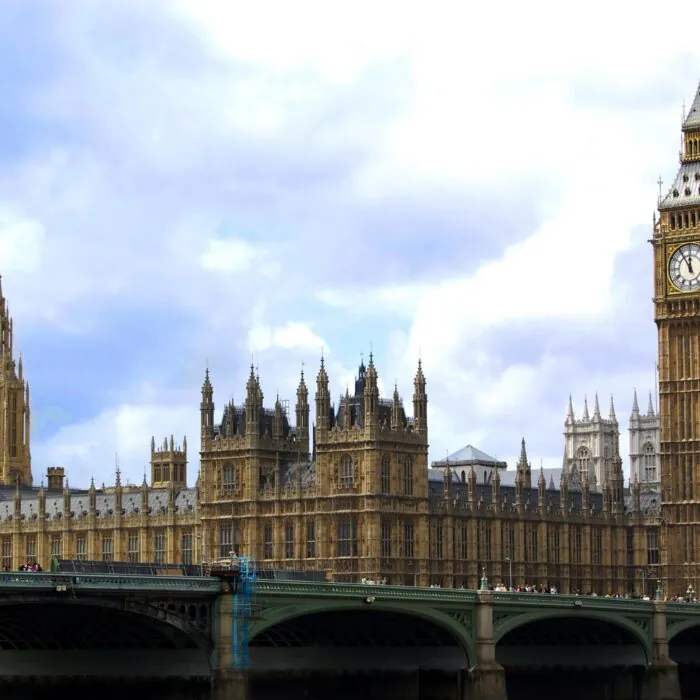
One of the most significant texts was the Act of Union 1801, which politically united Ireland and Great Britain into a single kingdom: the United Kingdom of Great Britain and Ireland. The Dublin Parliament was dissolved, and Irish MPs were sent to sit in London.
This act, adopted in a context of repression after the 1798 rebellion, was widely rejected by the Irish population. It reinforced the feeling of national alienation and was one of the catalysts for the autonomy movement (Home Rule) in the 19th century.
The Government of Ireland Act 1920
The partition of the island
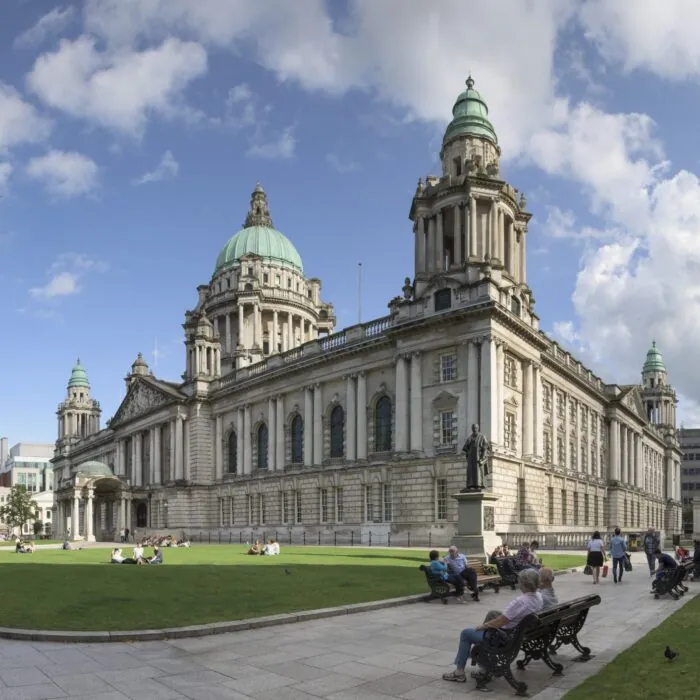
Facing nationalist pressures, the British government adopted in 1920 the Government of Ireland Act, which provided for the creation of two parliaments: one for Northern Ireland and one for the South.
This text marked the beginning of the partition: Northern Ireland remained in the United Kingdom, while the South, dissatisfied, quickly entered into conflict with London. The 1920 Act paved the way for the War of Independence and the birth of the Irish Free State.
The Anglo-Irish Treaty 1921
The birth of the Irish Free State
Negotiated in London between British and Irish representatives, the Anglo-Irish Treaty of December 1921 ended the War of Independence. It created the Irish Free State, an autonomous dominion within the Commonwealth, while leaving six Ulster counties in the United Kingdom.
This treaty deeply divided nationalists: some accepted it as a compromise, while others rejected it, leading to the civil war (1922–1923). Despite its limitations, it was a decisive step towards the independence of the Republic.
The Constitution of 1937
The affirmation of Irish sovereignty
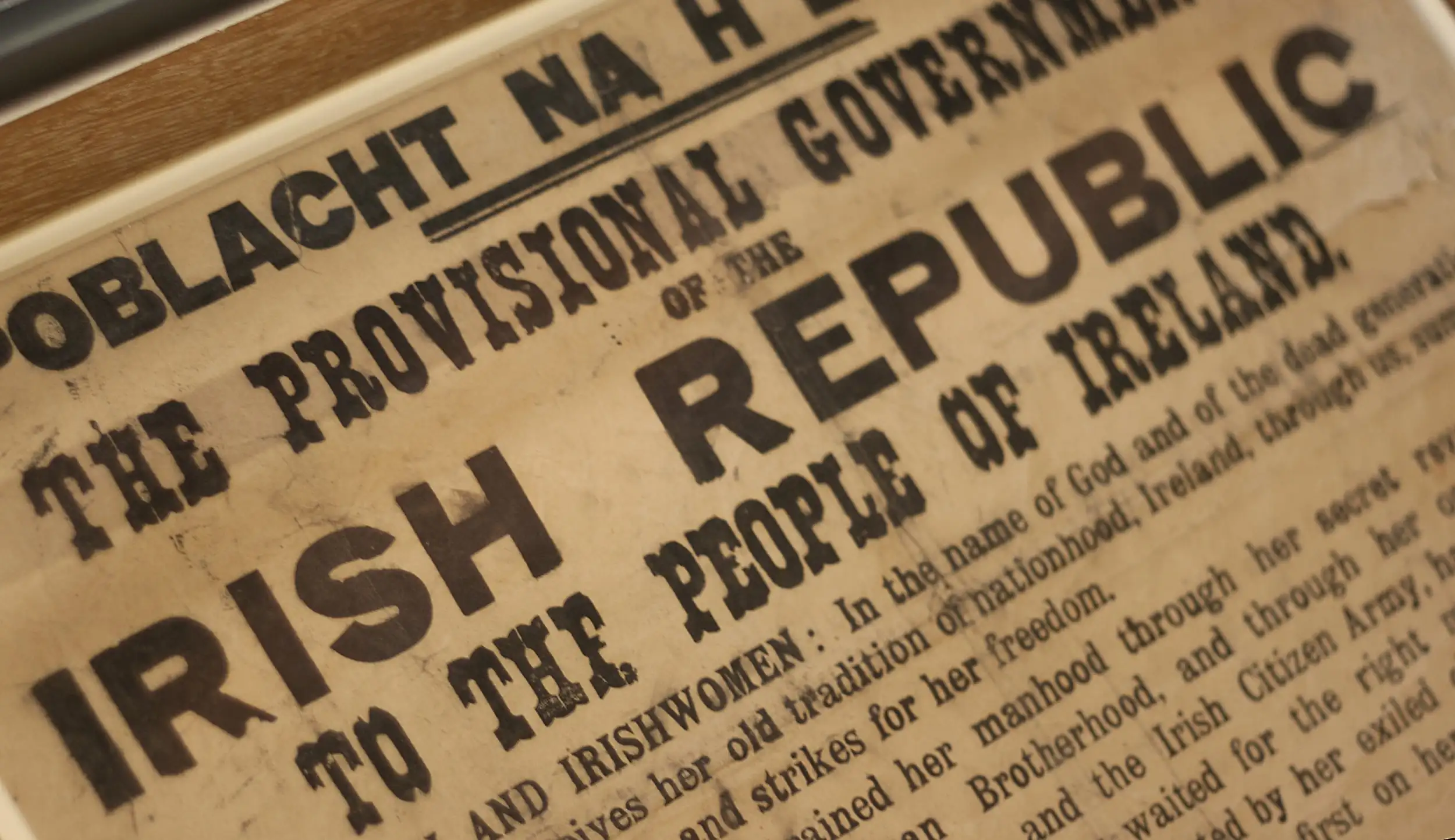
Under the leadership of Éamon de Valera, Ireland adopted a new Constitution in 1937, called Bunreacht na hÉireann. This founding text affirmed the country’s sovereignty and marked the transition from the Free State to a de facto Republic.
The 1937 Constitution defines Ireland as an independent state, reaffirms the central role of the Gaelic language, and establishes the institutions (president, government, parliament). It remains in force today, although several amendments have modernized it over the decades, notably on social issues.
Joining the European Economic Community (1973)
A law opening towards Europe
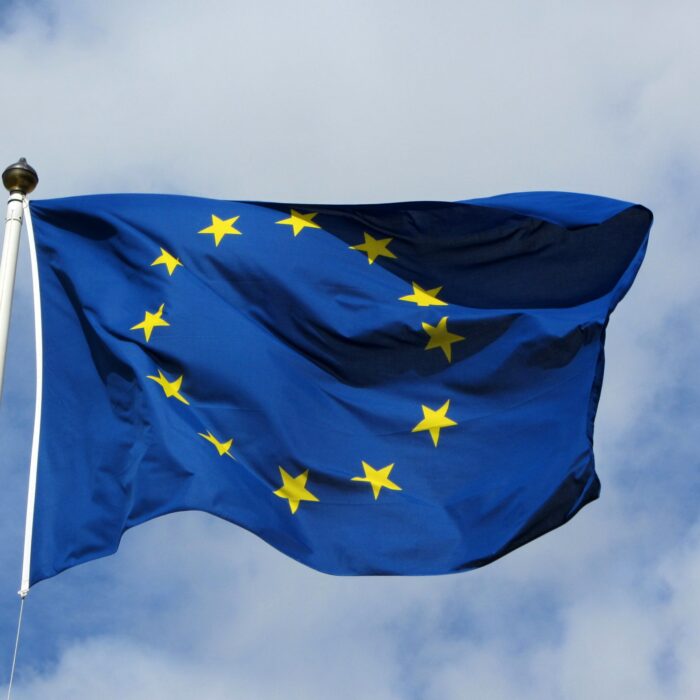
In 1972, the Irish voted massively by referendum in favor of joining the EEC (now the European Union). The entry into force in 1973 transformed the Irish economy, previously oriented towards Great Britain, and opened a new era of European integration.
This accession, enshrined in law, had a considerable impact on the country’s economic development, making Ireland one of the most dynamic economies in the Union.
The Good Friday Agreement (1998)
Peace in Northern Ireland
The Good Friday Agreement, or Friday Agreement, signed in 1998, is one of the most important texts in contemporary Irish history. The result of long negotiations, it ended the Troubles in Northern Ireland, a conflict that had bloodied the region for thirty years.
This agreement established power-sharing between unionists and nationalists, strengthened ties between the North and the Republic of Ireland, and opened an era of reconciliation. Ratified by referendum on both sides of the border, it symbolizes the desire for a peaceful future.
Recent social laws
An Ireland in full transformation
In the 21st century, Ireland has experienced profound legislative upheavals on social issues. Two major referendums marked minds:
- In 2015, the country legalized same-sex marriage, a world first achieved by popular referendum.
- In 2018, Ireland ended the ban on abortion, a legacy of a Constitution influenced by the Catholic Church.
These texts reflect a radical transformation of Irish society, moving from religious conservatism to embraced modernity.
A history written by laws
Heritage and identity
From the ancient Brehon Laws to the Good Friday Agreement, Ireland’s history has been written to the rhythm of its laws. Each major text reflects a stage of its identity: cultural resistance, struggle against domination, assertion of sovereignty, or opening to the world.
These laws are more than legal documents: they are milestones of memory, reminding us that law is also a political and cultural weapon in the construction of a nation.


 +
+