While Christmas in Ireland is a family celebration deeply rooted in the Christian religion, the New Year, called New Year’s Eve (Oíche Chinn Bliana in Gaelic), is a unique moment of transition, blending ancient traditions, popular beliefs, and contemporary festivities. Between superstitions inherited from the Celtic world, festive gatherings in pubs, and major urban events, Ireland experiences New Year’s Eve with intensity and conviviality.
The Celtic Origins of New Year
From Samhain to New Year’s Eve
In Celtic Ireland, the passage from one year to the next was a sacred moment. Long before the introduction of the Gregorian calendar, the Celts celebrated Samhain at the turn of autumn and winter. This festival marked the end of the agricultural year and the beginning of the “dark season.”
Although today Samhain is more associated with Halloween, some of its rituals and beliefs have carried over to New Year celebrations. The transition from one year to the next was seen as a liminal time when spirits could roam and the future could be foretold.
New Year Superstitions in Ireland
Between Omens and Home Protection
New Year’s Eve was, and sometimes still is, a time ripe for superstitions. Several popular customs marked the transition to the new year:
- Open doors and windows at midnight allowed the old year to leave and the new one to enter.
- The first visitor after midnight brought either luck or misfortune: a dark-haired man crossing the threshold brought prosperity, while a woman or a blond man could signal bad luck.
- Sweeping the house on New Year’s Eve symbolized the expulsion of bad influences to welcome new energies.
- Abundant food, placed on the table or left outside, signified that the family would lack nothing in the coming year.
These traditions, less practiced today, show how the Irish associated New Year with prosperity, luck, and protection against evil spirits.
The Place of New Year in Christian Culture
Between Mass and Blessings
With Christianization, New Year also took on a religious dimension. January 1st is dedicated to the feast of Saint Mary, Mother of God, and practicing Irish people attended mass to ask for blessings for the coming year.
In some rural areas, houses and hearths were blessed on this occasion, continuing a tradition of protection blending Christian and pagan influences.
New Year’s Eve in Irish Homes
A Family and Friendly Celebration
Traditionally, New Year’s Eve in Ireland was celebrated with family, sharing a large meal and evenings by the fire. Stories were told, songs sung, and music played, faithful to the country’s oral and musical tradition.
Even today, while big cities organize spectacular festivities, in rural areas and small towns, New Year remains a family moment, marked by simplicity and warmth.
Pubs and Irish Conviviality
An Essential Stop
It is impossible to talk about Irish New Year without mentioning the pubs. The evening of December 31st is one of the liveliest of the year: musicians, singers, and dancers take turns to accompany the arrival of the new year.
Pubs become true gathering places where locals and visitors mingle in a warm and festive atmosphere. Far from formal parties, the Irish New Year retains a popular spirit, full of laughter, music, and shared pints.
The Dublin New Year’s Festival
The Highlight of New Year’s Eve
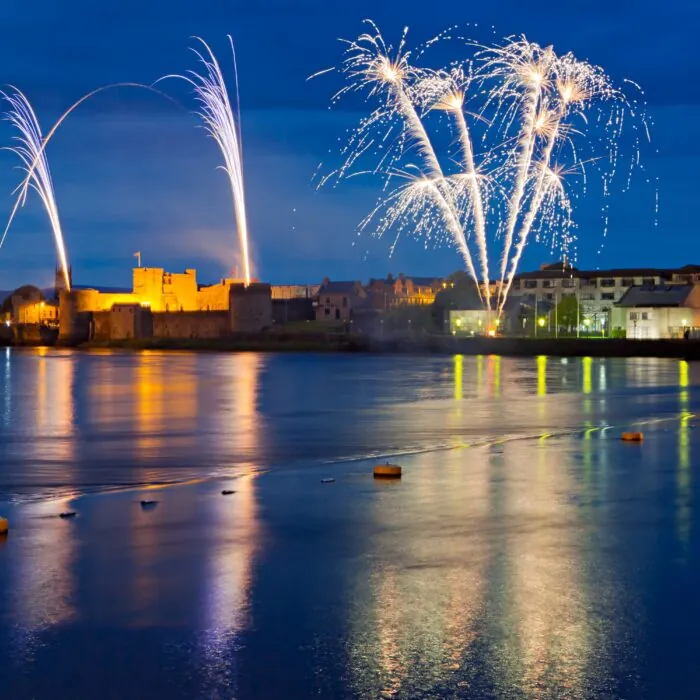
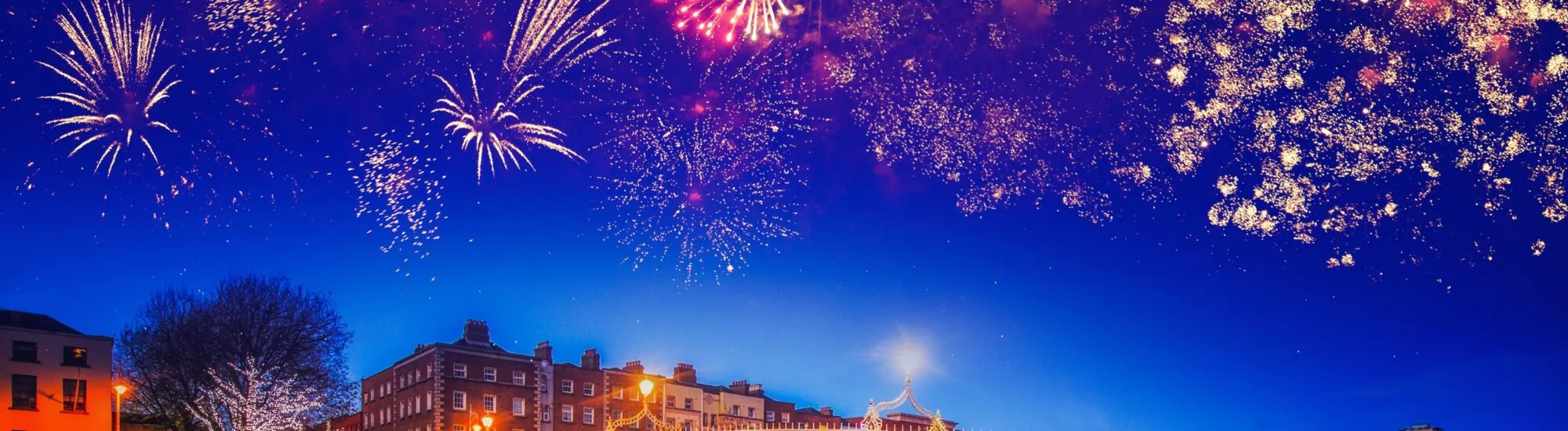
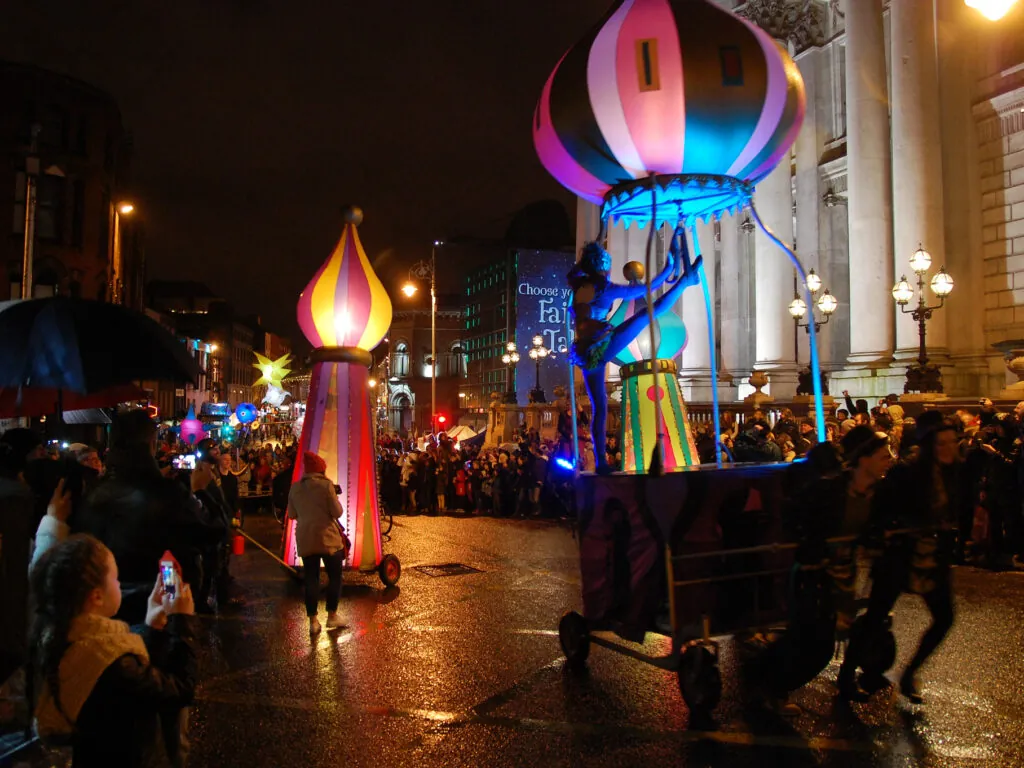
For several years, Dublin has hosted a New Year’s Festival attracting thousands of people from Ireland and beyond. This major event offers open-air concerts, light shows, family activities, and a giant countdown in the heart of the capital.
The festival often spans several days, turning New Year’s Eve into a key cultural and tourist event. The image of Dublin illuminated at midnight has become one of the modern symbols of the celebration in Ireland.
Regional Traditions
From Kerry to Connemara
While Dublin draws attention, rural regions of Ireland also preserve their own traditions. In Kerry, some villages still organize mummers’ plays, popular theatrical performances by costumed locals. In the west, traditional dances (céilís) bring communities together to celebrate the new year.
These local celebrations show that New Year in Ireland is not just about fireworks but remains deeply connected to community culture.
Irish Wishes and Poetry
Between Blessings and Humor
New Year wishes in Ireland are not simple “Happy New Year!” They often take the form of traditional blessings, full of poetry and spirituality.
For example, phrases like:
“May the road rise to meet you, may the wind always be at your back.”
These words, both simple and profound, remind us that the Irish have always blended humor, faith, and poetry in their traditions.
New Year in Ireland Today
Between Tradition and Modernity
Today, New Year in Ireland is a multifaceted celebration. Big cities offer spectacular events, villages maintain local customs, and families continue to share meals and evenings together.
While some old superstitions have faded, the spirit remains: celebrating the end of a cycle together and welcoming the new year with hope and conviviality.


 +
+