The history of Ireland is not limited to invasions, famines, and the quest for independence. It is also marked by profound social struggles, led by peasants, workers, trade unions, and popular movements who sought to improve the living conditions of a people long subjected to political and economic oppression. These battles, sometimes bloody, sometimes peaceful, have shaped Irish identity and continue to inspire contemporary social demands.
The colonial context and social inequalities
Unequal agrarian structures
From the English conquest and especially after the Plantations of the 16th and 17th centuries, Ireland was subjected to a deeply unequal land system. Lands were confiscated from Gaelic Catholic families and redistributed to English and Scottish Protestant settlers.
This reorganization created a hierarchical society: a minority of landowners dominated, while the majority of Irish people, tenants and sharecroppers, lived in extreme precariousness. This economic oppression became the backdrop for social and political revolts in the following centuries.
Peasant rebellions of the 18th century
The Whiteboys and the Defenders
The 18th century was marked by organized peasant movements against injustices in the agrarian system. The Whiteboys, emerging in the 1760s, rose up against rent increases, enclosures, and tithes imposed by the Anglican Church. Their often violent nighttime actions involved destroying fences and properties symbolizing oppression.
At the end of the century, another group, the Defenders, gathered poor Catholics opposing discrimination and violence from Protestant militias. These secret societies laid the foundations for organized resistance, though brutally suppressed by British authorities.
Struggles for civil and religious rights
Catholic emancipation
Protestant domination in Ireland was institutionalized by the Penal Laws, which prohibited Catholics from owning property, holding certain professions, and public offices.
In the 19th century, the movement for Catholic emancipation, led by Daniel O’Connell, mobilized the masses in peaceful gatherings known as “monster meetings.” Thanks to this popular pressure, the Catholic Emancipation Act of 1829 was passed, allowing Catholics to sit in the Westminster Parliament. This episode marked a major victory in the history of Irish social struggles.
The Great Famine and social repercussions
Between tragedy and emigration
The Great Famine (1845–1852) was not only a humanitarian disaster but also a catalyst for social struggles. One million deaths and two million emigrants transformed Irish society.
This tragedy intensified anger against the land system and the passivity of the British government. Organizations like the Land League, founded by Michael Davitt and supported by Charles Stewart Parnell, led the Land War in the 1870s-1880s. This movement demanded land reform, the right to fair rents, and the possibility to buy land.
Through campaigns of boycotts, demonstrations, and political pressure, successive reforms gradually allowed peasants to gain ownership.
The labor movement at the turn of the 20th century
Trade unionism and strikes
The industrialization of cities like Dublin and Belfast gave rise to a combative labor movement. Working conditions, marked by poverty and unsanitary environments, led to union mobilization.
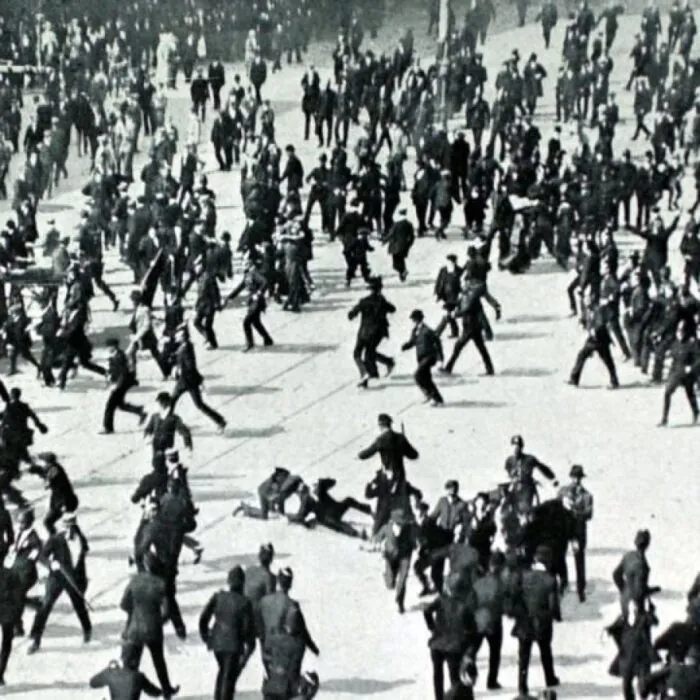
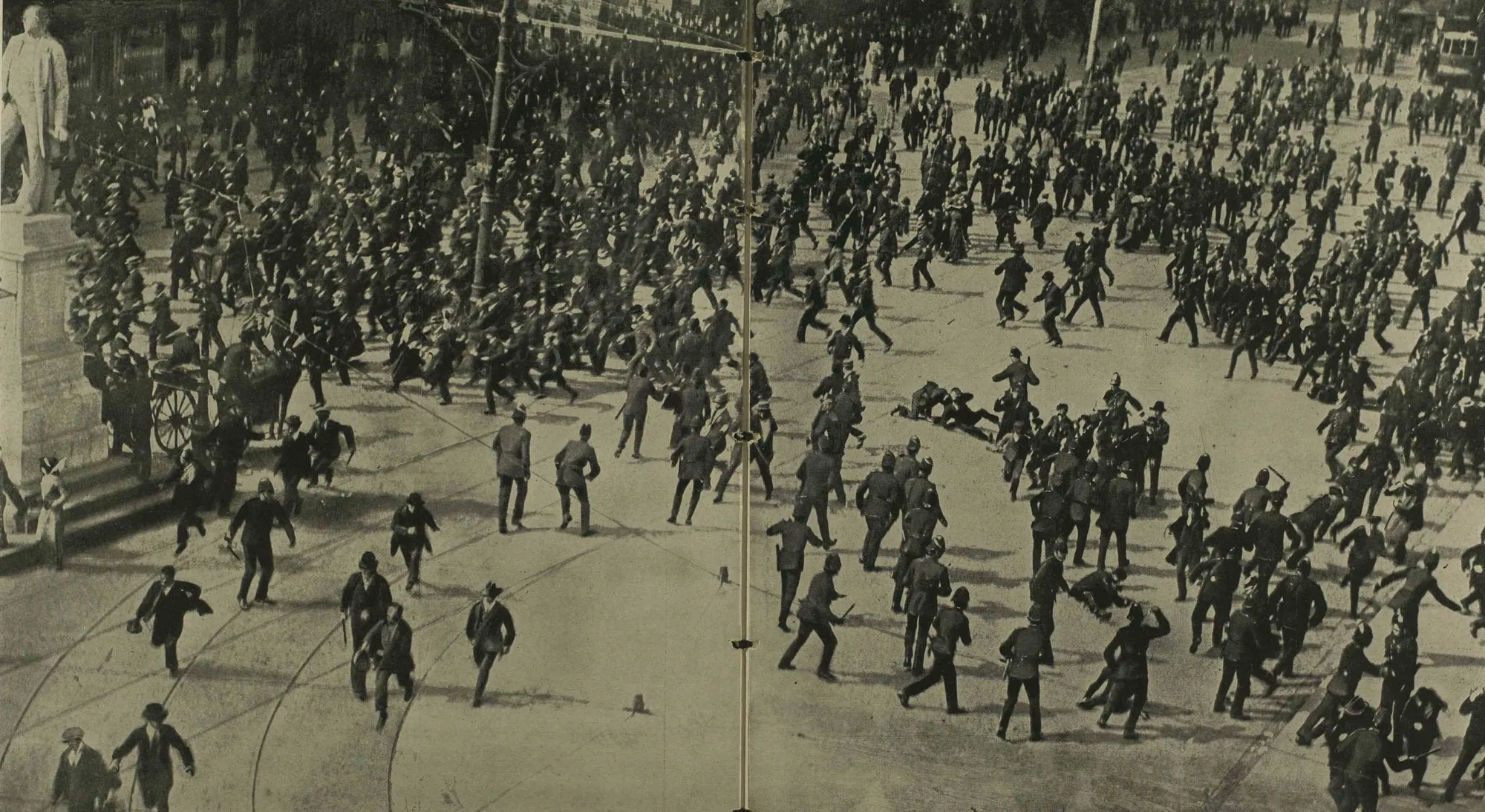
The most emblematic figure of this struggle was James Larkin, founder of the Irish Transport and General Workers’ Union (ITGWU). In 1913, the Dublin lock-out pitted thousands of workers against their employers. It was one of the largest social conflicts in Europe at the time, leaving a lasting mark on the workers’ consciousness in Ireland.
Women in social struggles
From suffragette to activist
Irish women played an essential role in social movements. Activists like Hanna Sheehy-Skeffington were at the forefront of the fight for voting rights.
At the same time, figures like Constance Markievicz participated in labor and political movements, blending social struggle, feminism, and nationalist demands. The conquest of women’s voting rights in 1918 and their participation in revolutionary movements testify to their decisive role.
Social struggles and independence
When social and political intertwine
At the beginning of the 20th century, social and political demands converged. The labor movement and peasant struggles were linked with the fight for independence.
During the War of Independence (1919–1921), social issues did not disappear: they merged with the quest for national sovereignty. The independent Ireland born in 1921 thus inherited both a political struggle and a tradition of social contestation.
Contemporary social struggles
Legacy and new demands
While major land reforms and independence transformed Irish society, social struggles did not stop. In the 20th century, they took other forms: fights for better housing conditions, for equal rights between women and men, for recognition of civil rights in Northern Ireland in the 1960s.
These mobilizations inspired the civil rights movement, whose peaceful marches were brutally repressed, leading to the Troubles. Even today, unions, associations, and collectives continue to play a role in defending social justice in Ireland.


 +
+