Traditional Irish dance is one of the strongest cultural emblems of the Emerald Isle. With its fast steps, lively rhythms, and community roots, it has endured through the centuries while adapting to artistic evolutions. Popularized worldwide by shows like Riverdance and Lord of the Dance, it remains deeply embedded in the daily life of the Irish, from pubs to festivals and international competitions.
The Origins of Irish Dance
Ancient and Community Roots
The history of Irish dance dates back several centuries, even to pre-Christian times. Although written sources are scarce, it is known that the Celts already practiced ritual dances linked to seasonal festivals such as Samhain or Bealtaine.
In the Middle Ages, dances took place during weddings, fairs, and local celebrations. They served both as entertainment and a way to strengthen social bonds. Transmission was mainly oral and by imitation, passed down through generations.
The Different Styles of Irish Dance
Stepdance, Céilí, and Set Dancing
Irish dance is not a homogeneous block: it encompasses several distinct styles.
- Stepdance: the most famous style, made globally known by Riverdance. Dancers keep their upper bodies rigid while executing fast and complex footwork.
- Céilí dancing: a codified group dance practiced at gatherings called céilís. It is danced in circles, squares, or lines, emphasizing conviviality.
- Set dancing: similar to quadrille dances imported in the 19th century but adapted to Irish music. Dancers perform in groups of four couples.
Each style reflects a particular aspect of Irish culture: individual virtuosity for stepdance, collective spirit for céilí, and cultural adaptation for set dancing.
Costumes and Shoes
A Recognizable Aesthetic
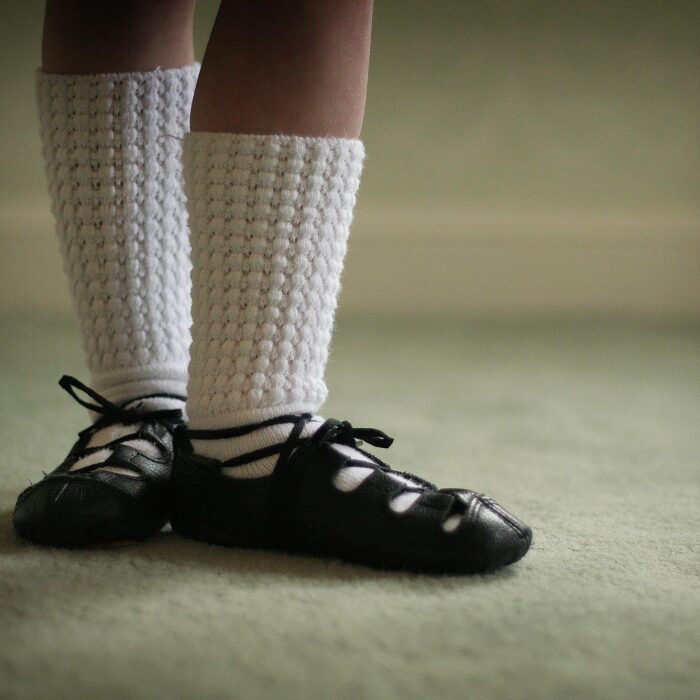
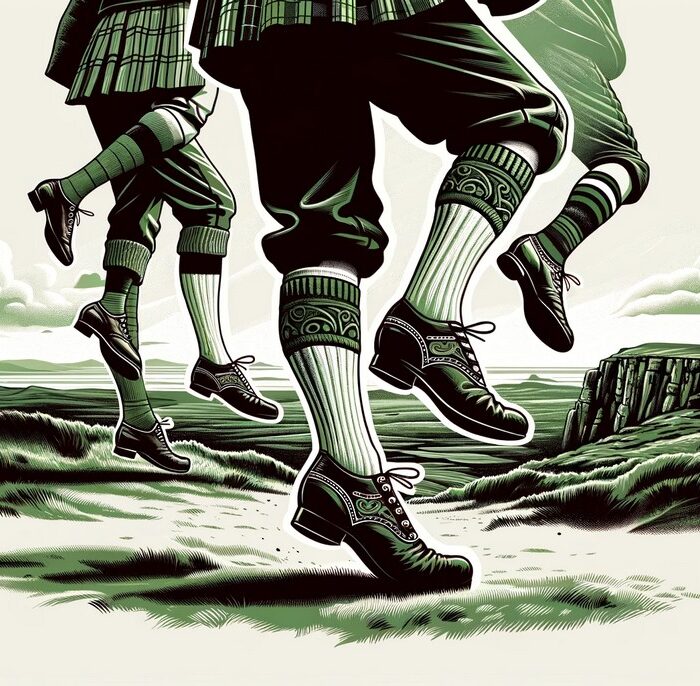
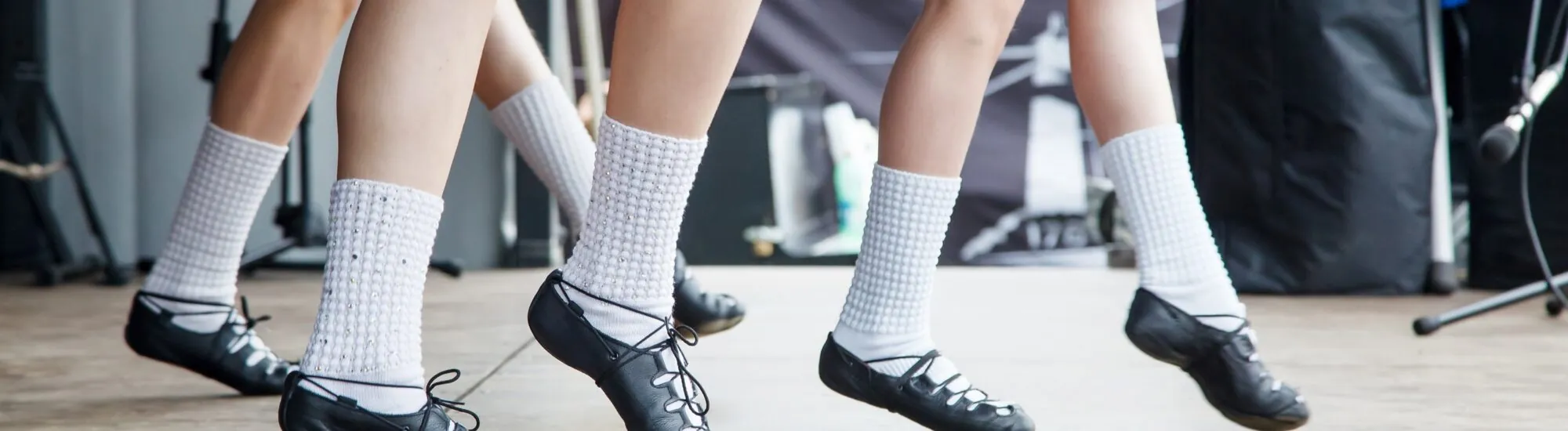
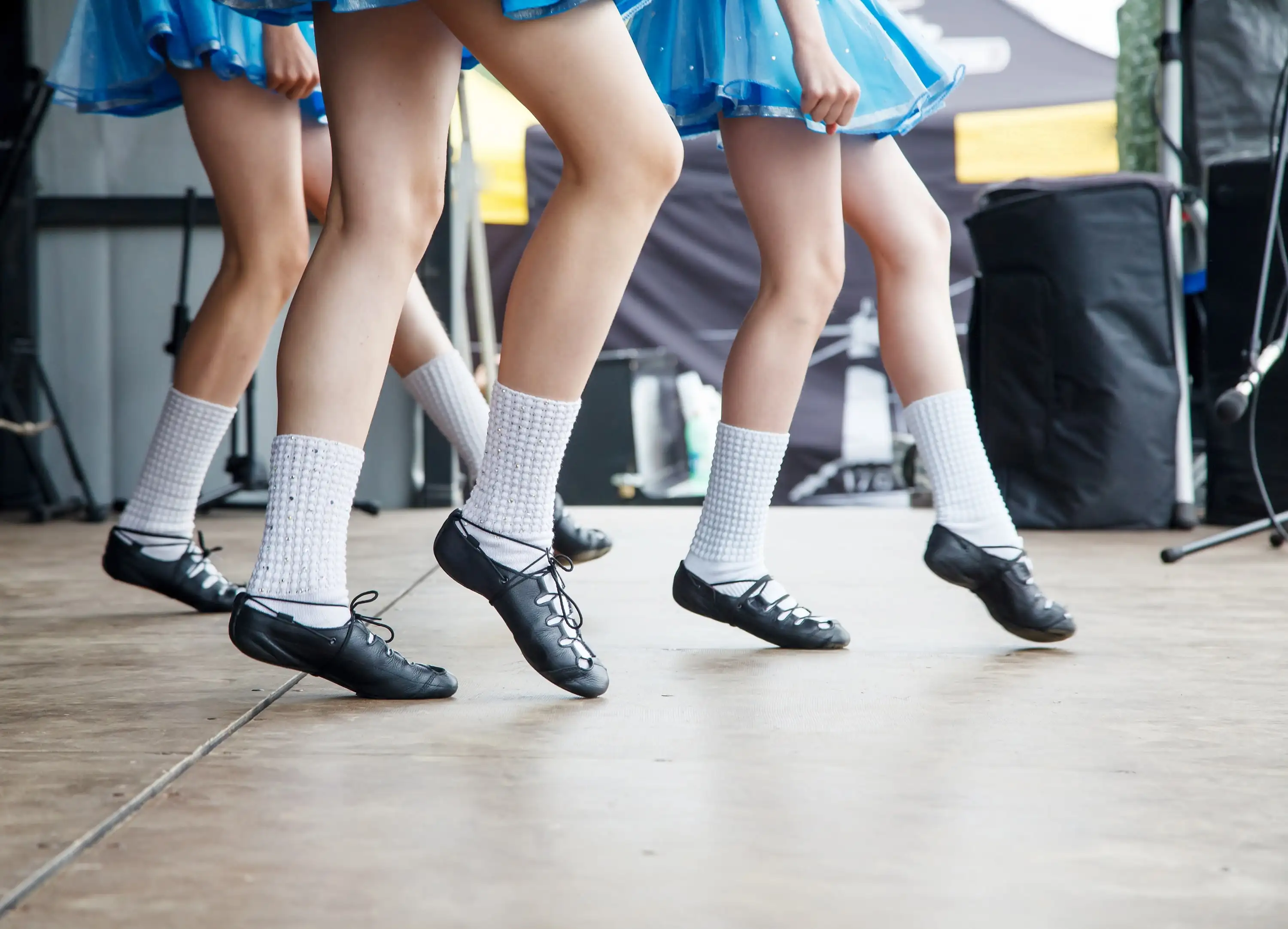
Traditional Irish dance is also distinguished by its colorful costumes and specific shoes.
- The embroidered dresses worn by female dancers, often adorned with Celtic motifs, recall medieval illuminations. Over time, they have become a strong symbol of dance competitions.
- Soft shoes (ghillies) allow for light and fast steps, while hard shoes produce the characteristic rhythmic clicking sound of stepdance.
These visual and auditory elements enhance the spectacle and the identity dimension of the dance.
Music and Dance
An Inseparable Duo
Irish dance is intimately linked to traditional music. Fiddle, flute, accordion, Irish bagpipes (uilleann pipes), and bodhrán (drum) provide the rhythm for the dancers’ steps.
Dances are performed to jigs, reels, hornpipes, or slip jigs, each rhythm imposing a particular dynamic on the movements. This fusion of music and dance creates a contagious energy that charms traditional evenings.
Transmission and Dance Masters
The Importance of Dancing Masters
In the 18th and 19th centuries, itinerant dance masters traveled Ireland to teach steps to rural communities. Their role was essential in codifying styles and preserving complex steps.
These masters helped professionalize dance, gradually transforming it from a popular practice into a recognized, taught, and perfected art.
Dance Competitions
Feiseanna and World Championships
In the 20th century, Irish dance took on a competitive dimension with the organization of Feiseanna (dance and music festivals). These events provide dancers the opportunity to showcase their virtuosity and creativity.
The Oireachtas Rince na Cruinne, or World Irish Dance Championships, are now the major event on the calendar. Dancers from Ireland, as well as the United States, Canada, and Australia participate, demonstrating the internationalization of this art.
Revival Through Modern Shows
Riverdance and Global Conquest
While Irish dance was already alive in Ireland, it experienced a global explosion with Riverdance (1994). The energy of the steps, modern staging, and dancers’ virtuosity captivated millions of spectators.
Other productions like Lord of the Dance and Celtic Tiger, led by Michael Flatley, reinforced this popularity, transforming traditional dance into a global spectacle.
Irish Dance in the Diaspora
A Symbol of Identity
Wherever the Irish diaspora settled, traditional dance followed. In the United States, Canada, and Australia, dance schools continue this heritage. For many descendants of the Irish, learning traditional dance is a way to affirm their cultural identity and connect with their roots.
This international spread explains why Irish dance is today one of the most recognized folk practices worldwide.
Contemporary Irish Dance
Between Tradition and Modernity
Today, traditional Irish dance continues to renew itself. Some dancers incorporate modern influences such as jazz, hip-hop, or contemporary dance, creating innovative hybrids.
At the same time, schools and competitions continue to preserve classical forms, ensuring a balance between respect for tradition and contemporary creativity.


 +
+