Ireland immediately conjures up images of windswept cliffs, verdant landscapes and the mighty Atlantic. In this collective imagination, swimming seems almost incongruous. Yet every year, thousands of visitors to the sandy beaches of Donegal, Connemara or Kerry ask themselves the same question: is it really possible to swim in Ireland? The answer needs to be qualified, as swimming here is very real, but very different from that practised in the Mediterranean or even on the rest of Europe’s Atlantic coast.
The first thing to know is the water temperature. In Ireland, the sea is cold all year round. In summer, between June and August, the water generally reaches 15 to 17°C, with a few rare peaks slightly higher during particularly sunny summers. In spring and autumn, it tends to fall to around 10 to 13°C, while in winter it can be as low as 7 to 9°C.
For a traveler accustomed to warm waters, the entry into the water can be startling. However, this coolness in no way prevents swimming. It simply requires mental and physical adaptation. Many visitors are content to spend just a few minutes in the water, which is more than enough time to feel that famous “invigorating” sensation the Irish often speak of.
Ireland’s climate owes much to the Gulf Stream, the warm ocean current that runs along the west coast of Europe. Without it, the water would be much colder. Thanks to this influence, the sea temperature in Ireland is relatively stable, with no extreme variations. This makes it possible to swim along much of the coastline, especially during the summer months.
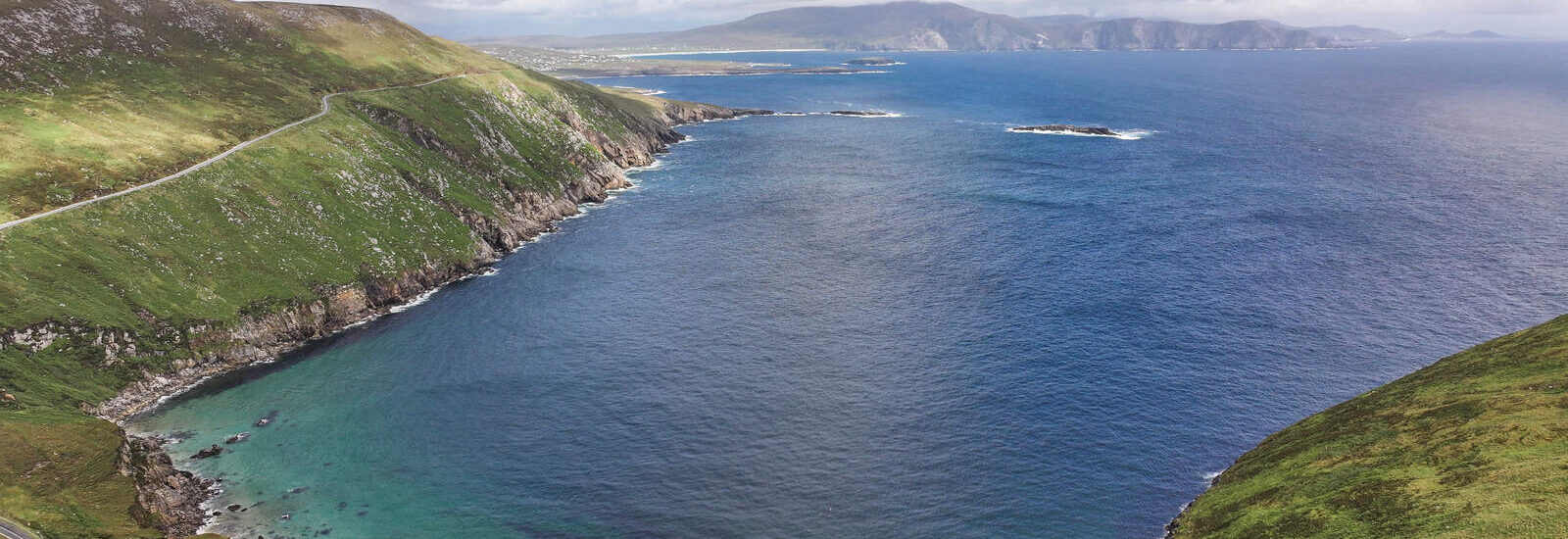
One of Ireland’s great paradoxes is the spectacular beauty of its beaches. White sand, turquoise waters, natural dunes and sheer cliffs make up scenery sometimes compared to the Caribbean or New Zealand. Dog’s Bay, in Connemara, is often cited as one of the most beautiful beaches in Europe, while Keem Bay, on Achill Island, impresses with its almost unreal setting.
In County Kerry, Inch Beach stretches for several kilometers and offers ideal space for walking, swimming or simply contemplating the ocean. Further north, Donegal hides wild beaches such as Portsalon and Marble Hill, where the water is surprisingly clear.
Ireland also stands out for the excellent quality of its bathing water. Every year, many beaches are awarded the Blue Flag label, guaranteeing clean, controlled and environmentally-friendly water. For travellers keen to bathe in a healthy sea, this is an extremely reassuring point.
This quality is due to the low level of industrialization of the coastline, vast protected natural areas and a relatively sparse coastal population. The result: clean, uncrowded beaches, often untouched by mass tourism.
While the water temperature is impressive, the main challenge of swimming in Ireland is safety. The Atlantic is powerful and unpredictable. Some beaches are exposed to strong currents, particularly rip currents, which can surprise even experienced swimmers.
Tides also play an important role. In just a few hours, a beach can change completely, revealing rocks or, on the contrary, considerably reducing the swimming area. It’s essential to get local information and respect the signs.
In summer, many popular beaches are supervised by lifeguards. Bathing areas are clearly marked with flags. Visitors are strongly advised to swim only in these areas, even if the sea seems calm. Irish lifeguards are fully conversant with local conditions, and their recommendations should be followed to the letter.
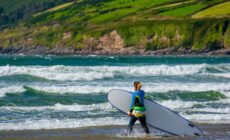
For many swimmers, the ideal solution remains the neoprene wetsuit. They allow you to enjoy the water for longer, limit thermal shock and explore the sea without undue stress. On the west coast, surfers are omnipresent and set the tone: full wetsuits almost all year round, even in summer.
For a traveler, renting or bringing a wetsuit radically transforms the experience. Swimming becomes more comfortable and less intimidating, especially if you want to swim a little longer.
At the same time, there’s a real craze in Ireland for wild swimming, the practice of bathing in a natural environment, often without a wetsuit. Groups meet year-round, even in winter, to dive into the sea, lakes or rivers. The practice is often associated with benefits for mental health and well-being.
For a visitor, it’s best to consider wild swimming as a supervised or one-off experience, to be tested with caution and, ideally, with regulars.
The best period is from June to September. The days are longer, the weather milder and the water slightly cooler. July and August remain the most popular months for swimming, both among tourists and the Irish themselves.
In spring and autumn, bathing becomes more confidential but also more spectacular. The beaches are almost deserted, the light magnificent and the experience much more raw. In winter, swimming is reserved for the more experienced, but is an integral part of the culture of some coastal villages.
Bathing in Ireland is no trivial activity. It’s a highlight of the trip, often short but intensely memorable. The contrast between the coolness of the water and the beauty of the landscape creates a unique sensation, difficult to compare with other destinations.
Even those reluctant to enter the water appreciate the atmosphere of Irish beaches, ideal for walking, contemplation and rejuvenation.
Bathing allows you to discover a more intimate, wilder Ireland, far removed from the usual tourist itineraries. It offers a direct link with nature and with the locals, for whom the sea is part of everyday life, whether for leisure, fishing or local traditions.









 3.32/5 (28 votes)