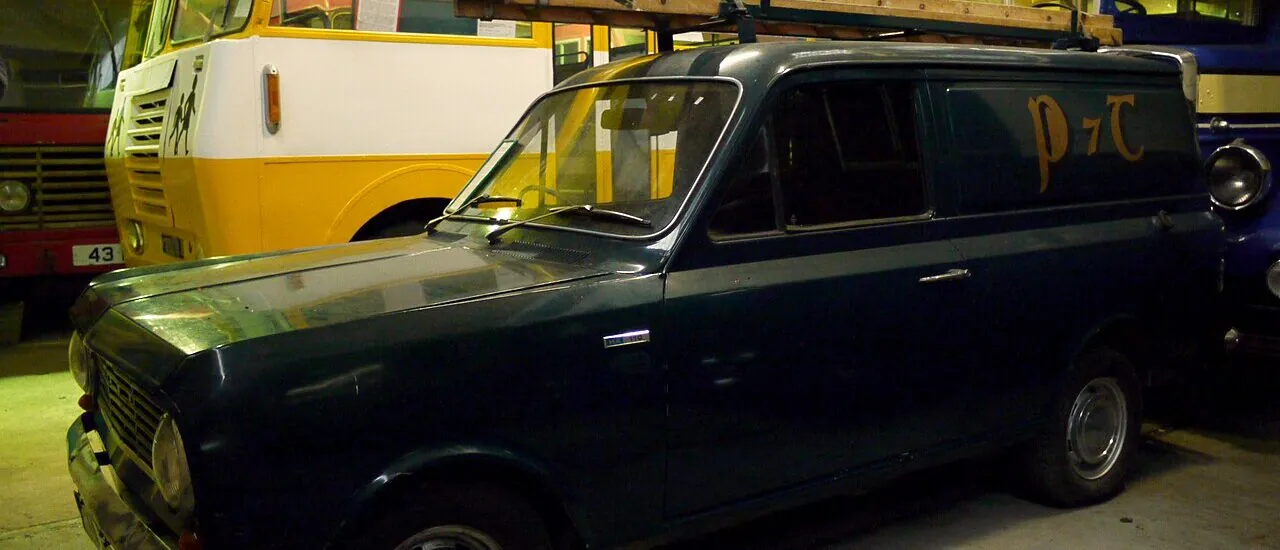
At the foot of Howth Hill, vehicles that once travelled through Dublin and its surrounding area have found a home in a former depot on the castle estate. At the National Transport Museum, a tram recalls the days when the peninsula could be climbed by rail, while a postal van or fire engine tells another story of the road: that of the services on which everyday life depended.
The story began in 1949, with an attempt to preserve three Dublin trams. The operation failed, but the idea of a collection took shape. Volunteers continued the work, extending their search to buses, lorries and service vehicles. The museum was first based in Glen of Imaal, County Wicklow. In 1986, it opened its depot on the grounds of Howth Castle, where the collection is now housed.
This history explains the variety of vehicles brought together here. Some models bear witness to the expertise of manufacturers that have since disappeared. Others have become rare precisely because they were once ordinary. A postal van, for example, might have travelled the same streets for years before being replaced and forgotten.
The Hill of Howth Tramway operated from 1901 to 1959. This electric line enabled travellers to reach the heights of the peninsula. It provides context for the museum’s historic trams and for a feature of today’s landscape. On the Howth cliff loop, some routes follow part of the former track. Seeing the rolling stock and then tracing its route on foot helps explain the line’s role in travel around the village.
The museum divides its collection between passenger, commercial, emergency, military and service vehicles. As you look at the buses, compare the height of the steps, the driver’s position and the shape of the windscreens. These details show how vehicle design evolved alongside changing uses. The vans and lorries, meanwhile, tell the story of the people who carried the post, delivered goods or responded to fires.
The catalogue includes a Guinness Fire Brigade vehicle. A brewery had its own emergency equipment, adapted to the needs of the industrial site. This type of vehicle offers an insight into trades and risks that are less familiar than the brands painted on the bodywork.
The museum makes a good stop for families. Younger visitors can spot the differences between a period bus and the one in service today, while industrial heritage enthusiasts can linger over the service vehicles. The depot setting allows visitors to view the exhibits up close. Part of the collection is on public display, while separate arrangements apply to vehicles kept in storage.
Howth Harbour is a natural continuation of the visit. At the museum, you will find the vehicles that served the streets and businesses. On the quays, you can see another side of Howth’s everyday work: the activity that continues around the fishing boats.
Want to extend your visit without having to rush around? Here are a few well-located places to stay near the must-see attractions.
Essential information to help you plan your visit, including key landmarks, access information, and booking options.
Heritage Depot, Castle Demesne, D13 NF86, Howth, County Dublin, Republic of Ireland, Tourist sites in Ireland
53.38681, -6.08104
Saturday, Sunday and public holidays from 2 pm to 5 pm, according to the museum.
Check the opening hours and admission requirements before you leave, especially during peak season or on Irish public holidays.
Adult: €5.50. Child, senior or student: €4. Family ticket: €12.