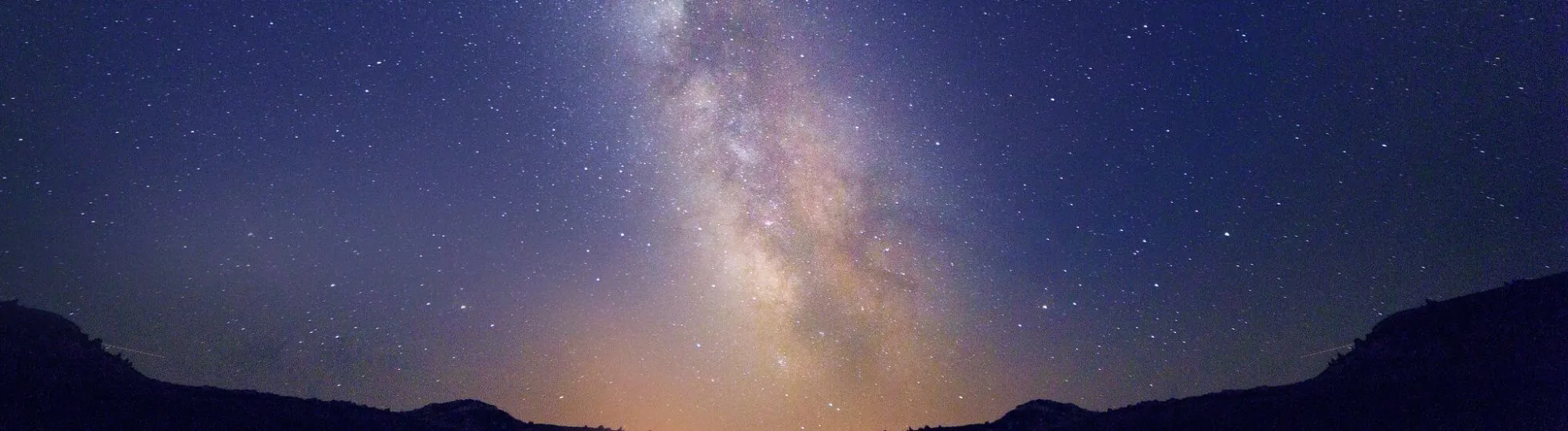
In County Mayo, when the clouds part and night falls, the landscape takes on a new dimension. Above the bogs and mountains of Wild Nephin, the stars reclaim a place often lost to urban lighting. Welcome to Mayo Dark Sky Park, an area of around 150 km² dedicated to protecting the night sky. Here, the experience begins simply: stop, let your eyes adjust to the darkness and look up.
Recognised in 2016 as Ireland’s first International Dark Sky Park, with the “Gold Tier” designation then awarded by the organisation now known as DarkSky International, the site offers the chance to discover the sky in an environment little affected by light pollution. It makes for a lovely outing in Mayo, provided two essential ingredients come together: favourable weather and a little patience.
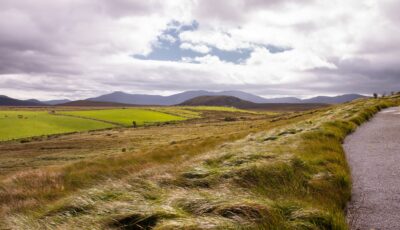
Ballycroy National Park – © Valentina
Mayo Dark Sky Park lies within Wild Nephin National Park, formerly known as Ballycroy National Park. Between the Nephin Beg mountains and the Atlantic coast, vast, sparsely lit expanses provide an ideal setting for stargazing.
Its designation warrants a clarification: it is an International Dark Sky Park, a category distinct from that of International Dark Sky Reserves. This recognition rewards both the quality of the night sky and the efforts made to preserve darkness, raise public awareness and limit the effects of artificial lighting.
This initiative is not solely for astronomy enthusiasts. Protecting the night also helps to respect wildlife rhythms and natural habitats. For visitors, this means following a few simple guidelines: use lighting only when necessary, point your torch towards the ground and avoid shining it at other observers.
Under clear skies, constellations become easier to make out and fainter stars gradually emerge. Depending on the season, the time and the brightness of the Moon, you may be able to spot the Milky Way, certain planets or a passing meteor.
The spectacle is never guaranteed, however. Cloud cover, a full Moon or mist can obscure much of the sky, even at a designated site. There is no point in counting the stars either: their visibility depends on the conditions and on how well your eyes have adapted to the darkness.
Do not expect to see the colours and details found in a long-exposure astronomical photograph. To the naked eye, the Milky Way appears more like a pale, delicately clouded band. That gradual discovery is precisely part of the pleasure: the longer you look, the more the sky seems to fill up.
The Ballycroy Visitor Centre is one of the park’s three main viewing points. Its car park and developed areas make it possible to plan a first evening without venturing into an isolated area. The Tóchar Daithí Bán trail also offers an opportunity for a walk, preferably explored before nightfall.
Be sure to distinguish between outdoor access and the building’s facilities: being able to come and observe does not mean that the exhibition, toilets or visitor reception will be open in the evening. Check the park information and plan your outing accordingly.
The Claggan Mountain Boardwalk allows you to observe from the car park area or continue your exploration along the boardwalk beside Bellacragher Bay. The sky has a fine foreground here: a stretch of water, dark slopes and light gradually fading away.
The site is not artificially lit. Arrive before dark to identify access points and stay on the designated paths. You do not need to walk the entire trail to enjoy the evening: a safe, comfortable spot is better than a long, improvised walk in the dark.
In the Letterkeen area, the Brogan Carroll Bothy is described by the park as the darkest and most secluded of its three main sites accessible by car. You may also come across its former name, Robert Lloyd Praeger Centre, on some signs.
This option calls for more preparation: identify the route, plan your return journey and do not rely on evening services being available on site. The presence of hiking trailheads should not encourage you to set off on an unfamiliar route after nightfall.
Check the cloud cover first, then the Moon’s timetable. To look for the faintest stars and the Milky Way, choose a time when the Moon sheds little light on the sky, or a period when it has set. A full-Moon night can be interesting for observing the landscape and the Moon itself, but it makes fainter celestial objects harder to see.
The long autumn and winter nights allow you to start earlier in the evening. In summer, you will need to wait longer for the sky to become sufficiently dark. In every case, remain flexible: several nights in the area increase your chances of finding a clear spell, without offering any guarantee.
No: naked-eye observation is enough for a first introduction. A star chart or an app set to the correct date can help you identify a few constellations. Check it briefly, with the brightness turned down as low as possible, then put the screen away to readjust to the darkness.
Allow your eyes around 20 to 30 minutes to adapt. A pair of binoculars can then enrich the experience, but is not essential. With children, choose a simple goal: spot a constellation, identify a planet when it is visible or watch the sky’s apparent movement over the course of the evening.
Dress more warmly than you would for a walk: standing still quickly makes you cold. Bring several layers, a hat, suitable footwear and protection from wind and rain. A folding chair, a blanket and a hot drink can make the wait much more enjoyable.
Bring a torch to move around safely, ideally with a low-intensity red light for observation periods. Nevertheless, use the light you need to see where you are stepping: protecting the sky does not mean walking blind. Avoid flashes and do not point your beam at other visitors.
Familiarise yourself with your chosen spot during daylight, stay close to known access points and plan your journey back. Respect local residents, parking areas and any temporary restrictions. If you bring a snack, take all your rubbish away with you; do not light a fire or barbecue for the evening.
To choose your starting point, find access details and up-to-date information on the three official viewing sites at Mayo Dark Sky Park. Events may also be offered by the park team: check their calendar and booking arrangements before your stay.
Essential information to help you plan your visit, including key landmarks, access information, and booking options.
54.024377, -9.823543
The three main viewing sites at Mayo Dark Sky Park are accessible throughout the year, subject to weather conditions and any temporary restrictions. To admire the stars, come after nightfall and choose a clear night.
Access to outdoor areas does not mean that visitor buildings and toilets are open in the evening. Ballycroy Visitor Centre has its own seasonal opening hours, which should be checked before travelling.
Astronomy events follow a separate timetable and may require booking. Check the park’s official information before your visit.
Check the opening hours and admission requirements before you leave, especially during peak season or on Irish public holidays.
Access to the national park and independent stargazing are free. No ticket is required to come and admire the stars from the viewing points, subject to current access conditions.
For an event or guided outing, check arrangements with the organiser: booking, availability and any charge are specific to each activity.