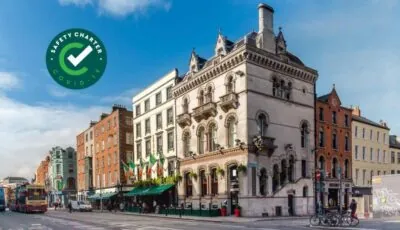


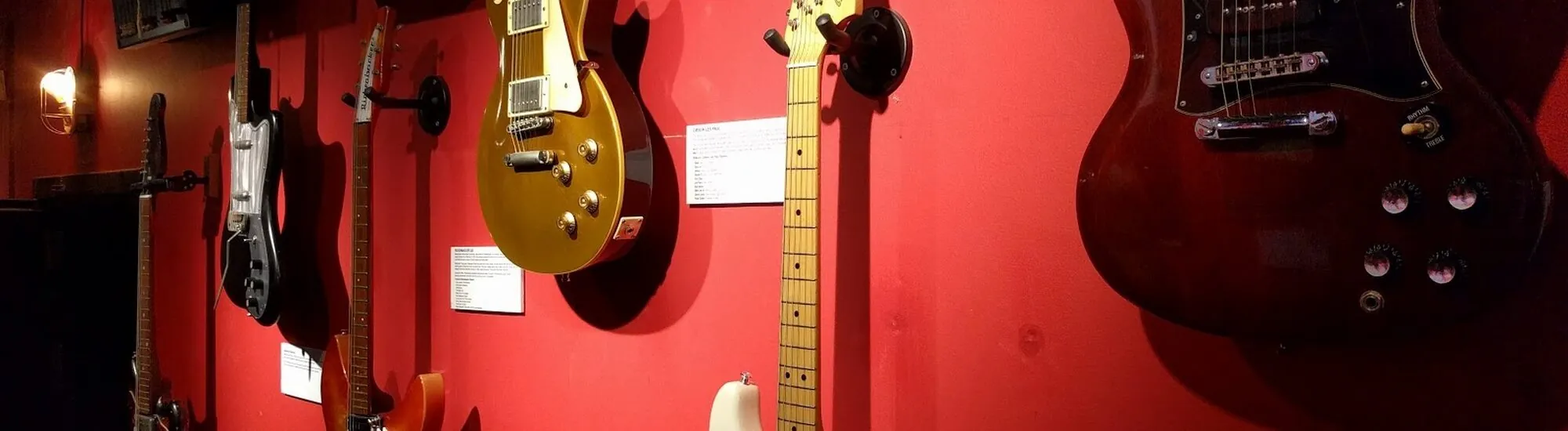
In the heart of Temple Bar, behind the lively façades of Dublin’s cultural quarter, a door leads behind the scenes of Irish rock. The Irish Rock ’N’ Roll Museum Experience is not a traditional music museum: it occupies a working complex comprising rehearsal studios, recording spaces and a real concert venue.
U2, Thin Lizzy, Rory Gallagher, Sinéad O’Connor, The Pogues, The Cranberries and Hozier feature throughout a guided tour where instruments, photographs and stage memorabilia sit alongside spaces still used by musicians. It is a living immersion in the history of Irish rock in Dublin, from the 1970s to contemporary artists.
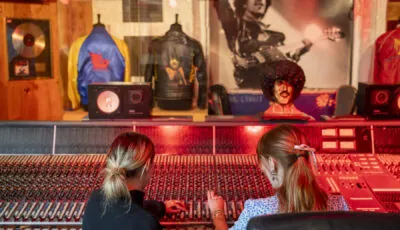
Irish Rock ’N’ Roll Museum Experience – © Emilien Durand
The Irish Rock ’N’ Roll Museum Experience is on Curved Street, in the Temple Bar district. Its entrance shares a building with the Button Factory, a concert venue well known on Dublin’s music scene.
Opened in 2015, the museum traces the development of Irish rock since the 1970s. The term ‘rock’ is used broadly here: the route covers everything from Thin Lizzy’s hard rock and The Undertones’ punk to the pop of The Cranberries, the music of U2 and the ballads of Sinéad O’Connor.
The visit is not simply a series of display cases. It takes visitors through a music complex where artists still rehearse, perform and record. The tour may therefore vary slightly when certain rooms are in use.
The museum cannot be visited independently. All tours are led by a guide, usually in a small group. This arrangement is due to the presence of studios and professional spaces that remain in use.
The guide recounts the great moments of Irish rock, as well as lesser-known stories linking artists to the studios, rehearsal rooms and streets of Temple Bar. The tone is lively, accessible and often touched with humour.
The tour generally lasts between 60 and 75 minutes. It is suited both to enthusiasts and to travellers simply curious to understand why such a small island has produced so many musicians recognised around the world.
Before Irish rock took off, showbands filled the country’s dance halls. These groups performed the hits of the day and travelled across Ireland, giving many musicians their first professional experience.
In the late 1960s and early 1970s, a more distinctive scene emerged. Rory Gallagher established an electrifying brand of blues rock, while Phil Lynott and Thin Lizzy gave Irish rock international visibility. Their success proved that a band formed in Dublin could win over British, European and American stages.
The following decades saw the emergence of U2, The Boomtown Rats, The Undertones, Sinéad O’Connor, The Pogues and then The Cranberries. Each developed a distinctive identity, sometimes shaped by politics, the island’s history, emigration or social tensions.
The museum carries this story through to the contemporary scene, represented in particular by Hozier, Fontaines D.C., Inhaler, Dermot Kennedy and artists who took their first steps in Dublin’s smaller venues.
Part of the museum pays tribute to U2. The band formed in 1976 after Larry Mullen Jr. placed an advert on the noticeboard at Mount Temple Comprehensive School. Paul Hewson, David Evans and Adam Clayton joined him before adopting the stage names Bono and The Edge.
The tour looks back at their beginnings in small Dublin venues, their international rise and their enduring connection with the capital. Posters, photographs, objects and anecdotes recall a time when the four musicians still played to audiences of just a few dozen people.
The museum does not hold U2’s official archives and does not claim to provide an exhaustive account of the band’s career. Instead, it places their beginnings in the context of the Dublin music scene from which they emerged.
The section devoted to Thin Lizzy is one of the highlights of the visit. Housed in Apollo Studio, it brings together instruments, equipment, photographs and various items of memorabilia connected with the band.
Born in England and raised in Dublin, Phil Lynott became one of the first major Black figures in European rock. A singer, bassist and songwriter, he blended guitar riffs, urban poetry and references to Irish history.
With songs such as Whiskey in the Jar, The Boys Are Back in Town and Dancing in the Moonlight, Thin Lizzy left a lasting mark on the history of hard rock. Phil Lynott remains a figure deeply associated with Dublin, where a statue on Harry Street pays tribute to him.
The museum also gives space to Rory Gallagher, the virtuoso guitarist born in Ballyshannon and raised in Cork. Known for his intense concerts and his famous Fender Stratocaster worn down by years on the road, he remains one of Ireland’s most respected musicians.
Sinéad O’Connor is represented through a career in which music was never separate from personal convictions. Her voice, her rendition of Nothing Compares 2 U and her public stances made her an artist as admired as she was controversial.
With Shane MacGowan, The Pogues combined punk energy with the instruments and stories of traditional Irish music. Their work evokes pubs, emigration, London, Dublin and the margins of society in a poetic language that became instantly recognisable.
Temple Lane Studios has welcomed musicians since 1984. These spaces are not a reconstruction: they continue to be used for recordings and professional projects.
Over the years, artists such as Rihanna, The Script, Bell X1, Gavin James, James Vincent McMorrow, Glen Hansard and Kodaline have worked there. This ongoing activity gives the museum a different atmosphere from that of a static collection.
Visitors can see recording equipment, an imposing mixing desk and the changes brought about by the shift from analogue to digital. Depending on the day’s activity, access to certain areas may be adjusted to respect the artists’ work.
The Jam Room offers one of the most entertaining parts of the tour. In a real rehearsal space, visitors can pick up a guitar, sit behind a drum kit or take hold of a microphone.
There is no need to know how to play. The aim is above all to understand how a rehearsal is organised and briefly experience the energy of a band. More reserved visitors can simply watch while amateur musicians try out a few chords.
This interactive element makes the visit especially enjoyable with teenagers. It also serves as a reminder that every concert is the result of hours of rehearsals, adjustments and collective work.
The tour also goes behind the scenes of the Button Factory. This Temple Bar venue hosts concerts, shows and various cultural events.
Visitors can discover the spaces reserved for artists, the dressing room and the stage, when the programme and rehearsals allow. The guide also shares some unusual requests made by musicians in their riders, the documents setting out technical requirements and hospitality arrangements before a concert.
This part of the visit offers a look behind the scenes: instrument preparation, soundchecks, the wait before going on stage, and the relationship between artists and technicians.
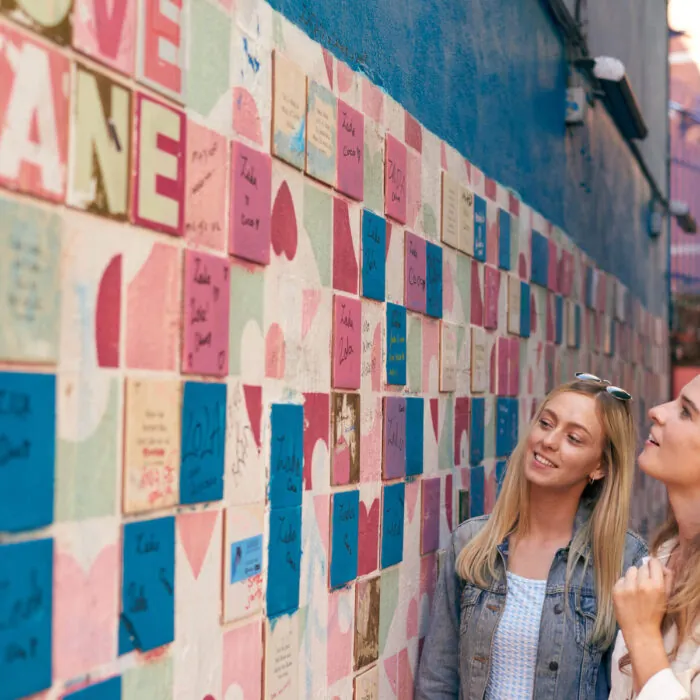
Right next to the museum, the Wall of Fame pays tribute to several major figures in Irish music. Large portraits displayed on the façade feature U2, Phil Lynott, Rory Gallagher, Sinéad O’Connor, Shane MacGowan, Bob Geldof, The Undertones and Luke Kelly.
This wall has become one of Temple Bar’s most photographed backdrops. It is not an official ranking, but a visual tribute to artists who have contributed to Ireland’s musical influence.
The Wall of Fame can be viewed free of charge from the street, independently of a visit to the museum.
The Irish Rock ’N’ Roll Museum is primarily aimed at music lovers, but no particular knowledge is required. The guides’ stories, the variety of spaces and the Jam Room make the tour accessible to a fairly broad audience.
However, the museum does not recommend the visit for children under 5 and generally advises a minimum age of 7. The route includes stairs, passages between several buildings and moments when visitors need to pay attention to the guide’s explanations.
Music-loving teenagers will particularly enjoy the instruments, the rehearsal room and access behind the scenes of a real concert venue.
Unfortunately, the museum is not accessible to wheelchair users. The route passes through several levels and old buildings that do not have the facilities required for step-free access.
Visitors with mobility difficulties are invited to contact the venue directly before booking. The team can outline the constraints of the route and determine whether a partial adaptation is possible.
Groups generally consist of around twelve participants, with a maximum capacity of approximately 15 people. This small-group format encourages interaction with the guide, but makes booking worthwhile during busy periods.
Entry is organised through guided tours. Tickets without a booking are accepted when spaces remain, but online purchase is recommended at weekends, during holidays and in high season.
Arrive around ten minutes before departure. Reception is at the entrance to the Button Factory on Curved Street. This small pedestrian lane can be reached from Temple Lane, just a few steps from Temple Bar Square.
The tour is mainly offered in English. Travellers wishing to take it in another language should check the available options with the museum before their visit.
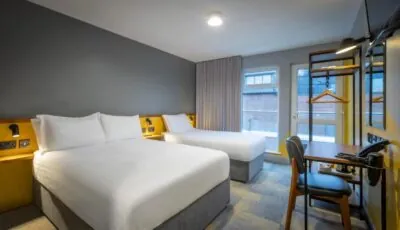
Want to extend your visit without having to rush around? Here are a few well-located places to stay near the must-see attractions.
Essential information to help you plan your visit, including key landmarks, access information, and booking options.
Curved Street, Temple Bar, Temple Bar
53.344958, -6.264618
1 heure
Prices vary according to the date, weekend and seasonal visitor numbers. Entry is also included in some Dublin Pass packages. Check the price for your chosen time slot on the official Irish Rock ’N’ Roll Museum page.
Check the opening hours and admission requirements before you leave, especially during peak season or on Irish public holidays.
Prices vary according to the date, weekend and seasonal visitor numbers. Entry is also included in some Dublin Pass packages. Check the price for your chosen time slot on the official Irish Rock ’N’ Roll Museum page.
Compare tickets, guided tours, and excursions available through our partner platforms.