In a quiet residential area of south Belfast lies a building that would be easy to overlook. Yet behind its 1.5-metre-thick concrete walls is a former bunker designed to coordinate Northern Ireland’s response to a nuclear attack. Usually inaccessible to the general public, this Cold War relic will exceptionally open its doors on 12 and 13 September 2026.
The opportunity is rare. The Northern Ireland Regional War Rooms are among hundreds of sites opening free of charge for the European Heritage Open Days. Visitors will be able to enter the bunker alongside specialists from the Historic Environment Division and discover a site built in the early 1950s, when the threat of nuclear conflict was beginning to reshape British civil defence plans.
A nuclear bunker hidden in the heart of Belfast
A building designed at the start of the Cold War
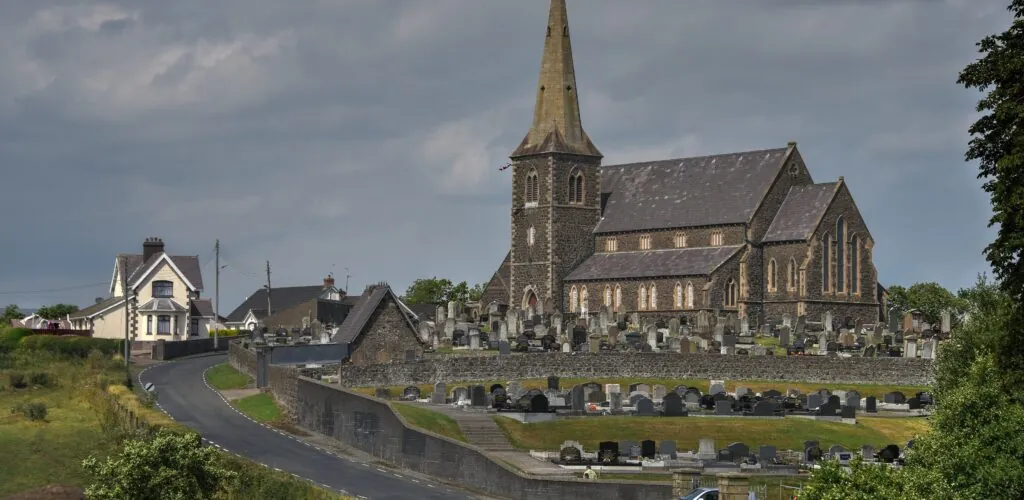
The bunker is located at Mount Eden Park in south Belfast. Its present-day surroundings stand in striking contrast to the purpose for which it was conceived.
The building was constructed in 1952, at a time of particularly high international tension. The Second World War had ended only a few years earlier, but the confrontation between the Western bloc and the Soviet Union now raised a new threat: that of a nuclear attack.
The United Kingdom then began building a network of regional centres intended, in theory, to maintain an organised civil defence response in the event of a disaster.
The Belfast facility was known as the Northern Ireland Regional War Room.
It was one of only 13 such centres in the United Kingdom
A command centre intended to operate after an attack
The Belfast site was not simply a shelter intended to protect a handful of residents.
It formed part of a network of just 13 Regional War Rooms built across the United Kingdom. Their role was intended to be far more strategic: ensuring regional coordination of civil defence in the event of a major attack.
In Belfast, the bunker was designed to accommodate around 45 people, including emergency service officials.
From inside the building, these teams would theoretically have coordinated rescue operations and helped maintain essential functions in a Northern Ireland hit by a nuclear attack.
A mission that now gives the rooms visitors will be able to explore a particularly powerful dimension.
Concrete walls 1.5 metres thick
The building has virtually no openings to the outside
To fulfil its purpose, the bunker was built to radically different requirements from those of a conventional building.
Its reinforced concrete exterior walls are around 1.5 metres thick, and the building has no windows.
Inside, various technical installations kept the site operational. The bunker had, in particular, a ventilation system and a diesel generator.
The aim was to enable those inside to continue working in a protected environment while ordinary infrastructure may have been severely damaged.
This defensive architecture also explains why the building has survived to the present day in a condition that allows for its preservation.
The bunker was ultimately never used in the event of a nuclear attack
Advances in nuclear weapons quickly made it obsolete
In an irony of history, the Northern Ireland Regional War Rooms never had to fulfil the mission for which they were built.
Soon after their completion, the extremely rapid development of nuclear weapons profoundly changed military scenarios. Destructive capabilities increased to the point of calling into question the effectiveness of regional centres such as the one in Belfast.
The bunker nevertheless continued to be used for various civil defence activities, including exercises.
It would then have several further lives, far removed from the prospect of nuclear war.
From nuclear command centre to archive repository
The bunker now protects Northern Ireland’s heritage
After the Cold War, the building gradually found new uses. It was used in particular by the Courts Service for storing files before becoming vacant in 2018.
Rather than abandon this highly unusual witness to contemporary history, the Northern Ireland authorities decided to give it a new purpose.
The bunker was restored and adapted to house the Historic Environment Record of Northern Ireland.
These archives bring together a considerable amount of information on Northern Ireland’s heritage: paper documents, photographs, maps, archaeological data, and information on historic buildings and monuments.
The choice of bunker is far from incidental. Its extremely thick walls, lack of windows and stable internal environment provide particularly favourable conditions for preserving documents.
A building once intended to preserve the functioning of the state after a disaster now serves to preserve the memory of Northern Ireland’s heritage.
More than 4,500 military sites have been recorded in Northern Ireland
The Cold War is now part of the heritage
The preservation of Belfast’s bunker forms part of a wider approach to modern military heritage.
Thousands of defence-related sites have been identified across Northern Ireland. Work carried out by heritage specialists has included mapping more than 4,500 military or defensive sites.
Pillboxes, military grounds, structures dating from the world wars and Cold War installations now stand as witnesses to a relatively recent history, though many of these remains are gradually disappearing.
The Regional War Rooms are of particular interest in this respect. The Belfast building is now listed Grade B1, in recognition of its architectural and historical value.
An exceptional opening on 12 and 13 September 2026
Visits will be organised during the European Heritage Open Days
It is precisely this new life that the public will be able to discover during the European Heritage Open Days 2026.
The event takes place on Saturday 12 and Sunday 13 September across Northern Ireland. More than 500 sites and events are taking part in this major heritage initiative this year.
The theme selected for 2026, Heritage at Risk: Revive, Resist, Reimagine, is particularly well suited to the bunker’s story: a building that became obsolete, stood vacant, then was restored and repurposed rather than demolished.
At Mount Eden Park, visitors will be accompanied by members of the Historic Environment Division. The tours will offer the chance to see the bunker’s original features while discovering its role during the Cold War and its new function as an archive centre.
How can you visit Belfast’s nuclear bunker?
Booking is essential
The bunker opening is organised as part of the European Heritage Open Days and admission is free.
However, it is not possible simply to turn up at the entrance. Visits to the bunker are available only on guided time slots, and advance booking is essential.
Tours are scheduled for 10am, 11am, 12pm, 2pm and 3pm.
The site will be open from 10am to 4.30pm on Saturday 12 and Sunday 13 September 2026.
Given the exceptional nature of this opening and the necessarily limited capacity of a former bunker, it is best to book quickly if you wish to see inside.
A lesser-known side of Belfast’s history
Far from the Northern Irish capital’s usual tourist landmarks
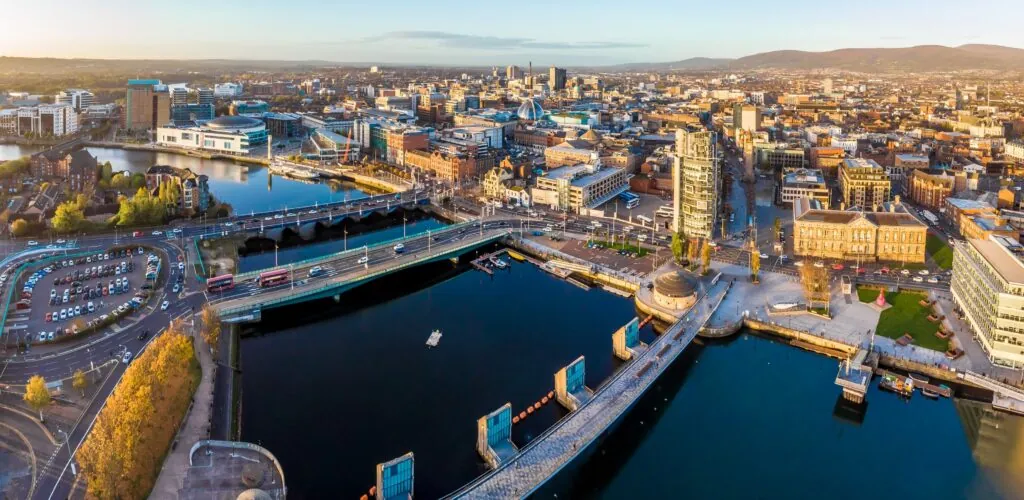
Belfast has many places that tell the story of its industrial, maritime and political past. Cold War remains, however, are much less visible.
The Northern Ireland Regional War Rooms offer the chance to discover another history: that of a period when the authorities considered, in very concrete terms, the consequences of a nuclear attack on the city and prepared infrastructure capable, at least in theory, of functioning after a disaster.
More than 70 years after its construction, the bunker fortunately never had to face the scenario for which it was designed.
Its repurposing now offers a remarkable reversal: a place built out of fear of destruction is now used to protect Northern Ireland’s history and heritage.
Visiting Belfast’s nuclear bunker
Dates, times and booking
- Location: Northern Ireland Regional War Rooms, 48 Mount Eden Park, Belfast BT9 6RB.
- Dates: Saturday 12 and Sunday 13 September 2026.
- Opening hours: 10am to 4.30pm.
- Guided tours: 10am, 11am, 12pm, 2pm and 3pm.
- Price: free as part of the European Heritage Open Days.
- Booking: essential.
The opening is exceptional and forms part of the European Heritage Open Days programme. It is recommended that you check the availability of time slots before planning your visit.