

Forget wings, glitter and helpful fairy godmothers. In Irish folklore, the Aos Sí belonged to an Otherworld that demanded respect. Around Samhain, when winter began and Oíche Shamhna brought a night dense with supernatural belief, meeting the Fair Folk was not considered charming. It could be dangerous.
Irish folklore records people avoiding fairy forts, mounds and trees, limiting night travel and protecting homes, livestock and families. The fear was less about a tiny creature hiding behind a flower than about accidentally crossing a boundary that humans were not supposed to cross.
Aos Sí refers to supernatural beings associated with the sídhe, a word linked with mounds and Otherworld dwellings. Irish tradition presents them as powerful and unpredictable: capable of favour, beauty and generosity, but also punishment when humans interfere with their places or customs.
Calling them “fairies” is convenient, yet it can flatten a much richer tradition. These beings belong to a worldview in which particular hills, ringforts, ancient places and trees could carry supernatural significance.
Samhain traditionally marked the beginning of winter. The National Museum of Ireland identifies 1 November as a major seasonal marker, with festivities concentrated on the previous evening, Oíche Shamhna.
Folklore collected around Ireland describes that night as unusually open to supernatural activity. Accounts mention the dead returning, spirits travelling and fairies roaming. A Schools’ Collection record from County Cavan explicitly recalls the belief that fairies came out on Halloween night.
The danger was rooted in unpredictability. Stories tell of people being led astray, drawn into fairy gatherings, afflicted by misfortune or carried away. Changeling traditions even imagined a human — often a child — being taken and replaced by a supernatural substitute.
These stories are folklore, not evidence of supernatural events. Historically, however, they mattered because they helped communities interpret unexplained illness, disappearance, accidents and bad luck.
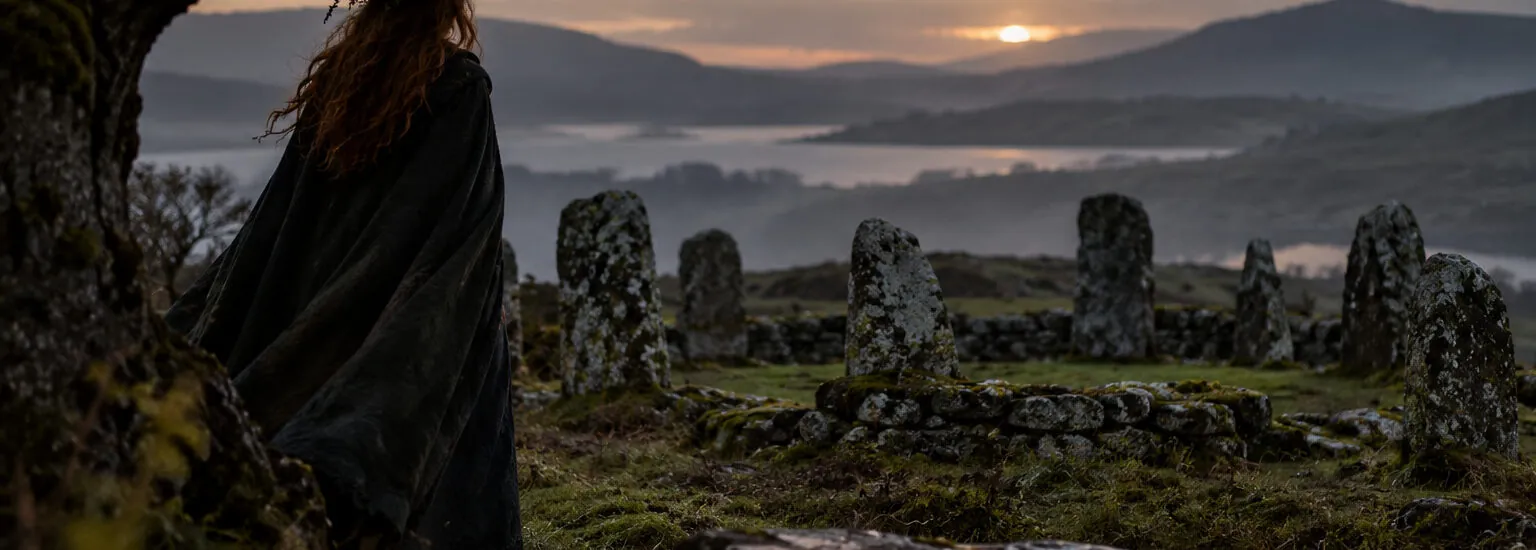
The landscape itself could become part of the belief system. Ringforts, mounds, solitary trees and ancient sites were sometimes associated with the Fair Folk. The National Museum of Ireland notes that fairy mounds, trees and forts were avoided at Halloween.
Damaging a significant tree, disturbing a fort or taking the wrong route through a reputed fairy place could therefore be seen as an offence. Before electric lighting, an isolated mound on a dark Irish road probably did not need much supernatural marketing.
Irish stories describe fairy gatherings and movements around Halloween. One account collected in County Cavan tells of a man encountering a ring of dancing fairies and being drawn among them.
Such tales help explain the caution surrounding solitary travel. The risk was not merely “seeing a fairy”; it was entering their path, interrupting a procession or being pulled into a place governed by different rules.
Practices differed by region and period. The National Museum of Ireland records holy water sprinkled over people, thresholds, animals and farms, as well as protective crosses made for the house and the coming winter.
Some traditions advised night travellers to carry iron or steel, including a black-handled knife or steel needle. The simplest defence was also the easiest: stay away from places associated with fairies and avoid unnecessary travel after dark.
Respectful euphemisms such as the Good People and the Fair Folk reflect the caution surrounding these beings. Naming or insulting them too freely could be regarded as an excellent way to attract unwanted attention.
The language captures their ambiguity. They might reward respect, but punish intrusion. Complimenting them was therefore less about affection than diplomacy.
Irish Halloween lore frequently places returning dead, ghosts, fairies and beings such as the Púca in the same extraordinary night. They should not all be collapsed into one category.
The Aos Sí belong to fairy and Otherworld traditions, while returning souls form a different strand of belief. Their overlap at Oíche Shamhna helps explain why the night became so exceptionally charged in Irish folklore.
Modern Ireland does not experience Halloween as rural communities once did, and the Aos Sí now belong primarily to folklore, literature and cultural heritage. Yet fairy forts, fairy trees and local stories remain highly visible parts of Ireland’s cultural landscape.
They are a reminder that Irish Halloween is older and stranger than pumpkins and costumes. And if you pass an isolated fairy mound at dusk on 31 October, you do not have to believe a word of it. Taking the other path is still perfectly respectable.