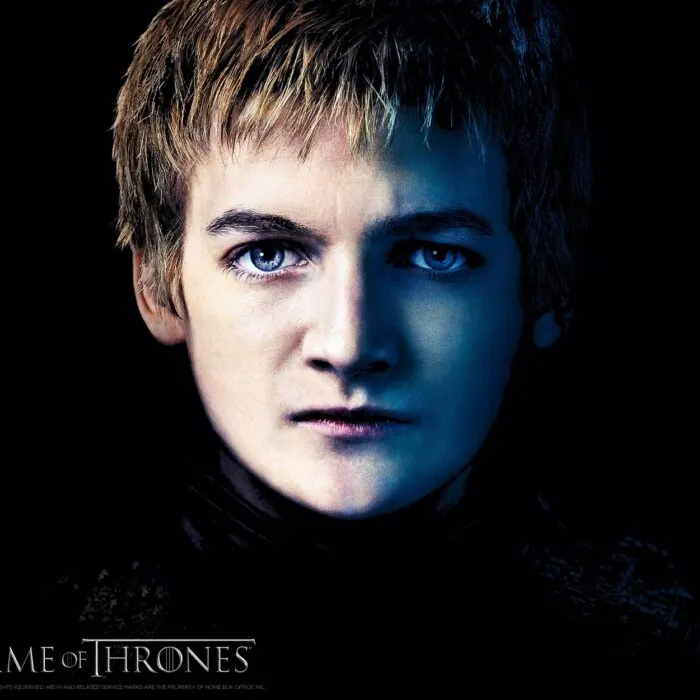
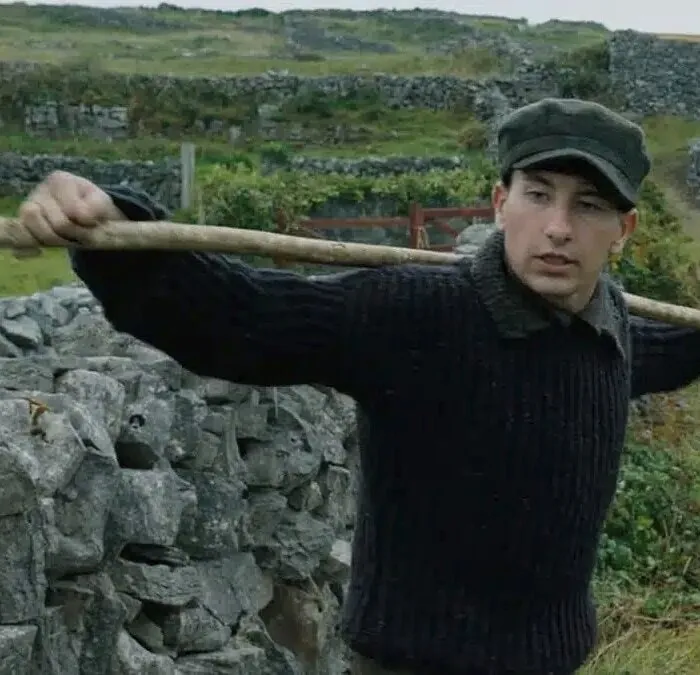


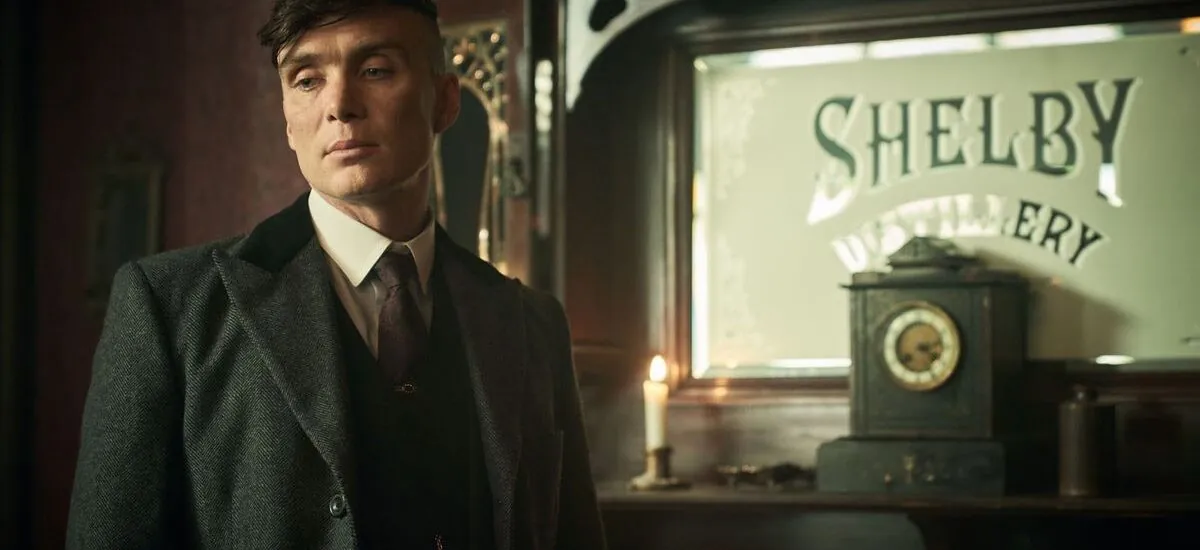
Sometimes a single face is enough to change a film. Cillian Murphy’s seems made for chiaroscuro: angular features, a gaze of almost unsettling intensity, and a stillness capable of conveying fear, anger or remorse without a word.
First noticed on screen in 28 Days Later and made into a global icon by Peaky Blinders, the Cork-born actor reached a new peak in 2024 when he won the Academy Award for Best Actor for Oppenheimer. Yet that Hollywood accolade does not tell the whole story.
Behind Thomas Shelby and Christopher Nolan’s blockbusters is an actor shaped in small Irish theatres, still deeply attached to music, Enda Walsh’s writing and stories that question his country’s history. With Small Things Like These, Murphy also became a producer, bringing demanding works to the screen himself—works sometimes too understated for traditional channels.
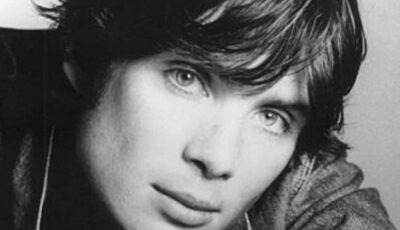
Cillian Murphy
Cillian Murphy was born on 25 May 1976 in Douglas, County Cork. He later grew up in Ballintemple, on the outskirts of the city, in a family closely connected with education. His father worked for the Irish Department of Education and his mother taught French.
His Irish first name is pronounced approximately “Killian”, with a hard sound at the beginning. The clarification became necessary as his international career exposed his name to pronunciations sometimes far removed from the original.
As a teenager, Murphy did not yet dream of cinema. Above all, he was passionate about music: he wrote songs, played guitar and sang in several bands. This first calling has had a lasting influence on his relationship with rhythm, voice and silence.
With his brother Páidi, Murphy formed The Sons of Mr Green Genes, a band named after a Frank Zappa track. The group combined rock, jazz and musical experimentation within a particularly lively local scene.
The band was offered a recording contract, but the deal did not go ahead. The musicians would have had to surrender a significant share of their rights and commit to several albums. Their young age and the family’s reservations also helped bring the project to an end.
Music never disappeared from Murphy’s life, however. It informs his preparation for roles, his listening to dialogue and the way he inhabits space. Much later, it also led him to present a radio programme devoted to his musical selections on BBC Radio 6 Music.
His musical culture extends far beyond the tracks used in Peaky Blinders. Cillian Murphy is interested in experimental rock, jazz, electronic music and contemporary Irish artists alike.
After secondary school, Murphy enrolled to study law at University College Cork. He devoted little time to the course and failed his first-year examinations. At the same time, theatre was taking an increasingly important place in his life.
A particularly physical production of A Clockwork Orange, staged by the Corcadorca theatre company, revealed a form of performance far removed from conventional school drama. He began spending time with the company and tried to secure a role.
This change of direction was significant: Murphy did not emerge from a major London drama school and was not trained through a conventional academic path. He learned directly on stage, alongside an experimental troupe deeply rooted in Cork’s cultural life.
In 1996, Murphy landed the lead role in Disco Pigs, a play written by Enda Walsh and produced by Corcadorca. He played Pig, a teenager trapped in an intense and destructive relationship with Runt, played by Eileen Walsh.
The two characters have grown up together, invented their own language and created a world seemingly closed to everyone else. Their violence, desire and fear of adulthood are expressed in language driven by Cork’s accent and energy.
The production toured Ireland, the United Kingdom, Europe, Australia and North America. Murphy then left his studies to become a professional actor. He reprised the role of Pig in Kirsten Sheridan’s 2001 film adaptation.
Disco Pigs was not simply his first success. The play established several features of his later work: characters confined by their own language, an intense physicality and a violence the actor allows to emerge without ever fully explaining it.
The collaboration with Enda Walsh continued long after Disco Pigs. Murphy notably performed in Misterman, a monologue in which a man obsessively replays the voices and events of a small Irish community.
He later reunited with the writer for Ballyturk, alongside Mikel Murfi and Stephen Rea, and for the stage adaptation of Grief Is the Thing with Feathers, based on Max Porter’s novel.
These productions allow Murphy to return regularly to a practice more stripped back than cinema. On stage, there is no editing or close-up to direct the audience’s eye. Voice, movement and rhythm must be enough to build an entire world.
That loyalty also explains why he has never regarded theatre as an outgrown stage of his career. Even after the success of Peaky Blinders and his films with Christopher Nolan, he continues to find a particular freedom and rigour there.
The wider public discovered Murphy in Danny Boyle’s 28 Days Later in 2002. He plays Jim, a bicycle courier who wakes from a coma in an abandoned hospital and discovers a United Kingdom devastated by a virus causing uncontrollable rage.
One of the film’s most famous images shows Jim walking alone through a deserted London. Murphy’s slight frame heightens the sense of vulnerability. He does not resemble the traditional hero of a survival story: at first, he appears fragile, disorientated and almost swallowed up by the empty city.
Shot largely with lightweight digital cameras, the film reinvented post-apocalyptic cinema. Its raw energy, exceptionally fast infected people and observation of a society falling apart had a lasting influence on horror films and television series.
The role also revealed an essential quality in Murphy: his ability to develop a character without losing its coherence. Jim moves from vulnerability to almost primitive violence while remaining recognisable.
In 2005, two films demonstrated the variety of his acting. In Wes Craven’s Red Eye, he plays Jackson Rippner, a terrorist who gradually takes control of a passenger during a night flight.
The film exploits the contrast between his delicate face and his character’s methodical coldness. Murphy shifts from almost reassuring charm to direct menace without any spectacular transformation.
That same year, Neil Jordan gave him the lead in Breakfast on Pluto. He plays Patrick “Kitten” Braden, a transgender woman who leaves a small Irish town to search for her mother in 1970s London.
Kitten faces political violence, rejection and loneliness with a flamboyant imagination. Murphy avoids making her a character defined solely by suffering. His tender, eccentric performance earned him a Golden Globe nomination for Best Actor in a Musical or Comedy.

Cillian Murphy in The Wind That Shakes the Barley
In 2006, Murphy took the leading role in Ken Loach’s The Wind That Shakes the Barley. He plays Damien O’Donovan, a young doctor who gives up plans to practise in London after witnessing violence inflicted by British forces.
Damien joins the Irish Republican Army during the War of Independence. The Anglo-Irish Treaty of 1921 then divides the former fighters, leading Damien to oppose his brother Teddy during the Irish Civil War.
Filmed in County Cork with many local performers, the film held a particular resonance for Murphy. The events depicted belong to the history of the landscapes and communities in which he grew up.
His performance avoids turning Damien into a simplified nationalist hero. The character acts out of conviction, but his decisions draw him into a logic of violence whose moral cost he gradually recognises.
The Wind That Shakes the Barley won the Palme d’Or at the 2006 Cannes Film Festival. The award went to the film and Ken Loach, not personally to Murphy, but his performance did much to bring his work to the attention of international cinema.
The professional relationship between Cillian Murphy and Christopher Nolan began with Batman Begins. The actor initially auditioned for the role of Bruce Wayne. Nolan did not cast him as Batman, but noticed the singularity of his face and gave him the part of Dr Jonathan Crane, alias Scarecrow.
Murphy reprised the role in The Dark Knight and The Dark Knight Rises. His appearance in all three films makes Jonathan Crane one of the few antagonists to span the entire trilogy.
In 2010, he played Robert Fischer in Inception. Far from a conventional antagonist, Fischer is the emotional target of an operation intended to alter his deepest convictions. Much of the film therefore rests on the unresolved relationship between the character and his father.
In Dunkirk, Murphy is never named. He simply plays a “shivering soldier”, rescued at sea after his ship is sunk. The character represents the invisible trauma of a battle often told through collective heroism.
For many years, Murphy therefore occupied supporting roles in Nolan’s films. This loyalty was founded not on their amount of screen time, but on mutual trust. It reaches its culmination in Oppenheimer.
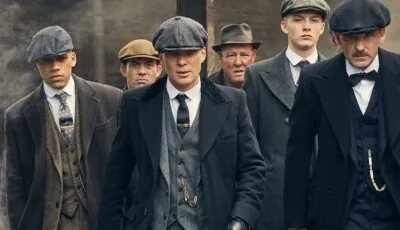
Cillian Murphy plays Thomas Shelby in Peaky Blinders
In 2013, Murphy accepted the role of Thomas Shelby in Peaky Blinders, a BBC series created by Steven Knight. The story begins in Birmingham in 1919, in a society marked by the First World War, labour struggles and political upheaval.
Tommy leads a family involved in illegal betting and various criminal activities. The Shelbys have Irish and Romani roots, but should not simply be described as a gang of Irish Travellers. The fiction draws loosely on groups that genuinely operated in Birmingham between the late 19th and early 20th centuries.
To play Tommy, Murphy altered his posture, walk and voice. His Birmingham accent, deeper than his natural voice, helps create an almost hypnotic authority.
The series turned the three-piece suit, peaked cap and the character’s haircut into instantly recognisable signs. Yet Tommy Shelby’s success cannot be explained by his appearance alone.
A former soldier haunted by the trenches, a strategist incapable of stopping and an often absent father, he embodies a form of masculinity built on control. Each season reveals the cracks in that armour: insomnia, addictions, bereavements and an inability to find peace.
Four years after the series ended, Murphy reprises his role in Peaky Blinders: The Immortal Man. Directed by Tom Harper and written by Steven Knight, the film continues the Shelby family story during the Second World War.
Tommy, now older, is drawn back to Birmingham and to a violence he had tried to leave behind. The story notably explores family legacy and his relationship with Duke Shelby, played by Irish actor Barry Keoghan.
Rebecca Ferguson, Tim Roth, Stephen Graham and Sophie Rundle complete the cast. Murphy also takes part in producing the film.
The Immortal Man was released in selected cinemas on 6 March 2026, before its worldwide Netflix release on 20 March. The feature is a direct continuation of the six seasons of Peaky Blinders, broadcast between 2013 and 2022.
In 2023, Christopher Nolan finally gave Murphy the leading role in one of his films. In Oppenheimer, he plays the American physicist J. Robert Oppenheimer, scientific director of the Los Alamos laboratory during the Manhattan Project.
The role required a significant physical transformation. Murphy lost weight to recreate the scientist’s extremely thin frame and worked on his diction, posture and hand movements.
Yet the essence of his performance does not rest on resemblance. Nolan frequently films his face in extreme close-up, as though the atomic bomb’s moral consequences must be sought in his eyes.
Murphy creates a brilliant, ambitious and at times vain man, able to grasp the theoretical implications of his work without fully anticipating its political use. After Hiroshima and Nagasaki, the scientist becomes both a celebrity, an uncomfortable conscience and a target of American power.
The actor seeks neither to exonerate nor condemn him. He keeps the character in a space of uncertainty where remorse, pride and fear coexist.
For Oppenheimer, Murphy won the Golden Globe, BAFTA, Screen Actors Guild Award and then the Academy Award for Best Actor on 10 March 2024.
He became the first actor born in Ireland to receive the Academy Award for Best Actor. Daniel Day-Lewis, also an Irish citizen and a multiple winner in the category, was born in London.
On the Dolby Theatre stage, Murphy described himself as a “very proud Irishman” and dedicated his award to peacemakers. The moment went beyond individual achievement: it confirmed the place Irish actors, writers, directors and technicians have earned in world cinema.
The win did not transform his relationship with fame, however. Murphy remains absent from social media and continues to limit promotional appearances to what his projects require. This discretion, often turned into media mystery, appears above all to reflect a deliberate separation between acting and the perpetual creation of a public persona.
After the scale of Oppenheimer, Murphy chose an Irish film built almost entirely around a silent dilemma. Adapted from Claire Keegan’s novel, Small Things Like These is set in a small County Wexford town in 1985.
Murphy plays Bill Furlong, a coal merchant, husband and father of five daughters. During a delivery to a convent, he discovers a young woman confined in troubling conditions. The encounter forces him to confront a reality the community prefers to ignore.
The story refers to the Magdalene laundries, institutions run by religious congregations in which thousands of women and girls were confined, forced to work and separated from their children.
The film does not turn Bill into a spectacular hero. It observes an ordinary man confronting the social and family cost of doing the right thing. Silence is no longer merely a psychological trait: it becomes the collective system that allows institutional violence to endure.
Murphy also produced the film. Presented as the opening film of the 2024 Berlinale, Small Things Like These marks a new stage: the actor no longer simply performs in Irish stories, but contributes directly to their financing and distribution.
Murphy founded Big Things Films with Irish producer Alan Moloney. The company describes itself as an independent structure devoted to works led by writers and filmmakers with a genuine vision.
The development follows an artistic logic. After several decades of work, Murphy uses his profile to support projects that are more difficult to make, notably literary adaptations, Irish films and stories centred on complex characters.
Small Things Like These illustrates that ambition, as does Steve, adapted from a text by Max Porter. Producing allows him to take part in decisions well before filming: choosing writers, seeking funding, developing the screenplay and assembling the team.
Released in 2025, Steve was directed by Tim Mielants, who had previously directed Murphy in Small Things Like These and several episodes of Peaky Blinders.
The film reimagines Shy, Max Porter’s novel originally centred on a teenager. The adaptation shifts part of its focus to Steve, the headmaster of a last-chance school threatened with closure in 1990s England.
As a television crew comes to film at the school, Steve tries to protect the pupils, keep his staff afloat and conceal the deterioration of his own mental health. Jay Lycurgo plays Shy, a teenager whose anger and despair mirror the headmaster’s exhaustion.
The film continues the reflection found in several Murphy roles on men who appear to control a situation while inwardly standing on the brink of collapse.
Murphy is also a producer through Big Things Films. The project brings together Tracey Ullman, Emily Watson and Simbi Ajikawo, among others.
Murphy served as executive producer on 28 Years Later, directed by Danny Boyle and released in 2025. Contrary to some rumours before the film’s release, he did not reprise the role of Jim in it.
His character does reappear at the end of 28 Years Later: The Bone Temple, directed by Nia DaCosta and released in January 2026. The appearance is brief, but confirms that Jim survived several decades after the events of 28 Days Later.
The sequence prepares a possible third instalment in this new series of films. At the time this article was updated, the development of that sequel had been mentioned, but its schedule and Murphy’s exact place in it should still be treated cautiously until production is complete.
Cinema often casts Murphy against his appearance. His fine features can seem fragile, while his gaze and voice suggest menace. This contradiction keeps his characters in a zone of uncertainty.
In Red Eye, a courteous passenger becomes a predator. In Peaky Blinders, an almost motionless man controls a violent organisation. In Oppenheimer, an emaciated body carries the destructive power of an invention capable of changing world history.
The actor also works extensively with voice. Tommy Shelby speaks slowly, in a deep and controlled register. Kitten Braden adopts a lighter musicality. Oppenheimer has precise, slightly detached diction. These voices are not merely accents: they shape the way characters think and inhabit space.
Murphy also rarely seeks the viewer’s immediate sympathy. His characters can be cowardly, dangerous, opaque or morally compromised. He prefers to preserve their contradictions rather than make them easily likeable.
Like Paul Mescal a few years later, Murphy has helped renew the portrayal of Irish and British masculinity on screen.
His characters often possess visible authority, but this strength conceals profound fragility. Thomas Shelby turns his war trauma into ambition. Bill Furlong struggles against a community organised around silence. Steve tries to save a school while no longer able to protect himself.
Emotion is never expressed through grand speeches. It emerges in pauses, restrained gestures and moments when the mask briefly stops holding. This reserve avoids confusing vulnerability with sentimentality.
Murphy’s Academy Award forms part of a period of exceptional visibility for Irish artists. Paul Mescal, Andrew Scott, Jessie Buckley, Saoirse Ronan, Barry Keoghan, Kerry Condon, Colin Farrell and Brendan Gleeson regularly feature at festivals and major international awards ceremonies.
This success is not solely due to the presence of a few stars. It rests on an ecosystem of theatres, schools, producers, technicians, writers and public support for cinema.
Murphy now occupies a distinctive place in this movement. His status allows him to work with the greatest directors while drawing attention and funding towards works by Claire Keegan, Max Porter and Enda Walsh.
His most enduring contribution may therefore not be limited to Thomas Shelby or Oppenheimer. By becoming a producer, he helps create the conditions in which other stories—more fragile and less immediately commercial—can exist.
Murphy remains deliberately discreet outside his work. He has no public account on the main social media platforms and rarely speaks about his family life.
This reserve should not be turned into an artificial mystery. Above all, it reflects a traditional view of the profession: playing characters does not oblige someone to become permanent content themselves.
A biography devoted to his work is therefore better served by focusing on his collaborations, methods and production choices than on speculation about his daily life. This approach respects the actor while giving readers information of more lasting value.
Name: Cillian Murphy.
Date of birth: 25 May 1976.
Place of birth: Douglas, County Cork, Ireland.
Nationality: Irish.
Pronunciation of Cillian: approximately “Killian”.
First major theatre role: Pig in Disco Pigs in 1996.
Best-known roles: Thomas Shelby in Peaky Blinders, J. Robert Oppenheimer in Oppenheimer, Jim in 28 Days Later and Jonathan Crane in the Dark Knight trilogy.
Major award: Academy Award for Best Actor for Oppenheimer in 2024.
In Cork, Cillian Murphy learned rhythm with a guitar and silence on a stage; Hollywood merely made the screen around him bigger.