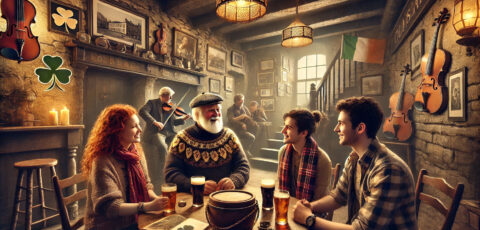

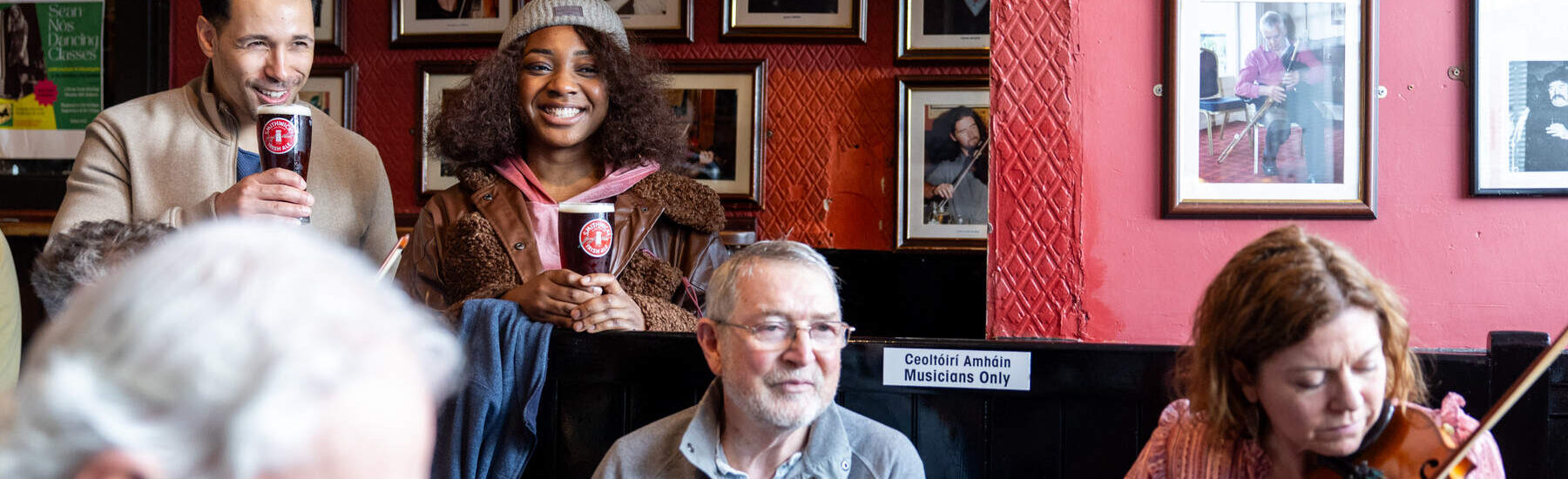
In a Galway pub, a conversation gathers pace around a fiddle. In Cork, friends linger over dinner without checking the time. On a road through Connemara, a rain-soaked walk ends in bursts of laughter. These moments may have little in common, yet in Ireland, one word could bring them together: craic.
Pronounced “crack”, the term refers to the pleasure of being together, the quality of a conversation, the news people share and the atmosphere of a place. It may arise over a pint, but equally at a family meal, a hurling match, a music session or a simple chat between neighbours.
Craic is not simply the Irish way of saying “having fun”. It describes a social experience shaped by spontaneity, humour and camaraderie. Difficult to translate precisely, it has become one of the most emblematic words in contemporary Ireland.
In its most common sense, craic means a good time shared with other people. It can refer to the fun itself, but also to the atmosphere that makes the occasion enjoyable.
Depending on the context, the word may evoke lively conversation, banter between friends, the latest news or the mood at a gathering. The phrase We had great craic means “We had a great time”, while What’s the craic? is closer to “What’s new?”.
Craic does not necessarily depend on the activity involved. A perfectly planned evening may have none, while an impromptu gathering in a kitchen can generate plenty of it. What matters is less the setting than the quality of the exchanges.
Contrary to a widespread belief, craic was not originally an old word in Irish Gaelic. It derives from the English and Scots term crack, once used in northern England, Scotland and Ulster.
The word referred to free-flowing conversation, news, amusing stories or jokes shared in company. The Dictionary of the Scots Language preserves examples of this usage dating back to the 18th century.
Crack was later adopted into the Irish language and adapted to its spelling as craic. This spelling became particularly widespread during the second half of the 20th century, before being borrowed back into English as spoken in Ireland.
Its journey is therefore rather remarkable: born in English and Scots, adopted by Irish, it returned to English with a new spelling and a stronger cultural identity. Its foreign origins do not prevent it from being closely associated with Ireland today.
Craic is pronounced “crack”, in a single syllable. The pronunciations “crayk” or “cra-ic”, sometimes heard from travellers, are incorrect.
In English as spoken in Ireland, the word is generally used without an indefinite article. You would say:
It was good craic.
“It was really good fun.”
The wording It was a good craic is not natural. Nor does the word take a plural when referring to an atmosphere or shared enjoyment.
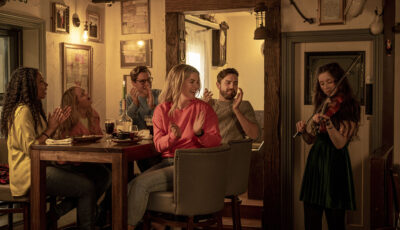
An Irish music session in a pub – © 2022 Rob Durston, All Rights Reserved
Good craic rarely depends on a fixed plan. It emerges when those present feel comfortable enough to talk, joke, tell a story or spontaneously join in a song.
Humour plays an essential part. It often takes the form of teasing, self-deprecation and observations delivered with mock seriousness. The ability to laugh at oneself is generally better received than boasting.
The conversation must remain open, too. A stranger sitting nearby may be invited to join in, without a formal introduction or any particular reason. This ease gives craic its warm, communal character.
It cannot, however, be ordered up. A venue may programme music, serve drinks and pay close attention to its décor, but no sign can guarantee camaraderie among the people there.
The Irish pub is one of the traditional settings for craic. It brings together regulars, travellers and sometimes musicians in a space where conversation remains important.
Reducing craic to alcohol would nevertheless be a mistake. It can arise over coffee, at a village fête, in the stands at a stadium, on a ferry journey or after a walk battered by the weather.
Family gatherings and weddings also provide ideal ground for it. Memories are shared, stories retold and sometimes embellished, while several generations sit around the same table.
It is therefore entirely possible to have craic without drinking alcohol. A drink may accompany the occasion, but it is neither its definition nor a condition for it.
A traditional Irish music session is one of the most visible expressions of craic. Musicians gather in a pub or home without necessarily following a set programme.
A fiddle starts a tune, soon joined by a flute, a bodhrán or uilleann pipes. Tunes follow one another, conversations resume between sets and a song may emerge from the audience.
The expression ceol agus craic means “music and entertainment” or, more naturally, “music and good craic”. It frequently appears in descriptions of concerts, festivals and organised evenings in Ireland.
To enjoy a session, it is generally enough to listen and respect the musicians. A song performed solo often calls for silence: talking loudly at that moment risks breaking the craic.
What’s the craic?
“What’s new?”, “How are you?” or “What’s happening?”
This question is not necessarily about a party. It is commonly used to ask for news or start a conversation.
Any craic?
“Anything new?” or “Anything interesting?”
We had great craic.
“We had a great time.”
He’s good craic.
“He’s funny and good company.”
Where’s the craic?
“Where’s the best atmosphere?”
Just for the craic.
“Just for fun” or “just to see what would happen”.
There was no craic.
“There was no atmosphere” or “It was really boring.”
You may also hear mighty craic to describe an exceptional atmosphere. The phrase The craic was ninety, popularised by a famous Irish song, takes the exaggeration even further: the number 90 does not correspond to any official scale, but simply means the occasion was memorable.
No address can guarantee craic, but certain settings encourage it to emerge. Pubs frequented by regulars, small music venues, local festivals and Gaelic sports gatherings often offer a more spontaneous experience than establishments designed entirely around Irish clichés.
It is best to enter a place with curiosity rather than intending to “consume craic”. Ordering quietly, observing the rhythm of the place and remaining open to conversation allows exchanges to develop naturally.
In rural areas, a conversation will often begin with the weather, the road taken or where the traveller comes from. These apparently harmless topics often lead to a story, a joke or advice for the rest of the trip.
There is no need, however, to overuse local expressions or imitate an Irish accent. Listening, replying naturally and accepting a degree of teasing is the best way to take part.
French has no single term that covers all the meanings of craic. Depending on the sentence, it may be translated as “atmosphere”, “a good time”, “fun”, “news”, “joke” or “conversation”.
This difficulty stems from the fact that craic does not describe an individual emotion alone. It generally arises through interaction. You do not watch it like a show: everyone helps create it through their presence, their attentiveness and the way they respond to others.
The word therefore reveals an important aspect of Irish sociability, without constituting an official philosophy. It simply reminds us that a successful occasion does not always depend on the prestige of the place or the planned programme, but on the quality of the connections formed there.
How do you pronounce craic?
The word is pronounced “crack”, in a single syllable.
What does craic mean in French?
Depending on the context, it means “good atmosphere”, “fun”, “a good time”, “conversation” or “news”.
Is craic a Gaelic word?
Its spelling is Irish, but the word comes from the English and Scots crack. It was adopted into Irish before returning to English as spoken in Ireland.
What does “What’s the craic?” mean?
The expression generally means “What’s new?”, “How are you?” or “What’s happening?”.
Do you have to drink alcohol to have craic?
No. Craic depends on the company, the conversation and the atmosphere, not on drinking alcohol.