
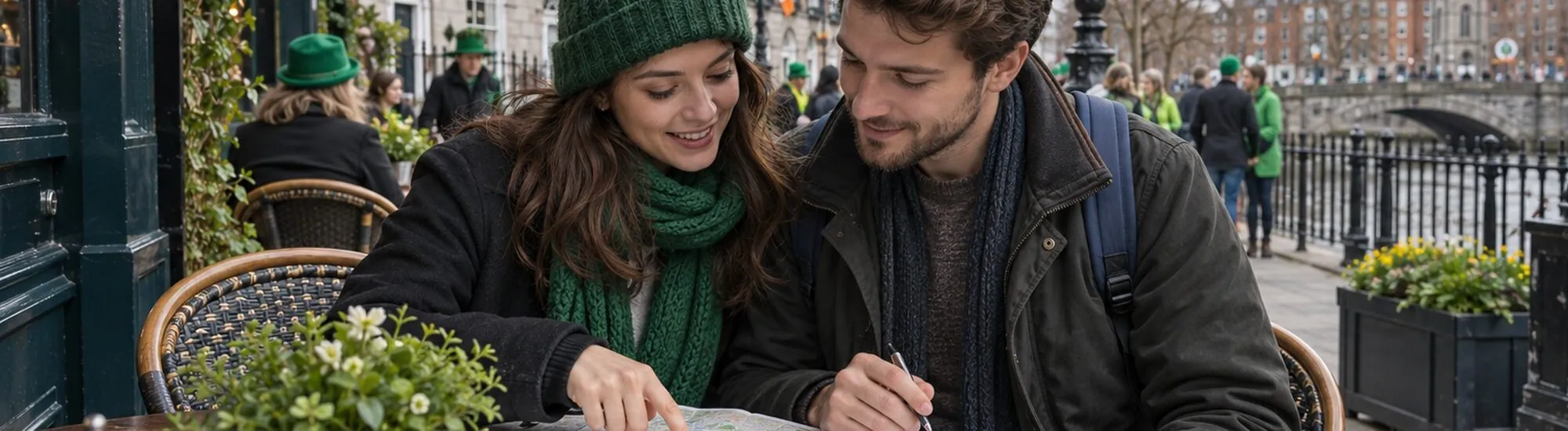
How much should you budget for St Patrick’s Day in Dublin? For three nights around 17 March 2027, allow around €290–€505 per person on a budget, €545–€975 for greater comfort and €1,020–€1,790 or more for a premium stay. These estimates assume two travellers sharing a room and exclude travel to Ireland and personal purchases.
Dublin is an expensive city, and St Patrick’s Day can send its prices soaring. The good news is that the parade is free to watch, and much of the atmosphere plays out in the streets. Accommodation remains the main cost to keep an eye on.
Estimates prepared on 8 September 2026 for a three-night stay in March 2027. They are intended for planning, not as a price guarantee. Check prices and conditions for your dates before booking.
| Item | Budget | Comfort | Premium |
|---|---|---|---|
| Accommodation | €180–€300 | €330–€600 | €600–€1,050+ |
| Food and drink | €90–€135 | €150–€225 | €240–€360 |
| Local transport | €20–€35 | €25–€50 | €80–€160 |
| Sightseeing and evenings out | €0–€35 | €40–€100 | €100–€220 |
| Total | €290–€505 | €545–€975 | €1,020–€1,790+ |
For a couple, double these amounts unless your room costs less than assumed here. For a solo traveller, the budget rises sharply as the room cost is no longer shared.
During the St Patrick’s Day period, a dorm bed or a single room booked well in advance can bring accommodation down to around €60–€100 per night, per person. For a centrally located hotel shared by two, allowing €110–€200 per person, per night is more prudent. A high-end property or a late booking can exceed €200–€350 per person.
Do not compare the advertised price alone. Check the total, cancellation policy, breakfast, walking distance and access during road closures. Browse available accommodation in Dublin on Booking, then compare several neighbourhoods. The article on accommodation during St Patrick’s Day will help you choose the right area.
A budget-conscious traveller can aim for €30–€45 a day with the help of supermarkets, bakeries, cafés and quick meals. A budget of €50–€75 allows for a sit-down lunch, a simple dinner and a few drinks. Above €80–€120, you can allow for several restaurants, cocktails or more refined establishments.
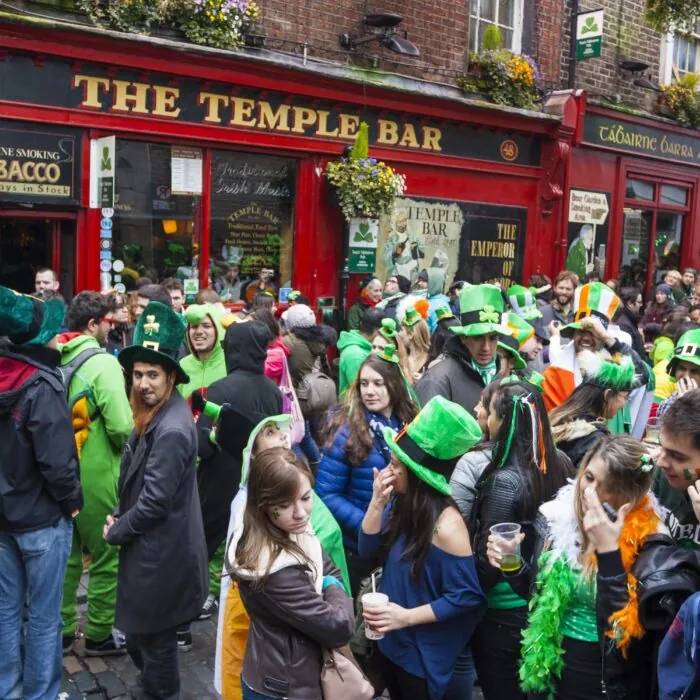
On 17 March, avoid waiting until you are hungry in the middle of the crowds: central venues fill up and queues get longer. Have a proper breakfast, book dinner if possible and leave yourself some leeway. A pint has never been a nutritional plan, even when it is perfectly poured.
Central Dublin is easy to explore on foot. With a Leap Card, the TFI 90 Minute fare allows you to combine certain urban services for €2 at the adult fare, at the time of our check. Conditions may change in 2027: check them on Transport for Ireland.
Allow €20–€35 for a few urban journeys over three days. Add a margin if you use airport connections or taxis. Some streets close on parade day: a more expensive taxi will not necessarily be faster than a good pair of shoes.
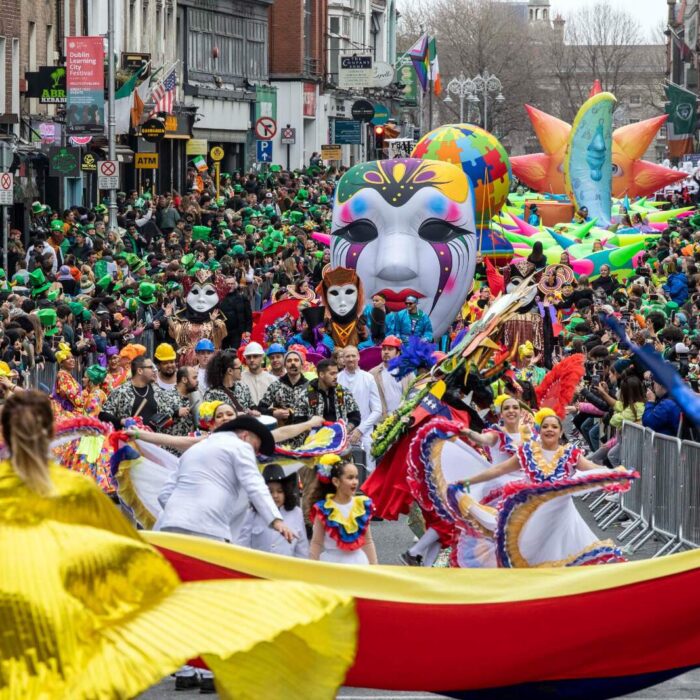
The parade can be watched free of charge along the route. Paid grandstands and certain bookable events can add to the experience. The St Patrick’s Festival 2027 is scheduled from 13 to 17 March; the full programme is due to be released in January 2027.
A tight budget can therefore prioritise the parade, free events, walks and free national museums. For a paid attraction, show or special evening, add €15–€40 per activity, or more for a premium experience.
For 17 March alone, allow around €35–€60 on a budget, €75–€130 for greater comfort and €160–€260 including a refined meal, taxis and a paid activity. These amounts include food, local transport and leisure, but not an overnight stay.
The most effective approach is to choose no more than two paid priorities. The parade and the city’s atmosphere already provide the heart of the spectacle; there is no need to turn every hour into a transaction.
Book early with flexible cancellation, compare the total cost across neighbourhoods and favour a location that lets you walk back. Travel with a small bag if your ticket charges separately for extras. Alternate between restaurants and quick meals, bring a reusable water bottle and set a daily spending limit.
Finally, keep a 10–15% contingency for price differences, unexpected transport or a last-minute concert. The best budget is not the lowest one: it is the one that lets you enjoy Dublin without checking your banking app every time you pass a shamrock.