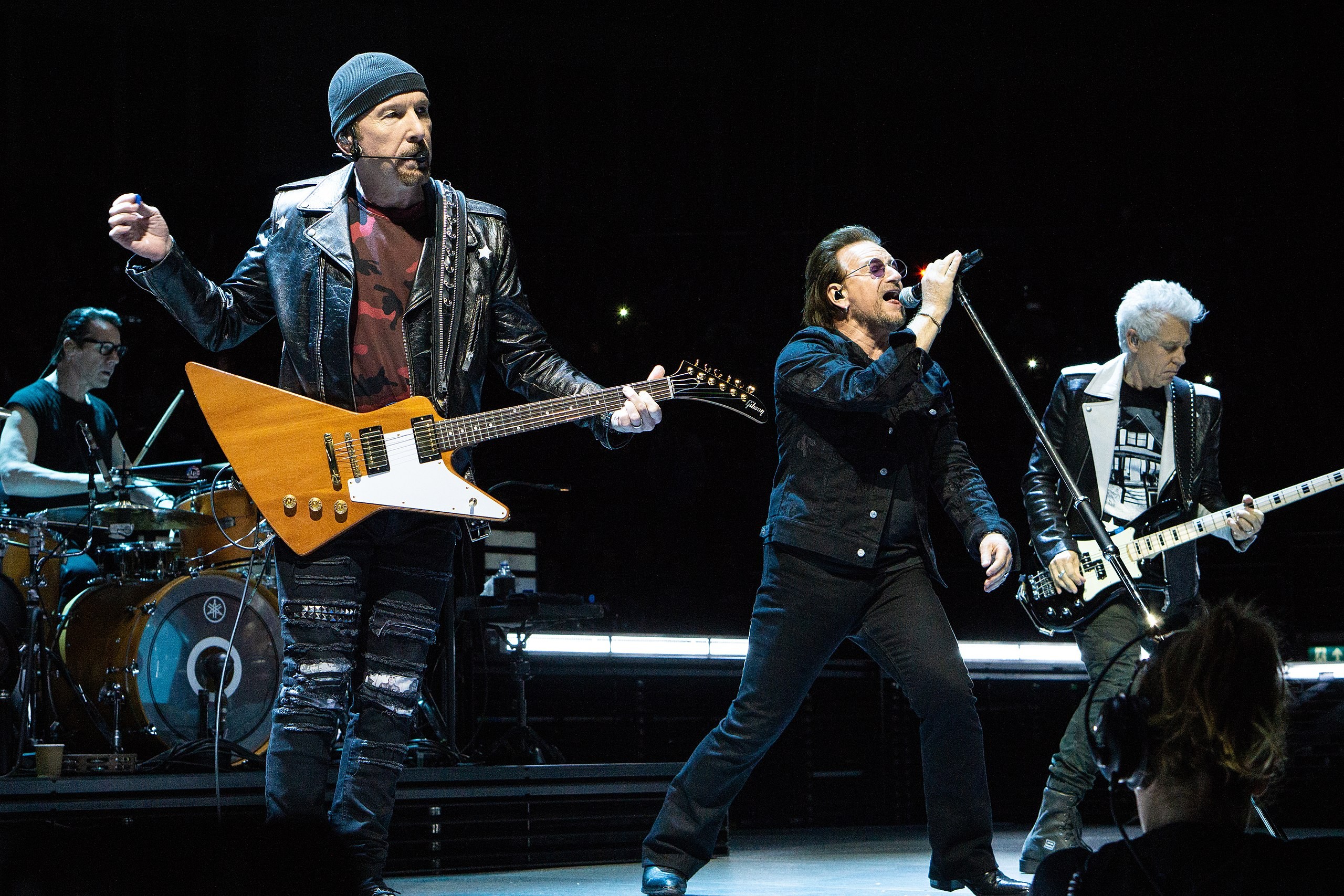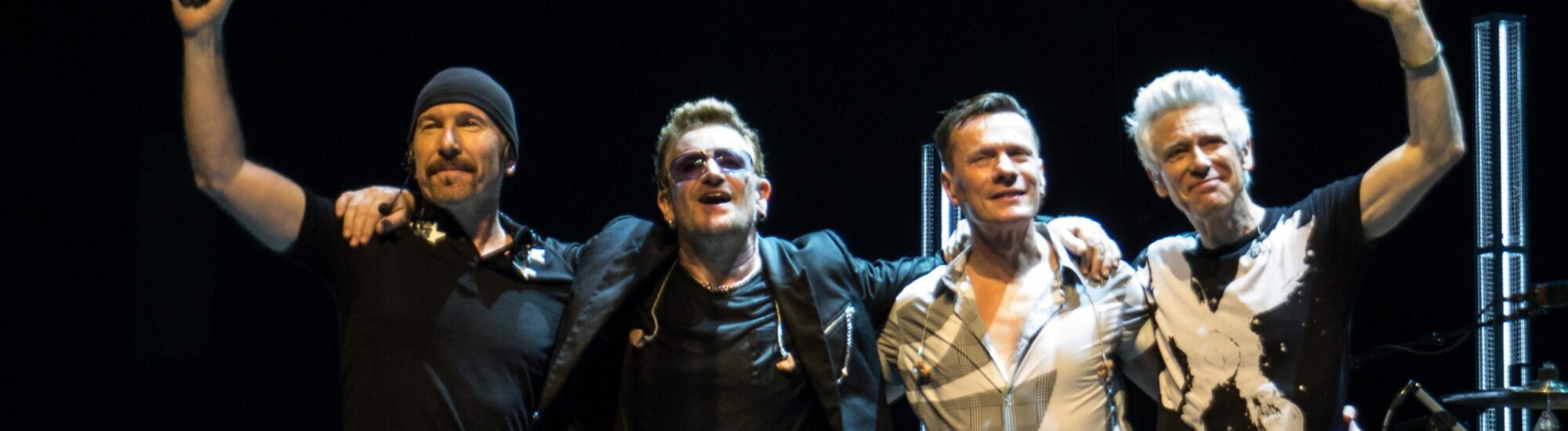
U2 is arguably the most famous Irish band in the world. From Dublin to the biggest international stages, the band led by Bono has shaped the musical image of the island of Ireland for over 40 years. Yet behind this global success lies a more nuanced reality: in Ireland itself, the band sometimes provokes annoyance, criticism… even rejection.
This paradox often intrigues travelers. How can such an iconic band be so contested in its own country? The answer lies in a subtle blend of culture, history and public perception. Let’s decipher a more than paradoxical relationship between the Irish rock band and their native country: Ireland!
In Ireland, U2 isn’t just a band: it’s an institution, a symbol, an inescapable representation of musical creativity made in Ireland. And therein lies the rub. By dint of their omnipresence in the media, official ceremonies and cultural references, part of the Irish public has developed a form of saturation.
Unlike other artists perceived as more discreet or authentic, U2 is often associated with a “mainstream” and international image, sometimes judged to be too far removed from today’s local scene. In a country where independent music and new voices are constantly emerging, this historical dominance can be perceived as overwhelming.
But that’s not all. The figure of Bono alone crystallizes much of the criticism. Highly committed to humanitarian, religious, political and economic issues, he is also regularly accused of being out of touch with Irish people’s daily lives.
His style, his outspokenness and his omnipresence in the media are divisive. Some hail him as a committed and influential artist, capable of taking up causes on a global scale. Others see in him an elitist, even moralistic posture, which does not sit well with an Irish culture traditionally attached to modesty.
One of the most striking episodes was the controversy surrounding the group’s tax situation. In the 2000s, U2 was criticized for moving part of its financial activities out of Ireland, in order to benefit from a more advantageous tax regime.
In a country deeply marked by economic crises at the time, this decision was perceived by some as a lack of national solidarity. Even if these practices were legal, they contributed to tarnishing the Group’s image among a section of the population, who preferred to turn away from the Irish group.
For many Irish people, U2 is more a global brand than a local band. As their success has grown, so has their identity, sometimes to the detriment of their roots.
As a result, some blame the Dubliners for having turned away from their origins… An ungrateful turnaround.
This discrepancy is particularly noticeable in a country where culture, music and tradition play a central role. While some Irish artists remain deeply rooted in their homeland, U2 are sometimes perceived as “above” this reality.
Despite these criticisms, it would be simplistic to speak of a total rejection. U2 remains deeply linked to Dublin and the country’s cultural history. The band continues to fill stadiums, inspire new artists and put Ireland on the international map.
This ambivalent relationship is ultimately part of the group’s very identity: admired as much as criticized, celebrated as much as contested. A phenomenon typical of icons that have become too big to belong to a single country.