 Eric Jones / Geograph, via Wikimedia Commons,
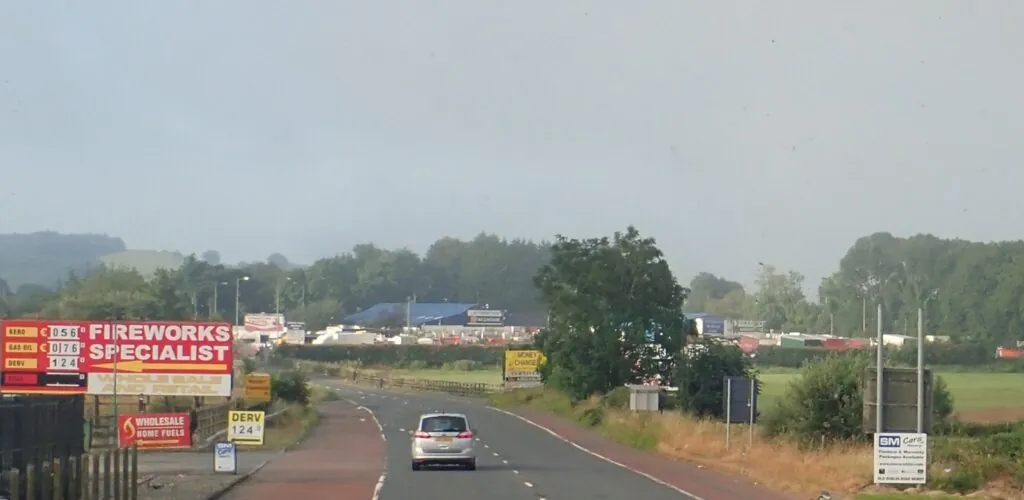
At Killeen, on the old road from Dublin to Newry, the crossing into Northern Ireland is marked by small details: the lines at the edge of the road change, as do the signs. For French visitors, however, the most important formality is dealt with before reaching the border. The UK ETA, an electronic travel authorisation, also applies to tourists entering by road from the Republic of Ireland.
On 16 November 2026, the Northern Ireland Assembly called on the UK government to remove this requirement for visitors arriving from the Republic of Ireland. The motion was adopted as amended. For your next trip, the ETA remains necessary if this requirement applies to you: the motion does not change the entry rules.
Why Stormont wants to remove the ETA for journeys from the Republic of Ireland
One itinerary, two entry systems
Arriving in Dublin, heading north to Belfast, then following the coast to the Giant’s Causeway: on a map, the route is a single line. For the MLAs who backed the motion, the UK authorisation adds an extra step to this type of trip and makes it harder to promote tourism itineraries across the island.
The official report of the session gives another example in the west: elected representatives support better links between the Wild Atlantic Way and the Causeway Coastal Route, with Derry and the Strabane district serving as a gateway to the north-west. The amended motion also calls on London to address the VAT disparity in the hospitality sector on either side of the border. These are two separate requests, and the text sets out no timetable for implementation.
From Dublin to Belfast: what to plan for today
Authorisation is required even for a day return trip
If you are travelling on a French passport, live in France and are visiting as a tourist, you should obtain an ETA before crossing into Northern Ireland, unless another exemption applies to your situation. The Home Office states that the rule also applies when crossing the land border. Whether you take the Dublin–Belfast train, a coach or a hire car, and even if you return that evening, the requirement remains the same. A stay limited to the Republic of Ireland does not require this UK authorisation.
According to GOV.UK, the application costs £20 per person, including children and babies. A family of four should therefore allow £80 if all its members need authorisation. The ETA is linked to the passport used for the application and allows multiple trips for two years, or until that passport expires if this happens sooner. The UK government advises allowing up to three working days for a decision. Apply through the official website or the UK ETA app before you travel.
Living in the Republic of Ireland may exempt you from the ETA
British and Irish citizens are exempt. A French citizen who is lawfully resident in the Republic of Ireland may also be exempt when travelling to the UK from the Common Travel Area; the Home Office explains which proof of residence is accepted. A hotel booking in Dublin does not give you resident status. To plan your crossing, see our practical guide to the ETA in Northern Ireland.