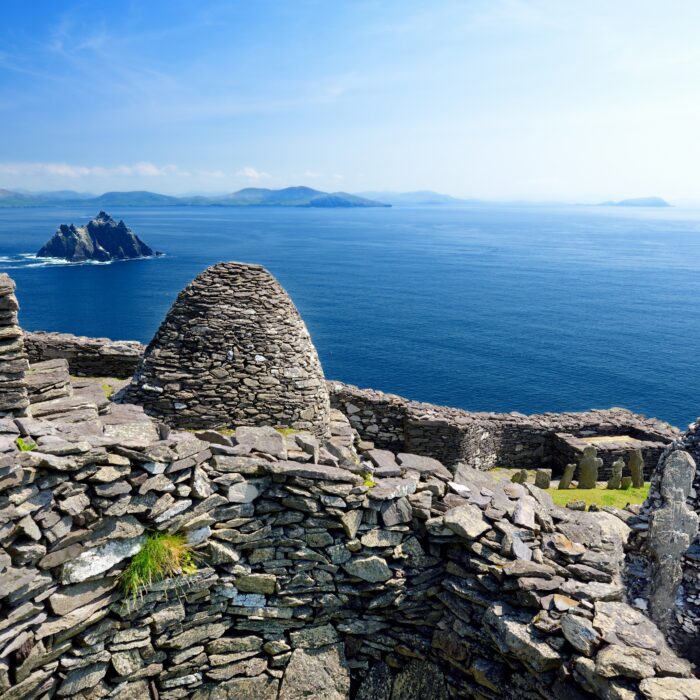


In Dingle, the landscape does not simply pass by behind a window: you earn it stride by stride. The Dingle Marathon takes runners along the roads of the peninsula, between villages, hills and views over the Atlantic. As you approach Slea Head, the Blasket Islands appear offshore and the coastal bends give the effort another dimension.
With a marathon and a half-marathon, the event offers a sporting way to discover this area. But the scenery should not make you forget the course: the terrain, exposure to the wind and the logistics of getting around all require careful preparation, well before race day.
The Dingle Marathon offers two races: a 42.195-kilometre marathon and a 21.0975-kilometre half-marathon. Both races start in Dingle and share an initial section towards Ventry and Slea Head.
The half-marathon finishes in the Dunquin, or Dún Chaoin, area. The marathon continues across the peninsula before returning to Dingle. This difference is essential when planning your day: the two distances do not finish in the same place.
Check the official course map before choosing your distance. The organiser states that the routes are still subject to confirmation and may be changed.
Leaving Dingle, the course heads to Ventry and then follows the coastal roads in the west of the peninsula. The bay, stone walls and hills gradually give way to the panoramas of Slea Head and views of the Blasket Islands.
The marathon continues inland towards the Ballyferriter area. The changing landscape accompanies a demanding second half: the organiser specifically highlights a difficult climb around the 22nd mile, or approximately 35 kilometres.
So save some energy for the finish. Even if the panoramas make you want to look everywhere, the route profile deserves as much attention as the course photos.
The edition announced for Saturday 4 September 2027 is listed as sold out on the official website. A booked room or purchased flight obviously does not guarantee a place in the race.
The published regulations prohibit bib transfers, name changes, deferrals and distance changes. Avoid offers from private resellers. For any changes to registration, rely solely on the organiser’s announcements and procedures.
Participants must be 18 years old on race day. Check all the conditions before building your trip around a future edition.
The half-marathon may seem like a more accessible way to discover the race, but it is still a run of more than 21 kilometres on a hilly route. The marathon, meanwhile, requires you to retain enough energy for the difficulties in its second half.
In training, plan outings on hilly terrain and test your shoes, clothing and nutrition. A coastal race also means learning to manage your pace when the wind disrupts habits formed on a sheltered course.
The FAQ lists time limits of 3 hours 30 minutes for the half-marathon and 6 hours for the marathon, calculated from the official start. These limits should factor into your choice of distance and be checked again before the race.
For participants travelling from abroad, the organiser has arranged race-pack collection in Dingle, with different arrangements from those for participants living in Ireland. Check the instructions sent after registration to find out the venue, the documents required and the collection times.
If your trip allows, arrive the day before: you can collect your race number, familiarise yourself with the start and prepare your belongings without rushing. Avoid making your participation dependent on a flight or a long journey on the morning itself.
A bag transport service is announced, with different arrangements for the two distances. Carefully identify the drop-off point for your race and pack dry clothes for the finish. Keep valuables with you or at your accommodation.
The course is marked in miles. If you normally think in kilometres, prepare your pace markers before the start or set your watch accordingly so that you do not have to keep converting distances during the race.
Refreshment stations are planned, but check their locations and the products provided in the event information. Stick to the habits you have tested in training and do not rely on a particular food without confirmation.
The roads pass through inhabited and fragile landscapes. Keep gel wrappers with you and use the collection facilities provided: verges, fields and stone walls must not become the race’s rubbish bins.
Half-marathon participants do not finish in the town. The organiser announces buses back to Dingle and prohibits runners from being collected by relatives in the finish area because of limited space.
So do not ask someone accompanying you to collect you by car in Dunquin. Arrange to meet after you return and allow some flexibility: recovery time, waiting for the bus and the journey all come on top of your race time.
Supporters can enjoy the atmosphere, but their plans must take road closures into account. A spot that is easy to reach the day before may be inaccessible by car on race day.
Choose your viewing points based on the official arrangements and follow the instructions of the volunteers and the Garda. According to the published rules, spectators cannot access the half-marathon finish area.
For a simpler day, staying in Dingle allows you to cheer runners at the start, enjoy the town and meet the participants afterwards. If you are accompanying a marathon runner, agree on a precise meeting point after the finish rather than relying solely on a phone call in the middle of the crowds.
Once your entry is confirmed, look for accommodation with the morning’s logistics in mind. Staying in Dingle may allow you to walk to the start; accommodation further away means checking road access and parking.
Do not overload the day before with a long hike or an overly ambitious itinerary. Allow time for the journey, race-pack collection, a meal suited to your usual routine and a good night’s rest.
Bring clothes to wear while waiting for the start and to cover up after the effort. On the coast, rain and wind can quickly make damp clothing uncomfortable. Check the forecast as the race approaches and adapt your equipment to the conditions expected.
If you can, keep a day after the race to discover the Dingle Peninsula at a more leisurely pace. You can revisit the landscapes you passed through, stop in a village or enjoy a meal in town without watching the clock.
Before setting off, reread the organiser’s FAQ and the latest instructions sent to registered participants. The course, traffic arrangements and reception procedures may change: these are the details that should guide your day.
Essential information to help you plan your visit, including key landmarks, access information, and booking options.
Départ : Strand Street, Dingle, comté de Kerry, Dingle, Dingle Peninsula, County Kerry, Republic of Ireland, Tourist sites in Ireland