In Dublin, IMRAM gives Irish literature pride of place. The festival brings together writers, poets, singers and artists in projects where a familiar song can be heard anew, a bus journey becomes a collective creation, or a poem is discovered through choral singing. For travellers, it offers a gateway to a vibrant literary Ireland that continues to invent new forms.
IMRAM – Féile Litríochta Gaeilge places Irish-language literature at the heart of its work. The organiser aims to support writers and publishers, encourage reading, and foster exchanges with both speakers and learners of the language. The festival also reaches out to the diaspora, rather than limiting itself to an audience based in Ireland.
Its identity lies in the way works are presented. A reading may enter into dialogue with a musical composition; a translated text may become the starting point for a performance; images may accompany a voice. This movement between disciplines gives IMRAM a distinctive place among Dublin’s cultural festivals. Here, literature is discovered as a practice transformed by its encounter with the stage.
There is no need, then, to look only for an author you already know. The format of an event matters as much as its title: sung poetry, a choral work and an accompanied reading do not offer the same experience. This distinction is particularly useful when choosing a first event.
The programme announced for 2026 illustrates this diversity through stories, poetic tributes and musical projects. Each event has its own team and venue. The performances presented below are part of this edition; they offer an insight into the festival’s approach, without representing a line-up that is identical from one year to the next.
A good way to approach IMRAM is to choose the kind of listening experience that appeals to you. If you enjoy voices, a choral work may be a good starting point. If you prefer stories rooted in places, a creation inspired by a familiar journey offers a way in through the landscape. And if you already know certain songs, hearing them in Irish offers a different relationship with their rhythm and interpretation.
Crann Mór / Tree begins with a poem by Richard Berengarten about the tree and its place in mythologies, history and spiritual traditions. Gabriel Rosenstock produced an Irish translation, commissioned by IMRAM and first presented in a film by Laura Hilliard.
The scheduled stage version brings together nine voices, percussion and film. Nick Roth is responsible for the vocal adaptation; the voices of Chamber Choir Ireland, conducted by David Young, join the trio of Caitríona O’Leary, Michelle O’Rourke and Olesya Zdorovetska. The production is directed by Adrian Dunbar.
This project offers a clear sense of IMRAM’s work: the text moves between languages, media and performers. For the audience, listening may be as much about the meaning of the poem as about the way the voices respond to one another. The Smock Alley presentation of Crann Mór provides further details of this creation.
With An 424: An Bus go dtí an Ghealchathair / The Bus to the Brightcity, the starting point is a bus route linking Connemara and Galway. The daily journey, its passengers and its landscapes inspire new texts by Laoighseach Ní Choistealbha, Jackie Mac Donncha and Cúán de Búrca.
The group Trá Pháidín provides the music and Donal Dineen the images, in a work conceived by Majella Ní Chríocháin. The creation explores what is shared while travelling: languages, memories and stories that can go unnoticed when one is looking only at the road.
For those discovering Ireland, this project creates a link between a rural region and the capital where it is presented. Its subject is Connemara; the performance itself takes place in Dublin. See the official An 424 listing to plan your visit.
Diamaint agus Meirg / Diamonds and Rust: The Dylan-Baez Project explores the creative and personal relationship between Bob Dylan and Joan Baez. The project presents their songs translated into Irish by Rody Gorman, Caitríona Ní Chléirchín and Tadhg Mac Dhonnagáin.
Here, translation is part of the artistic experience. Recognising a melody while discovering another language can change the way it is heard: more attention is paid to syllables, phrasing and the balance between voice and instruments. It is a possible introduction for music lovers wishing to discover IMRAM without beginning with a lengthy reading.
A French-speaking visitor may be drawn by the music or images, but linguistic understanding remains a factor when choosing. A bilingual presentation on the website does not guarantee surtitles, on-stage translation or support in French. Check these points with the venue or organiser before booking.
For a first experience, consider the form of the performance and the place given to spoken words. A literary conversation requires different reference points from a concert; a visual creation does not necessarily provide a translation of the text. Listen to the artists available online and read the summary beforehand to decide what will give you the most enjoyment on the day.
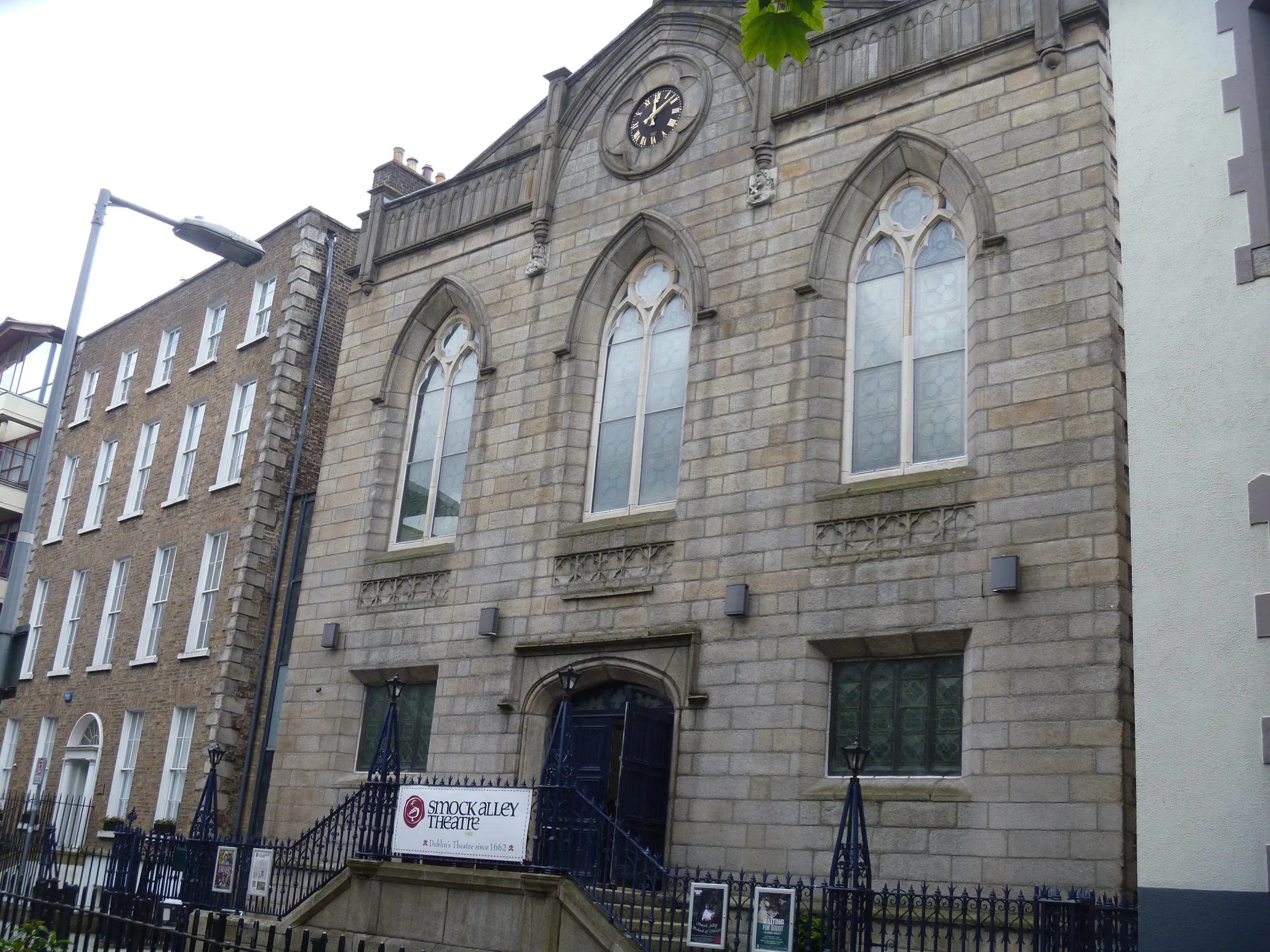
IMRAM takes place at several venues in Dublin. Smock Alley Theatre, in the Temple Bar area, hosts several of the creations presented here. A theatre’s address should not, however, be used for the festival as a whole: each event has its own listing.
First choose your performance, then check the venue, booking arrangements and visitor information. For an accessibility query or an outing with a child, contact the relevant venue: this information depends on the performance selected. The official IMRAM programme brings together announcements and ticket links. Confirmed dates, times and prices are listed in this page’s practical information.
Essential information to help you plan your visit, including key landmarks, access information, and booking options.
Plusieurs lieux à Dublin, dont Smock Alley Theatre, Exchange Street Lower, Temple Bar, Dublin 8. Vérifier l’adresse de chaque événement., Dublin, County Dublin, Republic of Ireland, Tourist sites in Ireland