

As night falls, Drogheda’s medieval monuments take on a new appearance. The Lú Festival of Light turns the historic centre into an open-air trail of light, with monumental projections bringing to life the myths, heroes and creatures of Irish folklore. The 2026 edition will take place from 23 to 26 October, a few days before Halloween, in the heart of County Louth.
The concept is as simple as it is appealing: explore Drogheda’s streets on foot and discover audiovisual creations projected onto several landmark buildings. The main event is free and requires no ticket. It is suited to families as much as to lovers of heritage, Celtic mythology and digital arts.
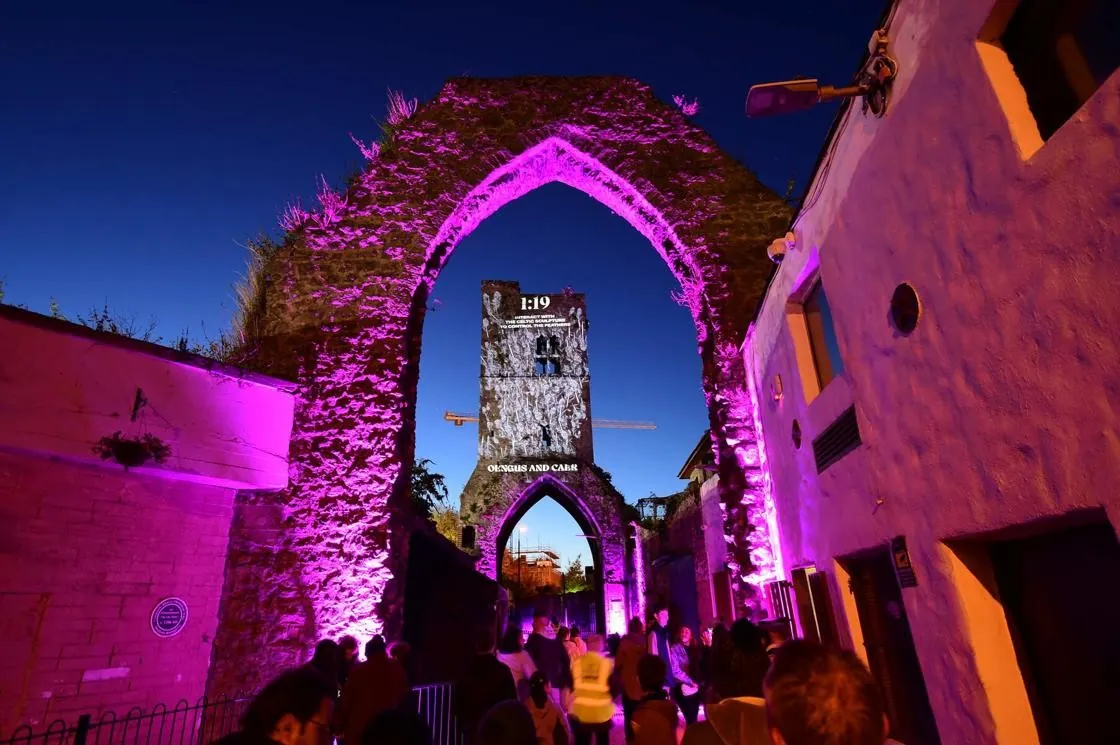
The Lú Festival of Light does not take place in a venue or behind closed gates. It takes over the centre of Drogheda, using the city’s architecture as a storytelling medium. Façades, towers and ancient gateways become vast screens through projection mapping, a technique that precisely adapts images to the contours of a building.
For 2026, the trail will highlight three key sites in particular: Old Abbey, St Peter’s Church and St Laurence’s Gate. These monuments are close enough to be linked on foot. Visitors can therefore follow the route at their own pace, pause at each sequence and enjoy the atmosphere of the town centre between projections.
The GPS point shown on this listing corresponds to Old Abbey, one of the main official stops. It is a useful landmark from which to begin your visit, but the festival extends far beyond this single monument.
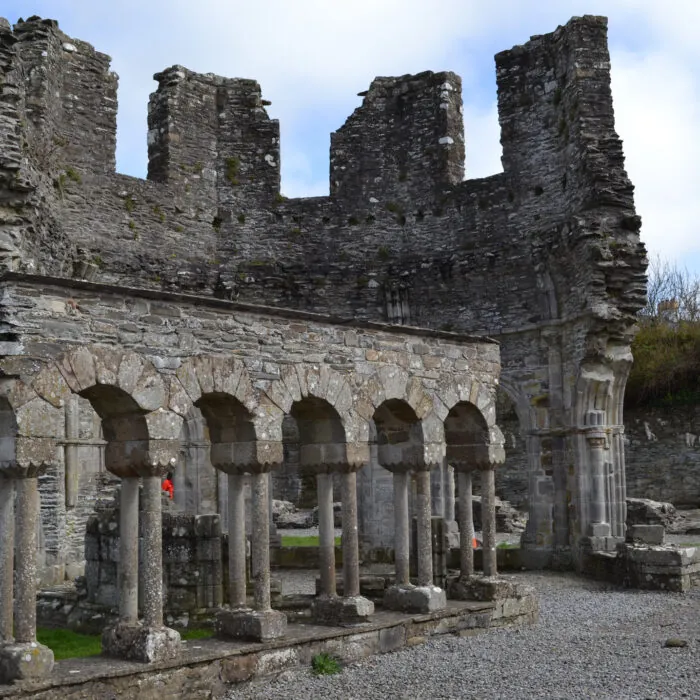
Old Abbey is among the festival’s most striking settings. The remains of the former Augustinian abbey of St Mary d’Urso, founded in the early 13th century near Mary Street, include a Gothic bell tower particularly well suited to vertical projections. Once darkness falls, the stone almost disappears beneath colours, silhouettes and effects of depth.
The light installations draw on ancient tales associated with Drogheda, the Boyne Valley and the Irish imagination. Gods, warriors, fabulous animals and shape-shifting creatures appear on the tower in a staging where image, music and architecture work together.
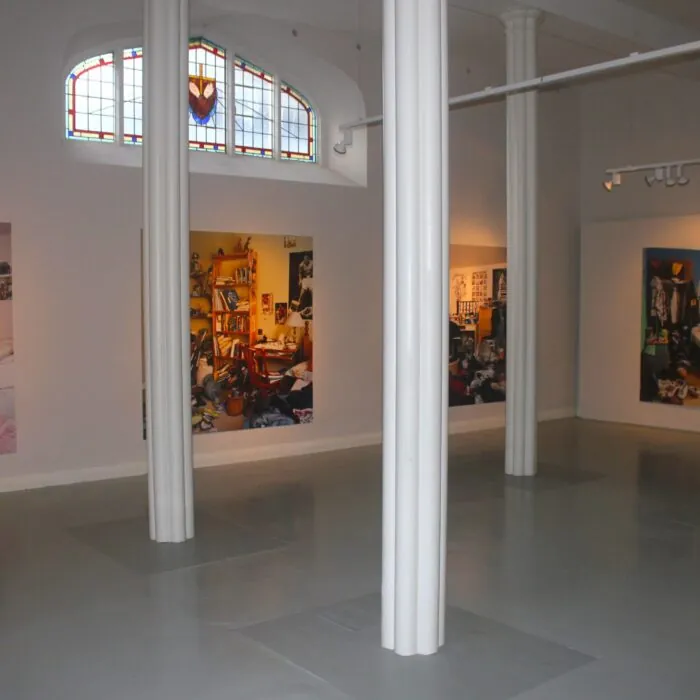
Located on Drogheda’s main shopping street, St Peter’s Church is another central stop on the trail. Its elaborate façade allows for visual effects very different from those at Old Abbey. The projections seem to open up the building, shift its columns or reveal imaginary scenes within the stonework.
The church should not be confused with the medieval site of St Peter’s Church of Ireland, located nearby. The one on West Street is best known for housing the relic of Saint Oliver Plunkett. During Lú, its façade becomes a meeting point between Drogheda’s religious heritage and the mythological tales celebrated by the festival.
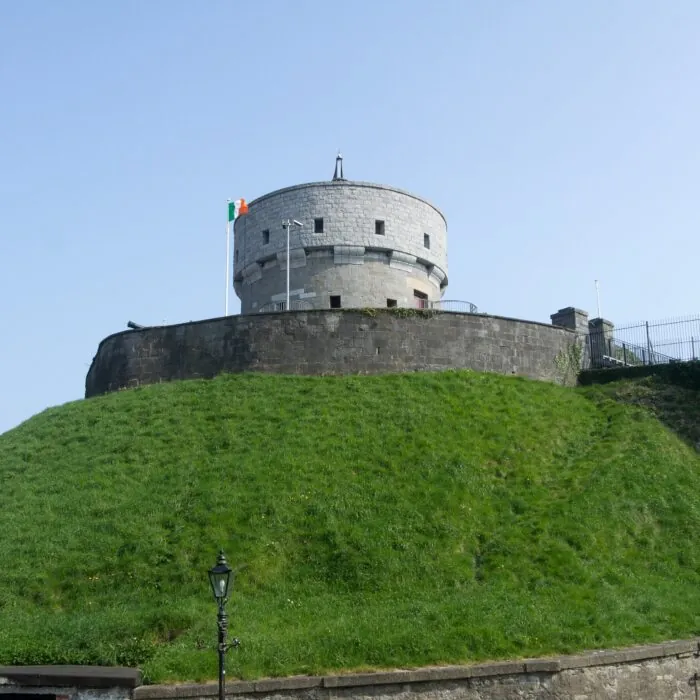
Built in the 13th century, St Laurence’s Gate is one of Drogheda’s best-preserved medieval monuments. Its two imposing towers once formed a strategic entrance to the walled town. The festival makes use of this spectacular silhouette to turn it, almost literally, into a gateway to the world of Irish legends.
The projections follow the contours of the towers, windows and masonry details. This layering creates a particularly effective sense of movement: the gate seems to crack, burst into flames or open onto another world, without any physical alteration being made to the monument.
Lú does more than use a few Celtic images to create a Halloween atmosphere. The festival is rooted in an area deeply associated with Ireland’s ancient stories. Drogheda lies at the gateway to the Boyne Valley, home to major prehistoric and mythological sites including Newgrange, Knowth, Dowth and the Hill of Tlachtga.
This region is closely linked to Samhain, the festival that marked the transition into the dark season in the ancient Irish calendar. Tradition described this time as one of uncertain boundaries, when the human world and the Otherworld could draw closer together. This narrative material naturally suits a night-time festival built around appearance, transformation and illusion.
The name “Lú” also refers to County Louth and evokes Lugh, a major figure in Irish mythology. This god of many talents belongs to the Tuatha Dé Danann and plays a leading role in tales from the Mythological Cycle, notably in the Battle of Mag Tuired. The festival draws on this heritage without taking the form of a history lesson: legends are told through movement, colour and sound.
Lú is best thought of as a night-time walk with several stops. Sequences are presented on different monuments, while visitors move freely around the town centre. There is therefore no main stage in front of which to spend the entire evening. This format allows you to arrive when you wish, create your own route and watch a projection again if you particularly enjoyed it.
The 2026 programme will also include a wider range of cultural entertainment in Drogheda, with performances, music and the Spooks Parade. Some additional indoor events may be ticketed or require booking, unlike the outdoor projection trail. Details of these activities may be added as the festival approaches.
The atmosphere is generally family-friendly in the early evening. The stories may feature unsettling creatures and Samhain imagery, but the light trail is not designed as a horror attraction. Children who are able to walk through a busy town centre can fully enjoy the colours, music and visual transformations of the buildings.
Bring warm, waterproof clothing: at the end of October, the weather can change quickly and most of the trail takes place outdoors. Comfortable shoes are also recommended, as several of the older streets have cobbles or uneven surfaces.
For a smoother visit, arrive before the illuminations begin so that you can locate the three main monuments in daylight. You can then follow the route as the light fades, without wasting time looking for the various stops. Families may prefer the start of the evening, which is generally less busy than peak periods.
The projections can be viewed from public spaces, but some areas may be temporarily managed to keep pedestrians moving. Follow the instructions of staff on site and avoid standing in the middle of a thoroughfare to take photographs. A recent smartphone is enough to capture a souvenir, provided you turn off the flash: it will not improve images of an illuminated façade and may disturb other visitors.
The festival is also an excellent opportunity to discover Drogheda beyond its illuminations. Before nightfall, you can explore West Street, visit the main monuments of the historic centre or extend your trip into the Boyne Valley. Lú thus offers an original introduction to a town that is still too often passed through rather than explored.
Essential information to help you plan your visit, including key landmarks, access information, and booking options.
Old Abbey, Mary Street, Drogheda, County Louth, Ireland, Drogheda, Drogheda (County Louth) - Republic of Ireland
53.71604386672753, -6.356569876842881
Friday 23 to Monday 26 October 2026.
Check the opening hours and admission requirements before you leave, especially during peak season or on Irish public holidays.
Outdoor trail and monumental projections: free.
No ticket is required to see the main illuminations.
Some partner events or indoor activities may be ticketed and require booking. Check the official programme before your visit.