
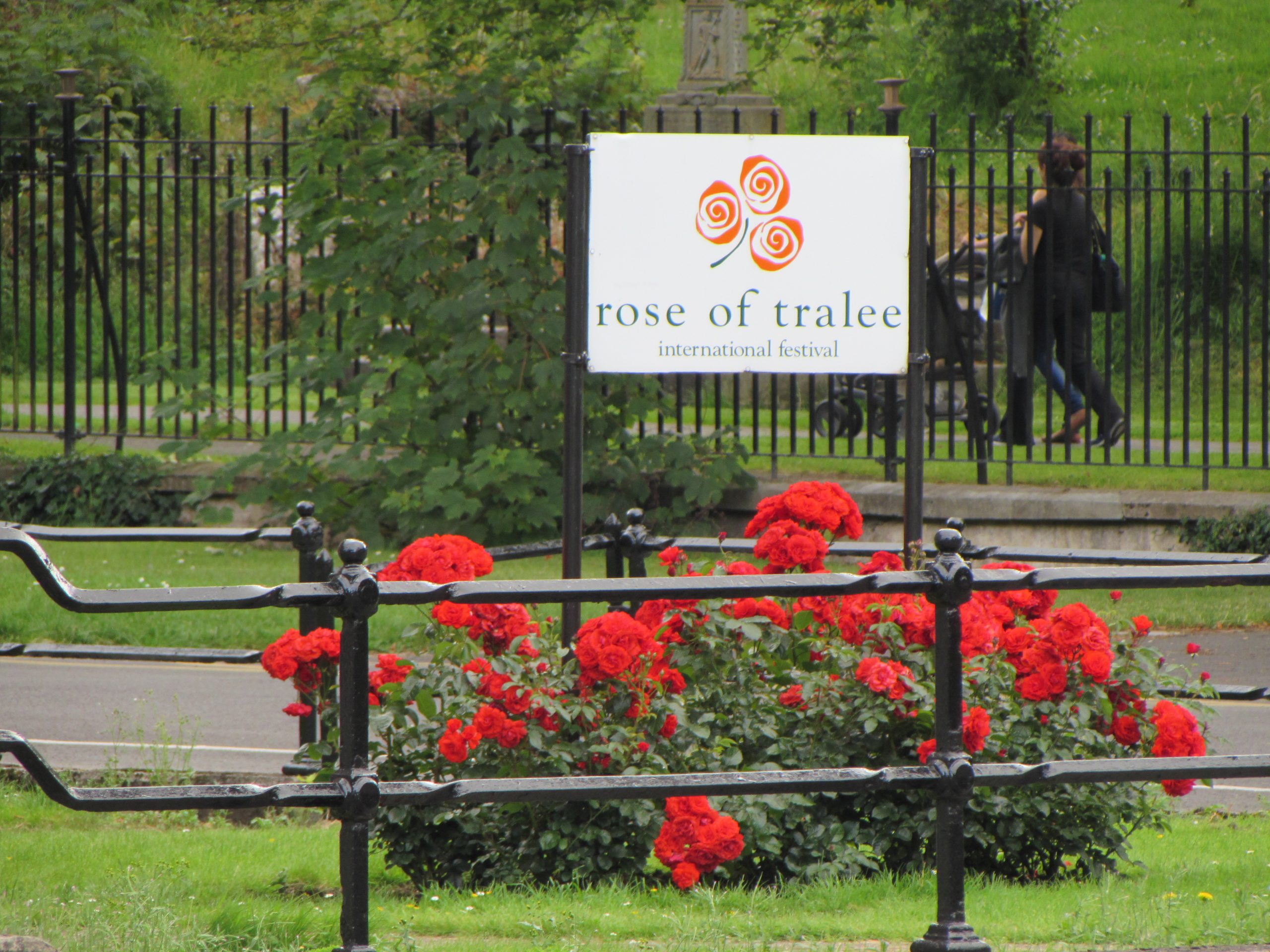
The Rose of Tralee is an Irish competition that ranks among the biggest national summer events every year! Held each August in the town of Tralee (County Kerry), this event is a kind of “Miss” pageant where an Irish woman is chosen to represent the Irish community worldwide… Alongside this, there are numerous local festivities and a TV show! Make no mistake: Tralee becomes packed, overrun by both Irish people and tourists alike!
The event is inspired by a 19th-century traditional Irish song called “Rose of Tralee“. The song is said to have been written by William Pembroke Mulchinock, a wealthy Protestant, in memory of Mary O’Connor, his Irish maid, with whom he was deeply in love. The song tells the story of this forbidden love and its tragic end.
Today, the song has inspired a full-fledged festival: the Rose of Tralee. The competition involves nominating the young woman who best embodies human and aesthetic qualities to represent Irish culture worldwide. Among the sought-after qualities, she must be beautiful, intelligent, cultured, and skilled in Irish music, dance, or even a traditional Gaelic sport.
The competition unfolds in several stages: each Irish county elects its own “Rose of Tralee” before a final selection takes place over four televised evenings on RTÉ. The show is hugely popular, attracting nearly 2 million viewers annually!
Meanwhile, the town of Tralee celebrates the event in grand style: parades, concerts, fireworks, street entertainment, and more. The town is literally taken over by tourists during this time! You don’t need to be a fan of beauty pageants to enjoy yourself here—there’s plenty to do for everyone!
Also, be sure to book your accommodation as early as possible; otherwise, you may have to stay outside Tralee. The town is in very high demand during this period!
Essential information to help you plan your visit, including key landmarks, access information, and booking options.
from August 15 to 19, 2025
Check the opening hours and admission requirements before you leave, especially during peak season or on Irish public holidays.