

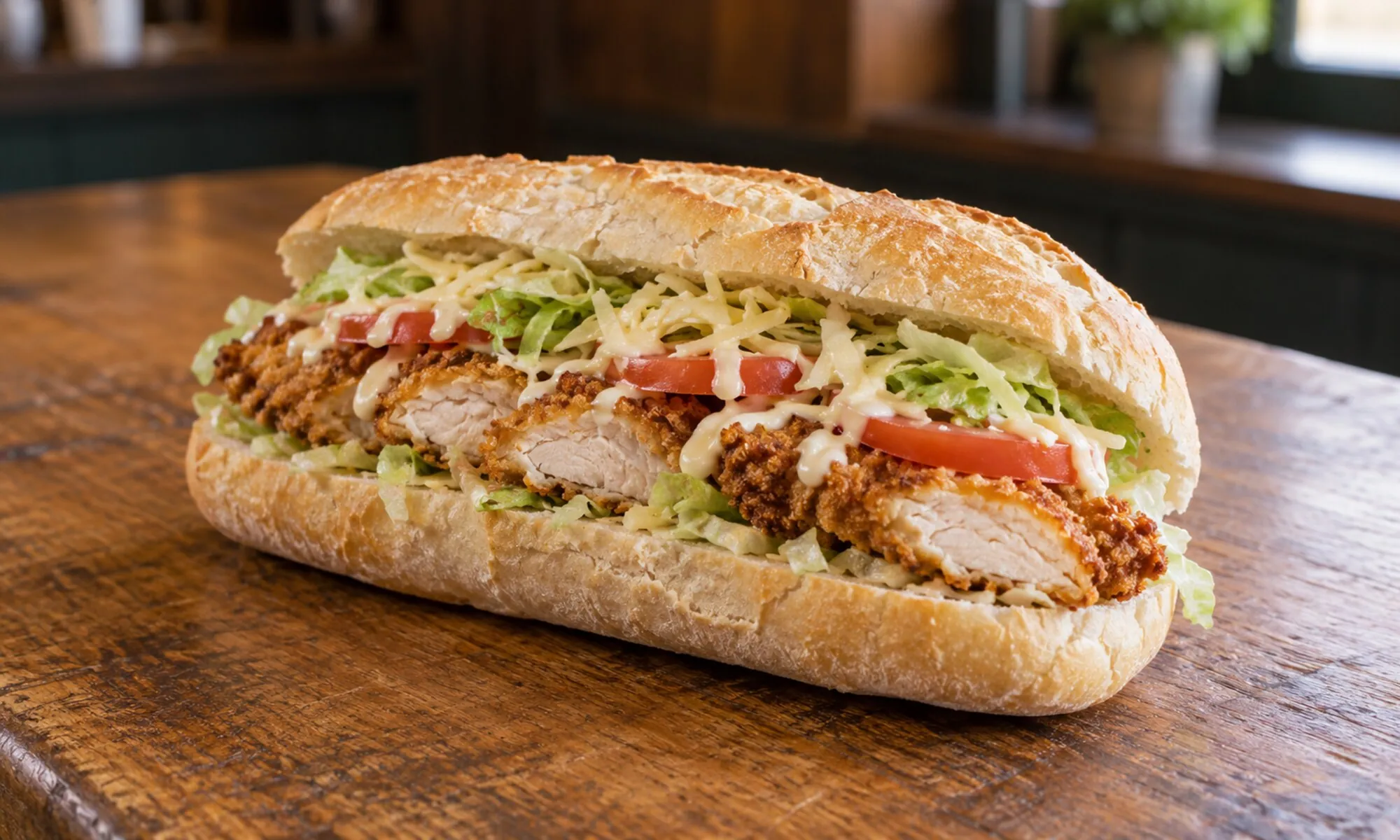
A crusty baguette, a still-warm breaded chicken fillet, a generous helping of sauce and a few salad items chosen on the spot: the Chicken Fillet Roll makes no attempt to impress with its elegance. Yet this sandwich, sold in convenience stores and petrol stations, has become one of Ireland’s most recognisable lunches. Quick, customisable and fairly substantial, it suits both a student’s break and a meal eaten on the road between stops.
The Chicken Fillet Roll is not one of the old recipes handed down on Irish farms. It belongs to a far more contemporary culture: that of the deli counter, where you order a sandwich made in front of you. Its humble origins have not stopped it from taking on a significant place in everyday local life. For curious travellers, trying one offers a taste of the real Ireland, far from menus designed especially for tourists.
In its most common form, the Chicken Fillet Roll pairs a baguette or long bread roll with a breaded chicken fillet. The chicken is kept hot behind the counter, then cut into pieces before being placed in the bread. The customer then chooses butter or mayonnaise, salad items, cheese and sauce.
The word roll refers here to the bread, not a rolled flatbread. As for the term fillet, it does not guarantee a chicken escalope freshly breaded on site. Depending on the outlet, it may be a prepared fillet, seasoned and cooked in the shop kitchen. The texture, quality of the meat and thickness of the coating can therefore vary considerably from one counter to another.
The deli counter is a familiar feature of Irish convenience stores, supermarkets, petrol stations and small shops. It offers hot dishes, salads, fillings and different breads. Customers put together their meal in a few sentences while the staff member assembles it in front of them. At lunchtime, the queue can grow very quickly: most people know their favourite combination and recite it with almost military precision.
The Chicken Fillet Roll has become one of the symbols of this system. A 2020 survey of more than 1,000 adults for Circle K found that 22% of respondents considered it their favourite deli-counter item. This result is not an official national statistic, but it clearly illustrates the sandwich’s popularity in everyday life.
There is no universally recognised creation date or officially identified inventor. The Chicken Fillet Roll appears to have taken hold with the growth of hot-food counters in local shops, particularly in the late 20th century and early 2000s. The success of takeaway food, travel by car and the density of the convenience-store network created an ideal setting for this quick, hot meal.
The sandwich therefore belongs to a different story from Irish stew, soda bread or boxty. It does not speak of rural farming or times of scarcity: it speaks of urban and suburban Ireland, daily commutes, short breaks and shops open early or late. It is precisely this ordinariness that makes it an interesting cultural subject.
The Chicken Fillet Roll inspires surprisingly passionate debates in Ireland. Should you choose plain, spicy or Southern Fried-style breaded chicken? Is lettuce essential? Should the cheese melt against the chicken? Does taco sauce improve the whole thing or overwhelm everything else? Everyone has their own answer, and certain combinations can provoke reactions worthy of a state affair.
The sandwich is also associated, with much humour, with the morning after a night out and meals eaten on the go. It regularly appears in conversations, videos and rankings devoted to Irish eating habits. Its fame now extends beyond the counter itself: restaurant chains have offered their own versions, and vegetarian alternatives have also emerged.
The first decision usually concerns the chicken. Counters may offer a plain version, a spicy coating or a crispier Southern Fried-style recipe. The bread choice may be limited to a white baguette, but some shops also offer wholemeal bread, wraps or seeded rolls.
The bread can be spread with butter, mayonnaise or both. The question “Butter or mayo?” often comes at the very start of the order. It is best to have your answer ready when several people are waiting behind you: the Irish deli counter is friendly, but lunchtime is not always the best moment to ponder the meaning of mayonnaise at length.
Available fillings depend on the establishment. Lettuce, tomato, onion, cucumber, sweetcorn, peppers and coleslaw are among the common options. You can add grated or sliced cheese, and sometimes bacon or stuffing. Simplicity remains a safe bet, however: too many ingredients make the sandwich difficult to close and dilute the flavour of the chicken.
Classic mayonnaise, spicy mayonnaise, barbecue sauce, sweet chilli and taco sauce are among the popular accompaniments. The latter is generally a creamy, spicy sauce found widely in Irish fast food. There is no official combination, however. The very principle of the Chicken Fillet Roll is customisation.
To order, simply ask for a chicken fillet roll. You will then be asked about the bread, butter or mayonnaise, type of chicken, salad and sauce. You can answer as you go, or state your chosen combination straight away if you know exactly what you want.
If your English is hesitant, it is usually enough to point to the ingredients you would like. The sandwich is assembled before your eyes and requires no command of culinary vocabulary. It is one of the most accessible food experiences of a stay in Ireland.
The Chicken Fillet Roll is mainly found in shops with a hot-food counter: convenience stores, supermarkets, petrol stations and local shops. The chains vary between the Republic of Ireland and Northern Ireland, but the principle remains widely recognisable. Not every outlet serves sandwiches all day, and availability may decrease after lunch.
For your first taste, choose a busy counter where the food is replenished regularly. The chicken should be served piping hot. If a prepared sandwich appears to have been waiting for a long time, or the display does not inspire much confidence, it is best to move on: even a national icon deserves to respect the hot-food chain.
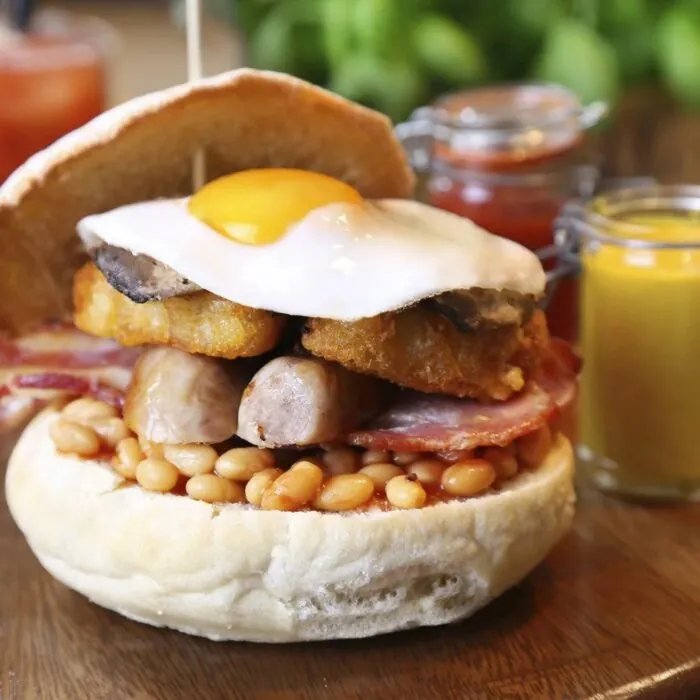
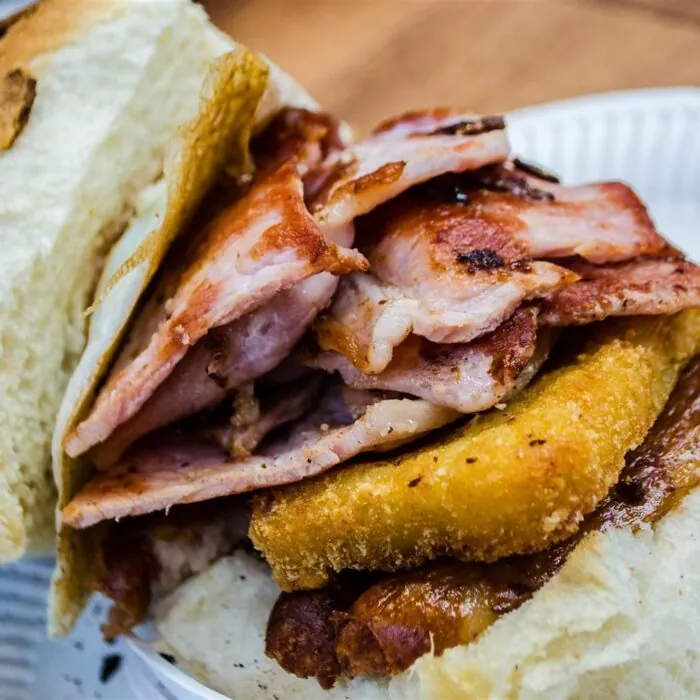
The Chicken Fillet Roll centres on breaded chicken and is commonly eaten for lunch. The Breakfast Roll, by contrast, brings together the elements of a hot breakfast: sausages, bacon, egg, pudding or a potato cake, depending on the version. The Belfast Bap is based on a large traditional round Belfast bread, which can hold a variety of fillings.
These three preparations belong to the same family of generous, easy-to-take-away meals, but they do not reflect the same habits or history. Distinguishing them helps preserve the character of each speciality and avoids reducing all Irish counter food to a baguette overflowing with fried food.
The Chicken Fillet Roll is neither a gourmet dish nor an ancestral recipe. It is often rich, salty and generously smothered in sauce. Yet it deserves a place on a food-focused trip because it captures an instantly recognisable local habit. You order one at a petrol station before getting back on the road, in a neighbourhood convenience store or among workers picking up their lunch.
It also offers a quick meal without choosing an international chain. Its quality depends greatly on the shop and the combination you choose, but a well-made version delivers a terrifically effective mix: crusty bread, hot chicken, seasoned coating, fresh salad items and creamy sauce. Nothing terribly sophisticated, admittedly, but good ideas do not always need a white tablecloth.