

After a windswept hike in Connemara or a rainy day on the streets of Dublin, few dishes are as comforting as an Irish stew. This Irish stew traditionally combines mutton or lamb with potatoes, onions and a few herbs, slowly cooked in a clear broth.
Behind its apparent simplicity lies one of the great classics of Irish cuisine. But beware of preconceived ideas: historic Irish stew does not necessarily contain Guinness, and its composition varies considerably from one region, family and pub to another.
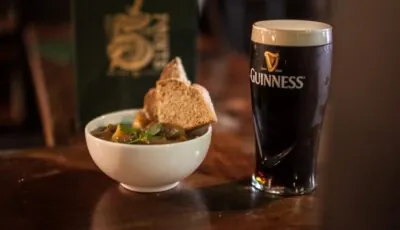
An Irish stew served at Five Points in Belfast
Irish stew, known as stobhach Gaelach in Irish, is a stew made with simple, nourishing ingredients. Its oldest version generally combines mutton, potatoes, onions, parsley and water or stock.
Historically, mutton was more common than lamb. Less tender but also less expensive and more flavourful, it was perfectly suited to slow cooking. In modern versions, lamb has largely replaced it, particularly in restaurants and pubs.
Carrots, leeks, celery, pearl barley and thyme may also be included. However, they are not always present. Like many popular dishes, Irish stew has no single, unchanging recipe.
Contrary to popular belief, stout is not one of the fundamental ingredients of traditional Irish stew. The historic version is closer to a hearty broth than a dish coated in a brown sauce.
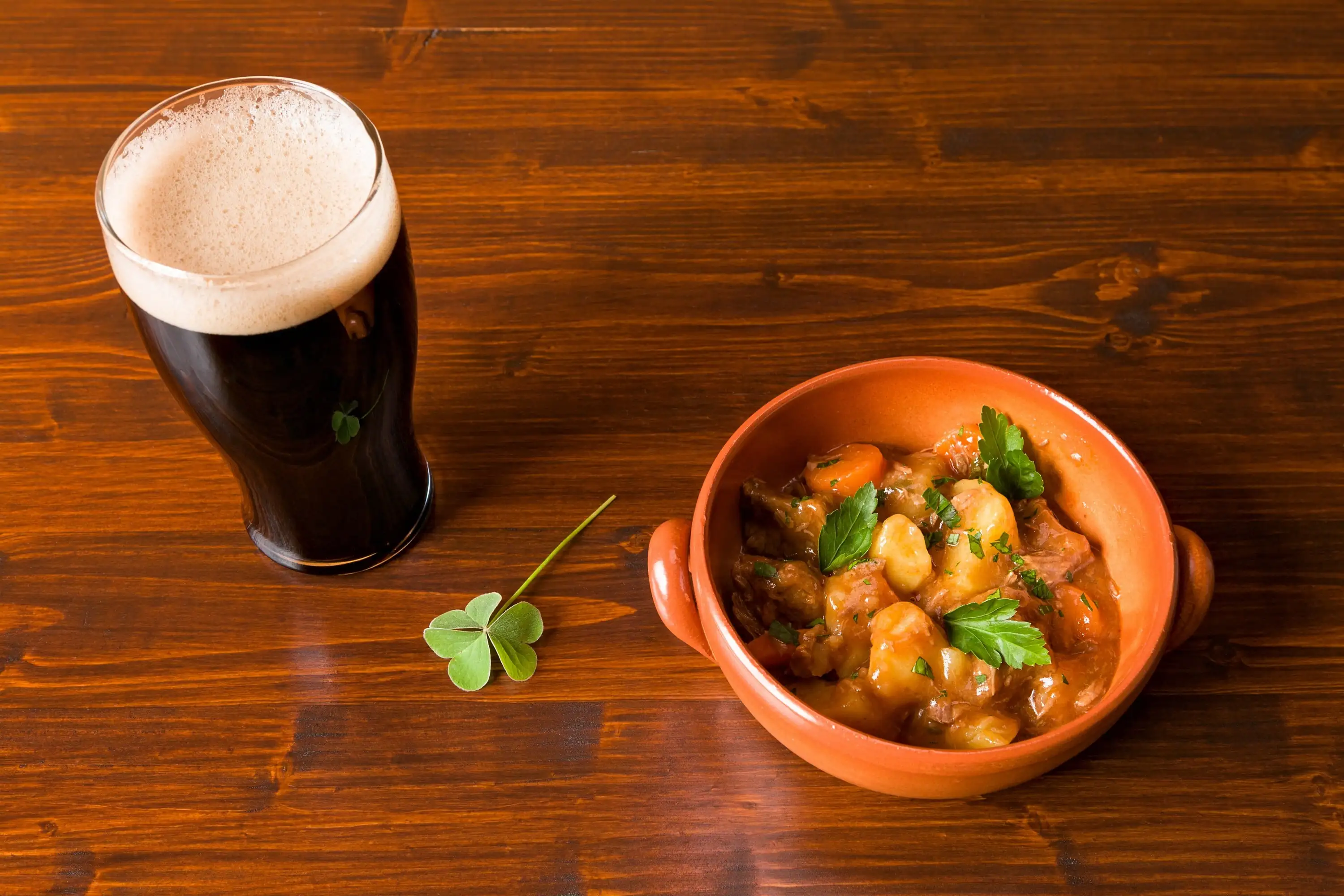
Beef and Guinness stew, made with beef and stout, is a modern variation particularly popular in pubs. Its sauce is generally darker, thicker and slightly malty. It is nevertheless distinct from traditional Irish lamb stew.
Both recipes sometimes appear on the same menu. If you want to try the version closest to the historic dish, look for traditional Irish stew, Irish lamb stew or mutton stew.
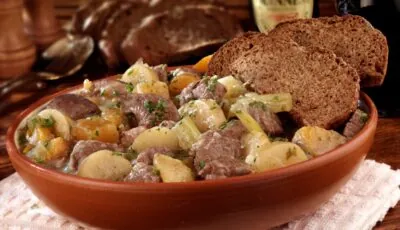
Irish stew – © cdkproductions
The exact origins of Irish stew are difficult to date. The dish belongs to a tradition of home cooking passed down orally for generations, with no official recipe or identified creator.
In rural Ireland, cooking in a pot made it possible to tenderise tougher cuts of meat while feeding several people with few ingredients. Onions added flavour, while potatoes gave the dish its substance.
Gradually introduced to Ireland from the late 16th century onwards, potatoes became increasingly important in the diet over the following centuries. They naturally became one of the central elements of this rural stew.
Irish stew therefore tells the story less of celebratory cooking than of an ingenious way of making the most of available resources. Its strength lies precisely in this economy of means: meat slowly simmered with a few vegetables in a broth that concentrates all their flavours.
Traditional Irish stew has relatively mild flavours. The meat becomes meltingly tender during cooking, while the potatoes absorb some of the broth and can naturally thicken it.
Onion, parsley and herbs bring freshness without masking the taste of the lamb. Versions containing root vegetables develop sweeter notes. Those made with barley have a more rustic, substantial texture.
The stew is often served with brown bread or soda bread and Irish butter. The bread is used to soak up the broth left at the bottom of the bowl, a simple gesture that is very much part of the pleasure.
The choice largely depends on your tastes. Lamb Irish stew is generally lighter, with a clear broth and a flavour dominated by the meat and herbs.
Beef simmered in stout develops a richer, darker sauce that is sometimes slightly bitter. The beer’s roasted notes evoke coffee, caramel and toasted bread. This variation is often served with mashed potatoes rather than potatoes cooked directly in the stew.
For a first taste, Irish lamb stew offers the most traditional version. Beef and Guinness stew is more likely to appeal to those who enjoy rich sauces and bold flavours.
Irish stew is available in many pubs and restaurants specialising in Irish cuisine, though it does not appear on every menu. It is generally easier to find in tourist areas, cities and establishments that highlight local produce.
In Dublin, Galway, Cork, Killarney and Belfast, menus often distinguish between lamb stew and beef with Guinness. In rural areas, some establishments adapt the dish to local produce, using lamb from Connemara, Kerry or Wicklow.
The presence of traditional music is no guarantee of culinary quality. To choose a good place, it is better to look for a short menu, clearly stated meat provenance and food prepared on site.
Brown bread and soda bread are the most natural accompaniments. Some establishments add a serving of mash, even when the stew already contains potatoes.
An Irish beer can complement the meal: stout with a beef version, red ale or lager with a lamb stew. This pairing is, of course, optional, and alcohol should be consumed in moderation.
The days when you could easily find a full Irish stew for under €10 are long gone. In 2026, expect to pay:
Bread and butter are sometimes included, but this is not always the case. A pint ordered alongside is always charged separately.
The traditional recipe may be naturally gluten-free, but restaurant versions sometimes contain flour, barley, beer or an industrial sauce used to thicken the broth. It is therefore important to check with staff.
The mash and bread served alongside may contain milk or gluten. Finally, a vegetarian Irish stew is necessarily a modern adaptation, as the traditional dish is built around mutton or lamb.