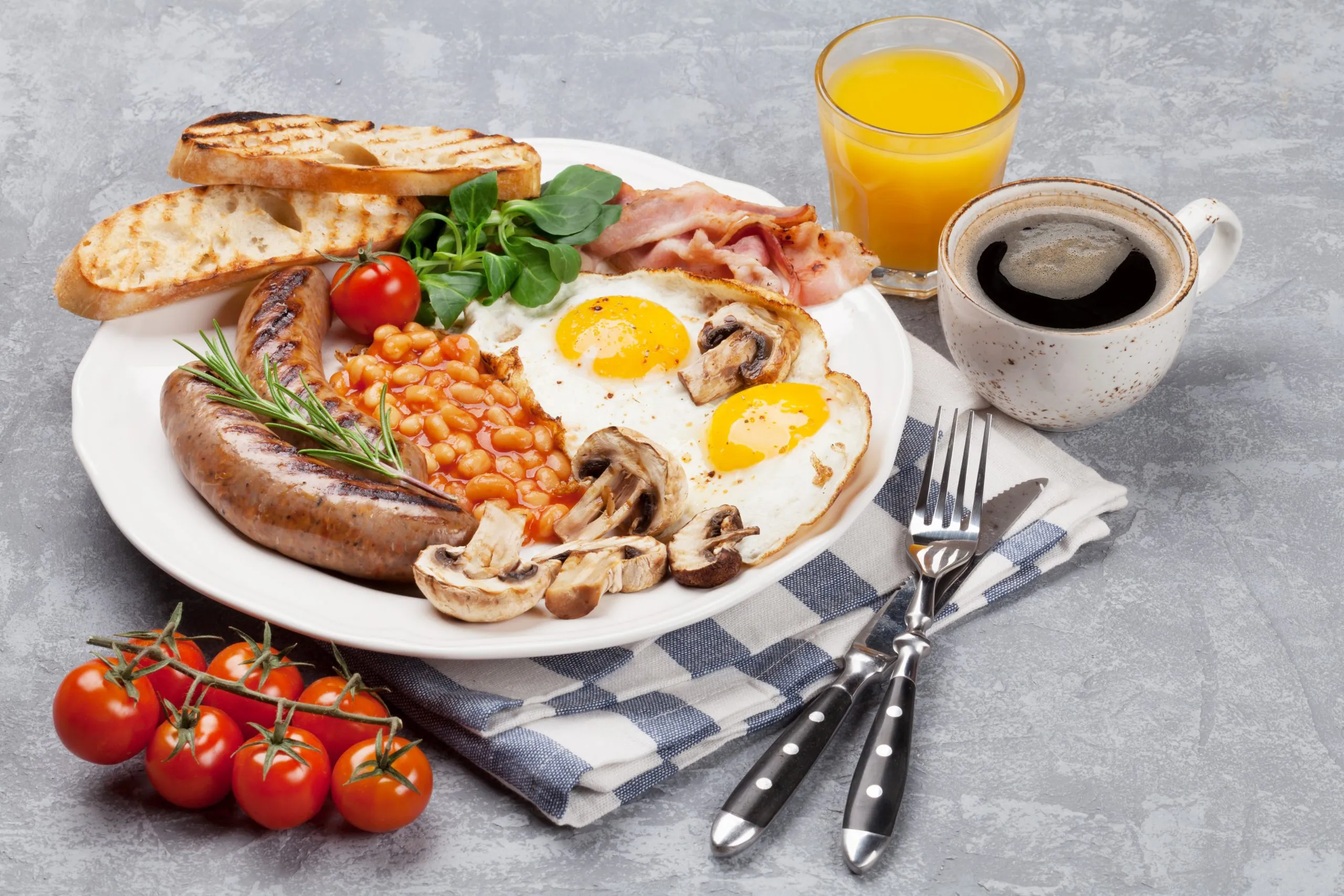
The Ulster Fry is one of Northern Ireland’s most iconic dishes. This generous plate usually brings together eggs, bacon, sausages, soda bread and potato bread, sometimes with tomato, mushrooms or pudding. More than simply a variation on the Irish breakfast, it is distinguished by its griddle-cooked breads, finished in the frying pan until golden.
The word fry refers directly to the cooking method: the various elements are traditionally fried, often in the same pan so that their flavours mingle. This was a hearty meal, suited to days of physical work and made with simple ingredients readily found in Ulster homes.
Today, the Ulster Fry is chiefly associated with substantial weekend breakfasts, cafés and hotel stays. It can, however, be served at any time of day, particularly under the name all-day fry. The plate is substantial enough to happily stand in for lunch.
There is no universal list set in stone. Habits vary between families, counties and establishments. At its most characteristic, it combines bacon, sausages, egg, soda farl and potato bread. Above all, it is these two breads that give the Ulster Fry its regional identity.
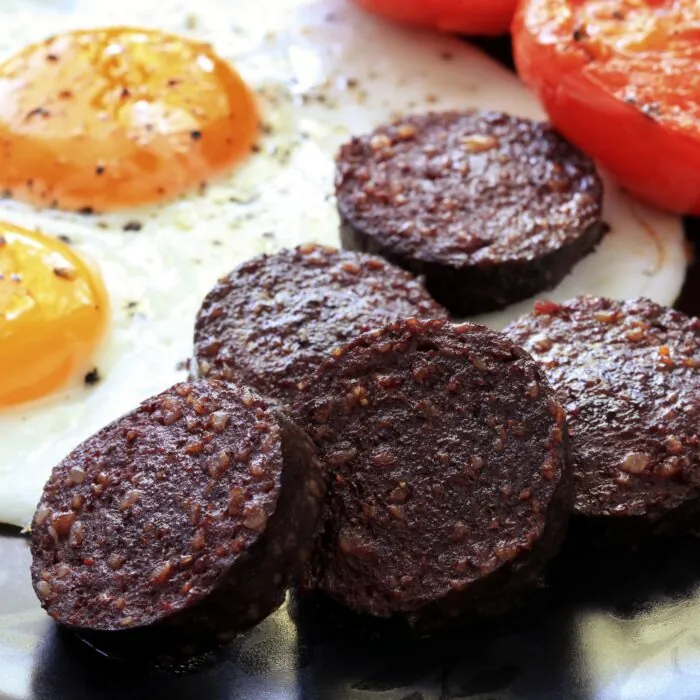
Tomato, mushrooms, black pudding, white pudding or baked beans may complete the plate. Their presence is common, though debated by purists. A more abundant version is not necessarily more authentic: the quality of the cooking and ingredients matters more than sheer quantity.
Irish or British bacon is generally served as rashers. More substantial than thin, crisp American bacon, it offers both a lean section and a fatty edge. The sausages, most often pork, are browned slowly so they cook through without burning their casings.
The egg is usually fried, with the white set and the yolk still runny. It becomes almost a sauce for dipping the breads into. Some establishments nevertheless offer scrambled or poached eggs, a modern adaptation that moves slightly away from the principle of a fry without changing its spirit.
Soda farl is a flat bread made with flour, bicarbonate of soda and buttermilk. Its dough is traditionally divided into four quarters — the term farl refers to this shape. Cooked on a griddle rather than in a deep tin, it has a dense, tender crumb.
For an Ulster Fry, the soda farl is cut and then browned in the frying pan. Its surface turns crisp while the inside absorbs the cooking juices. This texture clearly sets it apart from an ordinary slice of toast.
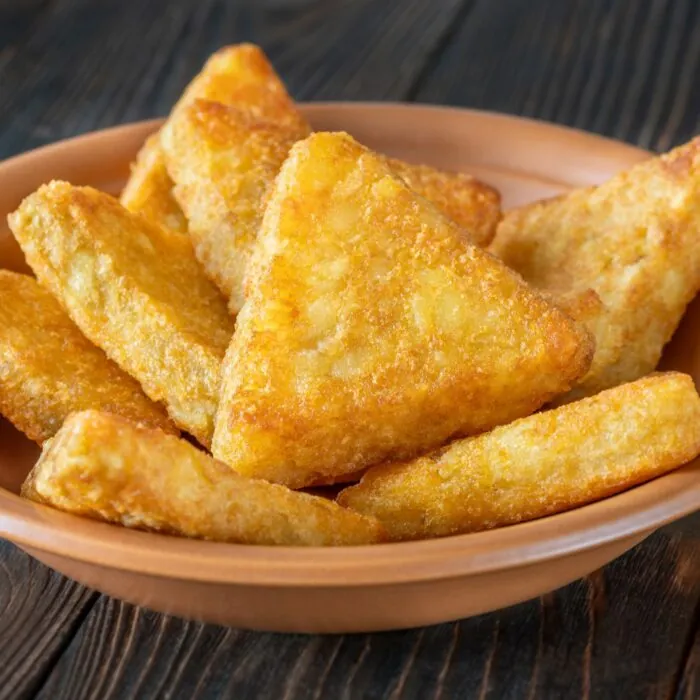
Potato bread, also known as potato farl, is made mainly from mashed potatoes mixed with a little flour. The dough is flattened, cut and cooked on a griddle. As part of the breakfast, the pieces are reheated and browned until they form a thin crust.
Its soft, slightly floury texture perfectly absorbs egg yolk and bacon juices. Along with soda farl, it is the clearest sign of a genuine Ulster Fry among the other full breakfasts served across the British Isles.
The Ulster Fry and the Full Irish Breakfast share many ingredients: bacon, sausages, eggs, pudding, tomato and mushrooms. The boundary is not always clear, especially as recipes travel from one region to another. The presence of both soda farl and potato bread nevertheless remains strongly associated with Ulster.
In the Republic of Ireland, a full breakfast may instead come with sliced soda bread, toast or sometimes boxty. Here too, home cooking habits and contemporary menus make any absolute rule uncertain.
The Full English commonly includes toast or fried bread and often gives baked beans a prominent place. The Ulster Fry places greater emphasis on its regional griddle-cooked breads. Hash browns, although common in modern breakfasts, are not an essential historical element of the Northern Irish plate.
These differences may seem slight at first glance, but they markedly change the texture of the meal. Potato bread brings the softness of potato, while soda farl offers a denser crumb, ideal alongside the fried elements.
The main challenge is serving all the ingredients hot at the same time. Start with the sausages, which take the longest to cook. Then add the bacon, followed by the mushrooms and halved tomatoes if using. The breads and eggs come at the end.
A large frying pan makes the process easier, though cooked items can be kept aside in a low oven. The food should be browned rather than saturated with fat. Grilling the bacon and sausages is a lighter adaptation that is very common today.
Soda farl and potato bread need only a few minutes on each side. They should develop a golden surface without drying out. If there is a great deal of fat in the pan, remove some before cooking the breads: they should absorb the flavours, not turn into sponges.
Serve immediately on a warm plate, with the egg yolk still runny. Black tea traditionally accompanies this breakfast. Extra bread, butter and sauces may be offered, but the plate is already rich enough to stand on its own.
The Ulster Fry appears on many menus in Belfast, Derry, Armagh and smaller Northern Irish towns. Independent cafés, covered markets, pubs serving breakfast and guesthouses are good places to try it. The most interesting versions showcase butcher’s sausages, thick-cut bacon and locally made breads.
On a menu, look for Ulster Fry, small fry or all-day breakfast. Even a small version can be very generous. Despite its misleading name, the term vegetable roll can also refer in Northern Ireland to a meat preparation served with some breakfasts.
A good Ulster Fry should be neither soggy nor uniformly greasy. The sausages should be well browned, the bacon should remain substantial, the egg should retain a soft yolk, and the breads should have lightly crisp edges. Each element thus keeps its own texture while benefiting from the flavours of the pan.
For travellers, this plate offers a very tangible introduction to Ulster cuisine. It highlights two specialities that can be difficult to encounter outside the region — soda farl and potato bread — and reveals a popular cuisine that favours generosity over passing fashions.