

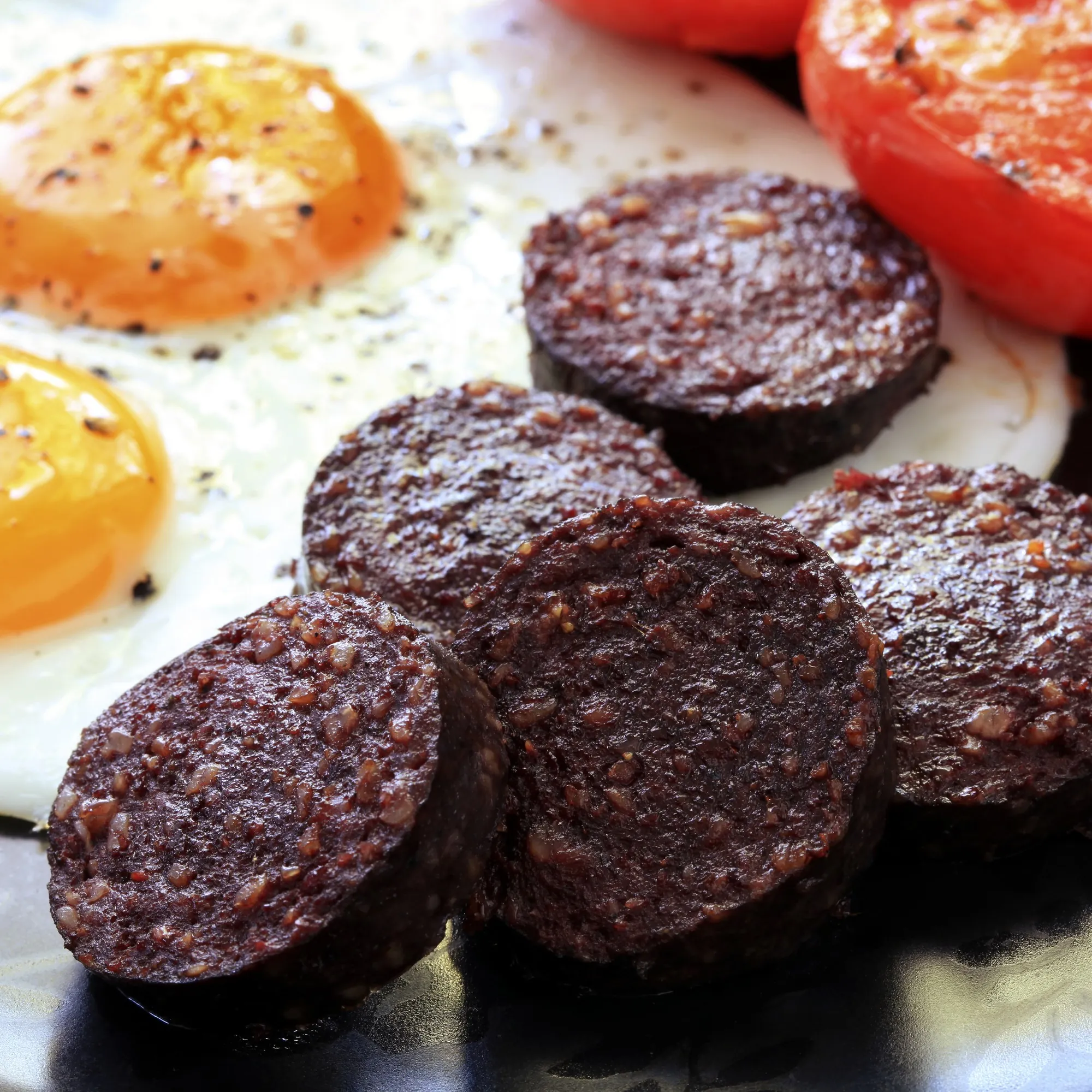
In the warmth of a still-quiet pub, a steaming plate arrives at the table: eggs, bacon, sausages, grilled tomatoes and two dark slices with a crisp exterior. This is black pudding, one of the staples of an Irish breakfast. Similar to French boudin noir, this speciality made with blood, fat, cereals and spices nonetheless has a firmer, often more granular texture. It is an almost essential discovery for anyone wishing to explore Ireland’s traditional cuisine.
Black pudding belongs to the broad family of blood sausages eaten for centuries in many European countries. In Ireland, it is traditionally made with pig’s or beef blood, fat, onions, oats or barley, salt and a blend of spices. Its exact composition varies between regions, artisan producers and manufacturers.
Contrary to what one might think, the Irish recipe does not necessarily contain meat, bread or potatoes. Some versions consist chiefly of blood, fat and cereals. The generous use of oatmeal or oat grains gives them a denser, crumblier texture than many French black puddings.
Black pudding is generally sold pre-cooked, in the form of a cylinder to be cut into slices. It is then reheated in a frying pan, under the grill or in the oven, following the instructions on the packaging.
The idea of cooking the blood of slaughtered animals is very old and is not an exclusively Irish invention. For centuries, rural European communities sought to use every part of the animal, at a time when livestock farming required considerable resources and food waste was difficult to imagine.
In rural Ireland, the seasonal slaughter of pigs played an important part in domestic life. The meat was salted or preserved, while blood and fat could be combined with inexpensive ingredients such as oats, barley and onions. The result was a nourishing food suited to the needs of rural families.
Each butcher and region gradually developed its own seasoning. Some recipes favour pepper and warming spices; others stand out for their high oat content or particularly crumbly texture. This diversity still exists among Irish artisan producers and manufacturers.
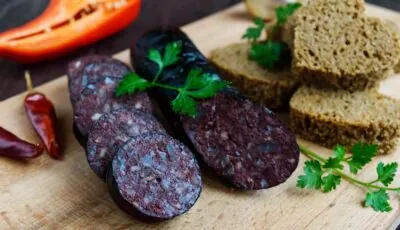
Black pudding
Black pudding is made in many parts of Ireland, but the town of Clonakilty, in County Cork, is particularly associated with it. A commercial recipe is said to have been developed there in the 1880s at Edward Twomey’s butcher’s shop.
Having become one of the country’s best-known references, the Clonakilty version combines oats, onions, beef fat, beef blood and a secret blend of spices. It is recognisable by its crumbly texture and peppery, flavoursome taste, without being overly strong.
Clonakilty is therefore not the only place where Irish black pudding is produced, but the town has played a major role in popularising the speciality. Other renowned producers operate in Counties Cork, Kerry, Limerick and Mayo, as well as elsewhere on the island, with sometimes very different recipes.
The term drisheen, or drisín in Irish, is sometimes mistakenly presented as a simple translation of black pudding. It in fact refers to a distinct speciality historically associated with Cork city and its covered market, the English Market.
Drisheen can be made with beef, sheep’s or pig’s blood, with milk, fat, salt and sometimes herbs added. Its softer, more gelatinous consistency distinguishes it from oat-rich black pudding. In traditional Cork cooking, it was often served with tripe.
Today, drisheen is much harder to find than black pudding. Curious travellers can still look for it at some of the historic butcher’s shops in Cork’s English Market.
Despite its dark colour and an ingredient list that may seem off-putting, black pudding does not generally have a pronounced blood taste. Its flavour is mainly salty, spiced and deeply savoury. The oats soften it, while cooking creates a pleasing contrast between a lightly crisp crust and a soft or crumbly centre.
It is traditionally served as part of a full Irish breakfast, alongside eggs, sausages, bacon rashers, tomatoes, mushrooms and white pudding. The latter resembles black pudding, but contains no blood.
Contemporary Irish cooking now gives it a much broader role. It can be found in warm salads, on toast, with scallops, in burgers or crumbled over potato dishes. Its rich flavour works particularly well with apple, caramelised onion, eggs and seafood.
Where to try it: black pudding features in most establishments serving a full Irish breakfast. It can be found in hotels, guesthouses, cafés and some pubs open in the morning. It is sometimes possible to choose between black pudding and white pudding, though both are often served on the same plate.
Where to buy it: it is readily available in Irish supermarkets, butcher’s shops and delicatessens. To discover a more artisanal version, opt for a local butcher or food market. In Cork, the English Market is a particularly interesting place to visit.
Guide price : expect to pay between €3 and €6 for a supermarket pack, depending on its weight, brand and production method. Artisan products may cost more.
Preparation: remove the casing if recommended by the manufacturer, then cut the pudding into thick slices. As a guide, Clonakilty recommends frying it over a medium heat for three to four minutes on each side. Always follow the instructions for the product you have bought rather than eating it cold or insufficiently reheated.
Allergens and dietary requirements: most recipes contain oats or barley and may therefore not be suitable for people following a gluten-free diet. As their composition varies greatly, it is essential to check the label. Traditional black pudding is neither vegetarian nor halal.
Storage and transport: keep it refrigerated and observe its use-by date. If taking it back to France from the Republic of Ireland, preferably keep the product sealed in its original packaging and transport it chilled in an airtight cool bag. Do not hesitate to discard it if you have any doubts about how well it has kept during the journey.