The siege of Derry (1689)
The Siege of Derry is an important episode in the history of the city of the same name. It refers to the…
 5.00/5 (1 votes)
 5.00/5 (1 votes)
 5.00/5 (1 votes)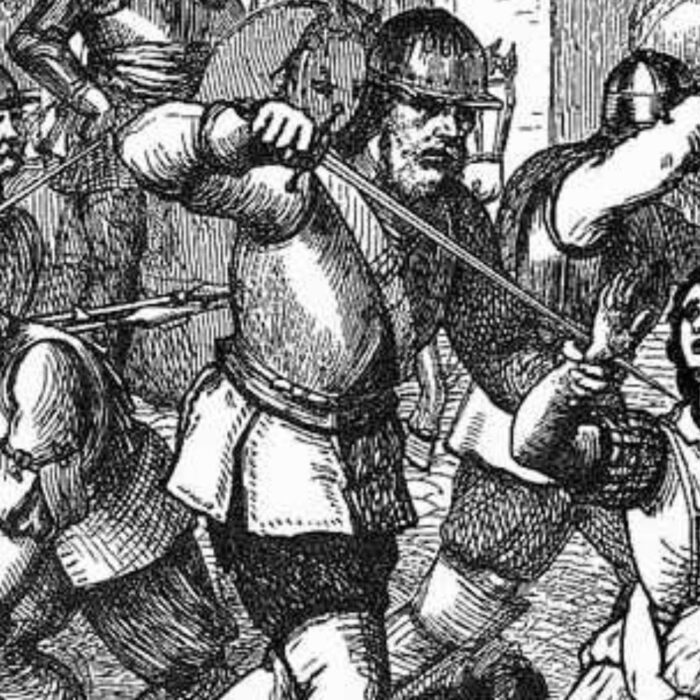
 (0 votes)
 (0 votes)
 (0 votes)
 (0 votes)
 (0 votes)
One island. Two territories. The geopolitical situation of the island of Ireland is the result of several centuries of fierce struggle, during which Ireland was forced to live under English occupation. A conflict now calmed, but still very much alive, especially in Northern Ireland…
The Anglo-Irish conflict took root in the 12th century, when wealthy Normans from England decided to raid Ireland. At that time, they landed on Irish soil, plundering and ravaging monasteries (including Monasterboice).
They strongly coveted the island of Ireland. They then planned to colonize it and extend their oppression over the Irish, whom they considered simple and uncivilized.
Their goal was clear: they wanted to settle and forcibly impose English culture on Irish territory.
But this invasion was not to the liking of the Irish. Numerous wars and power struggles followed to crush Ireland under British rule.
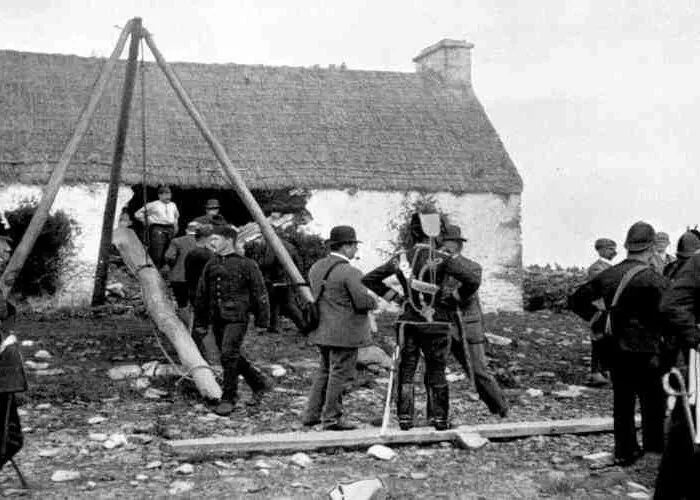
The English then deployed their troops in Ireland, forbidding the Irish from practicing Gaelic (their traditional language), their music, and depriving them of their most fundamental freedoms. At the same time, the deeply Catholic Irish were urged to convert to Protestantism.
An impossible situation that led to countless deadly wars, sieges, and sackings of local towns, where women and children were also raped and killed.
To better consolidate their presence in Ireland, Oliver Cromwell, an English military leader, decided to take matters into his own hands. He landed in 1649 with over 12,000 men. He sacked many Irish towns, raped, killed, and massacred men, women, and children.
These acts (known as the Cromwellian Conquests) lasted 3 years and were so deadly that the Irish population dropped from 1,466,000 to 616,000 inhabitants. A true massacre.
At the same time, Oliver Cromwell invited British settlers to come and settle in Ulster (referred to as “Plantations“). He encouraged the arrival of high-ranking English leaders and sought to expand colonization of the region. (This policy is at the origin of the current situation in Northern Ireland, where the Northern Irish must live alongside many British. This greatly exacerbated the Anglo-Irish conflict in the 20th century.)
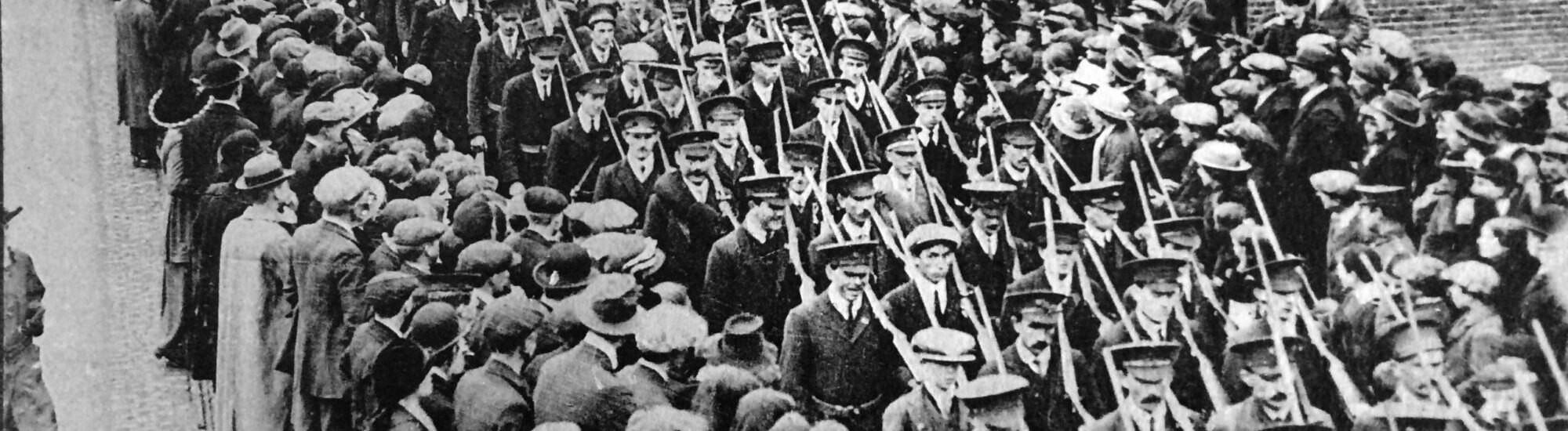
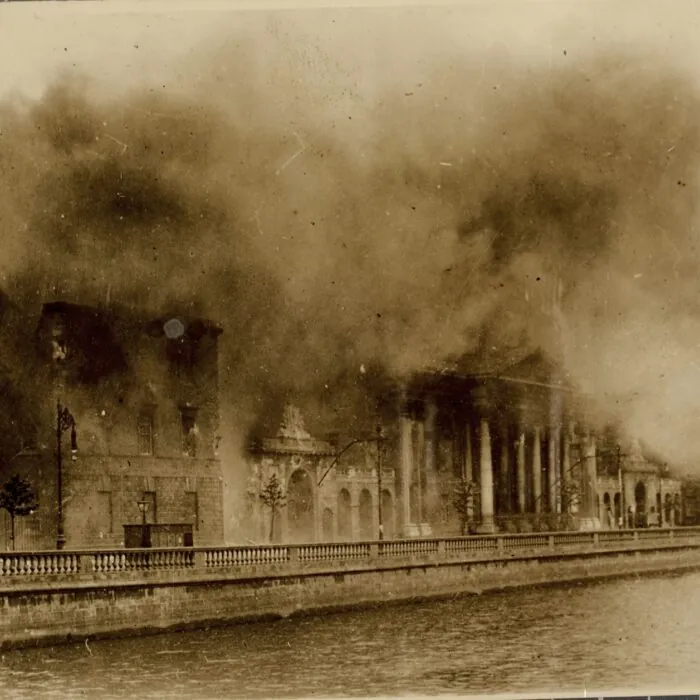
Many Irish rebels then tried to fight against this domination over the centuries… until 1916, the date of the Easter Rising, when the Irish attempted to retake Dublin by force… unsuccessfully.
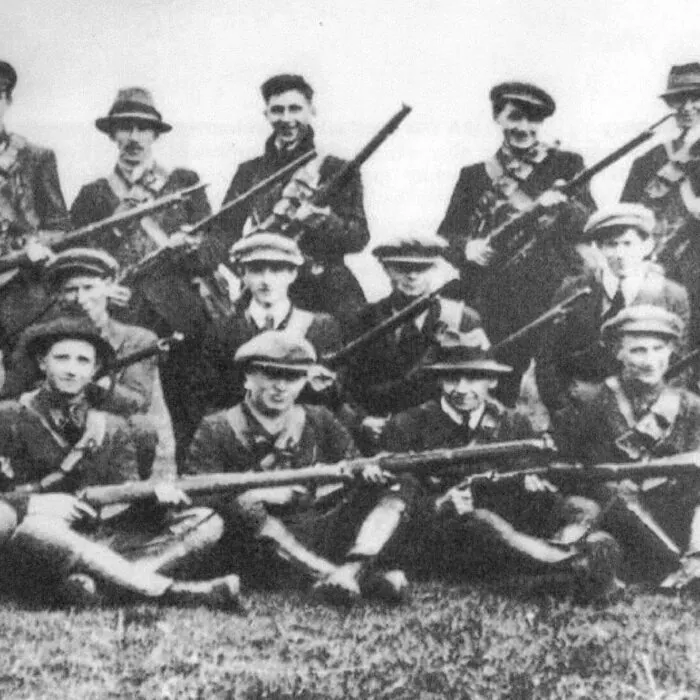
An independence war then broke out from 1919-1921. England then granted independence to Southern Ireland but intended to keep Northern Ireland under its control.
A heartbreaking situation that led to a terrible civil war (1922-1924) where Irish people fought among themselves over the Anglo-Irish Treaty (the famous treaty that allowed the annexation of Northern Ireland by the British).
In the 1960s, Northern Ireland was still under the United Kingdom. But armed factions continued to clash over the question of Northern Ireland. Militias like the IRA and UVF fought relentlessly, with bombings and intense violence. Cities like Belfast and Londonderry were surrounded by barbed wire, and sensitive neighborhoods were invaded by tanks and British troops.
Mistakes followed: British troops fired on a crowd of peaceful protesters on January 30, 1972 (known as Bloody Sunday). Hundreds of Northern Irish suspected of insurrection were imprisoned without trial in local prisons…
And the toll was heavy. From 1960 to 1990, more than 3,480 people died during this period, due to stray bullets, bombings, and other guerrilla acts. Both Northern Irish republicans and British loyalists mourned victims.
Until that day in 1998, when Northern Ireland signed a historic act: the Good Friday Agreement. It was then a question of making peace: armed militias were ordered to begin dismantling, and a peace process was established.
Today, Northern Ireland has calmed down, and the Anglo-Irish conflict seems pacified… despite still some palpable tensions. Many Orangemen still parade in the streets in summer to commemorate their historic victory over the Irish… A situation that strains sensitive neighborhoods in Belfast or Derry where some flare-ups and acts of violence can be observed.
However, acts of violence are now rare. Sensitive neighborhoods have reopened to others, and quality of life has improved. It is perfectly safe to travel there.
The Anglo-Irish conflict is not completely over, however: indeed, Brexit is currently awakening some ghosts of the past. In the event of a hard Brexit (without agreement), Northern Ireland could be completely cut off from the rest of Ireland. A terrible economic situation that might require the creation of a border, as well as the establishment of a customs regulation extremely impactful for the Northern Irish province.
Although the region is still uncertain, anger is growing. Many Northern Irish feel held hostage by the United Kingdom… and call for a referendum for the reunification of Ireland.
A demand firmly rejected by the United Kingdom, which clings by all means to Northern Ireland… even today.