It took centuries of struggle, fight, and opposition for Ireland to achieve its geopolitical independence from the United Kingdom. After many failures and aborted battles, Ireland finally found its salvation in the 20th century. Here’s how it unfolded…
20th Century in Ireland: The Time of the Uprising
Context
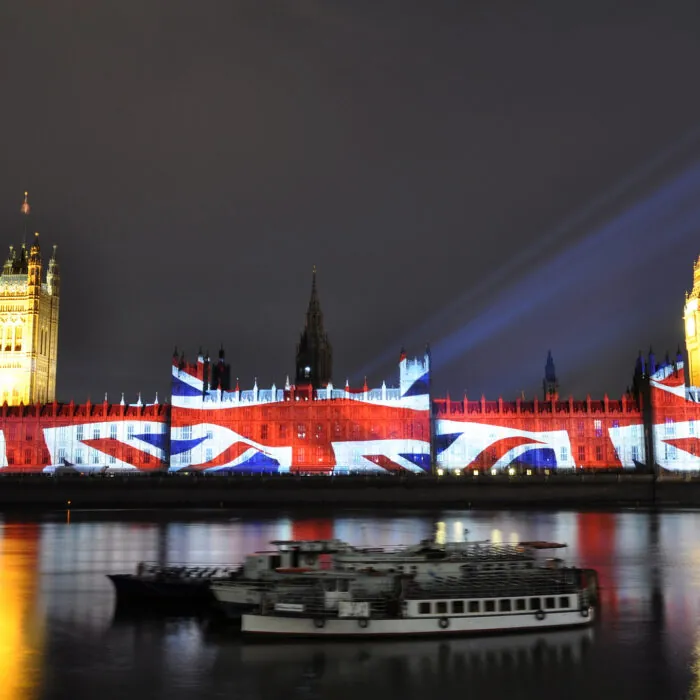
We are at the beginning of the 1910s in Ireland. For several centuries, the Emerald Isle has lived under the yoke of the British Empire. Ireland is effectively considered English territory: the British impose their presence, mistreat the Irish by depriving them of their most fundamental civil rights, and exploit the island’s resources for their economic balance.
At this time, the territory is fractured by ideological and identity conflicts. First, because the Irish are mostly Catholic (while the British are Protestant), but also because the Irish population is exhausted and severely impoverished due to past British abuses.
As a reminder, Ireland notably suffered the Great Famine (1845-1848) a few years earlier. A crisis during which Great Britain stood out for its deliberate inaction, causing between 500,000 and 1 million deaths.
A situation that continuously crystallized tensions between the Irish and the British… until the 20th century.
At this time, many Irish intellectuals adopted nationalist ideology. For them, enough was enough. Ireland is a country that must gain its independence and end the colonial regime of the English.
The Easter Rising of 1916
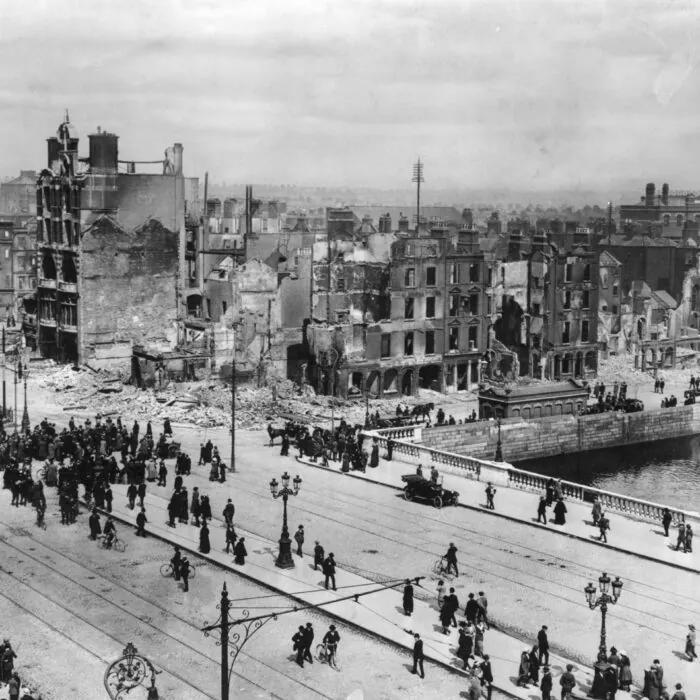
While Europe is in the midst of a world war, Irish nationalists decide to foment an insurrection on April 24, 1916. The objective is clear: to seize the strongholds of Dublin and proclaim the birth of the Irish Republic.
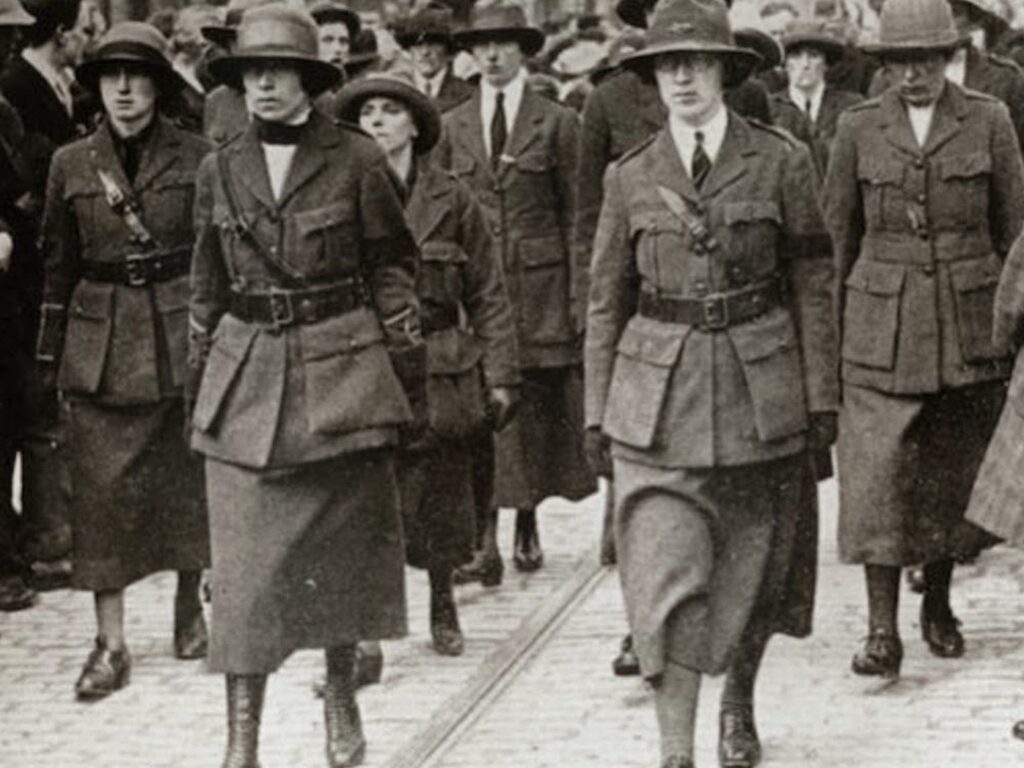
For this, several independentist military groups are mobilized: the Irish Citizen Army, the Irish Volunteers Force, and the Irish Republican Brotherhood. These three armed groups notably seize the General Post Office in Dublin, the Mendicity Institute and the Four Courts (courthouse), the Jacobs biscuit factory, the Boland mills, and Westland Row station.
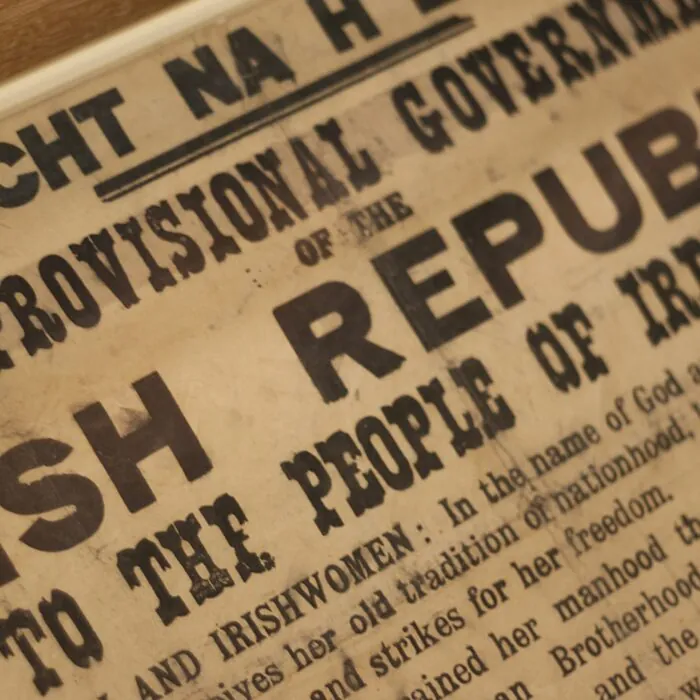
Patrick Pearse, one of the leaders of the Insurrection, then proclaims the Irish Republic…
But unfortunately, the Insurrection did not mobilize enough men and women. Very quickly, the English army mobilizes, bombs the independentist forces, and eventually neutralizes them.
For example, most of the movement’s leaders are executed by firing squad, creating outrage and a wave of revolt among the Irish population.
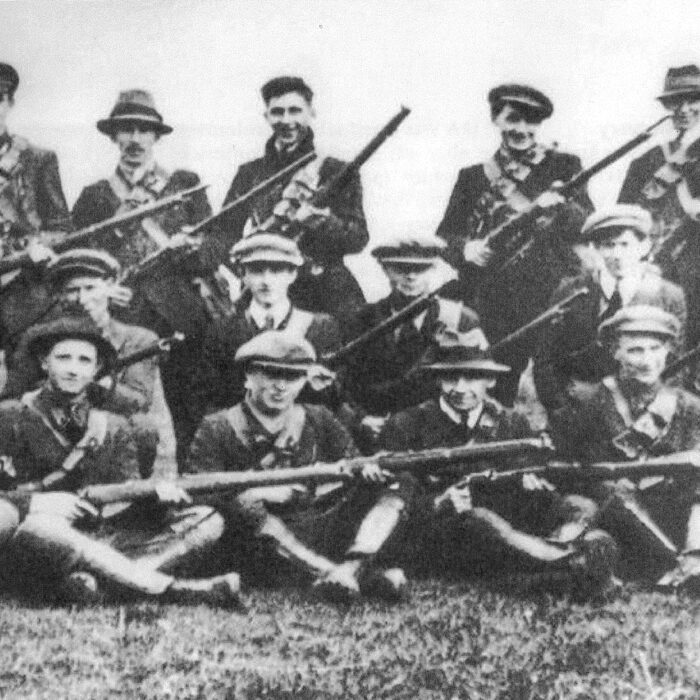
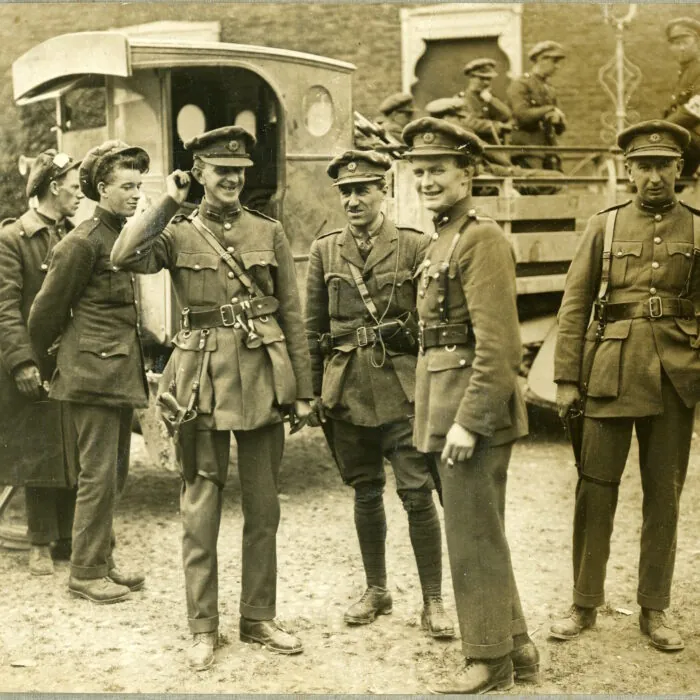
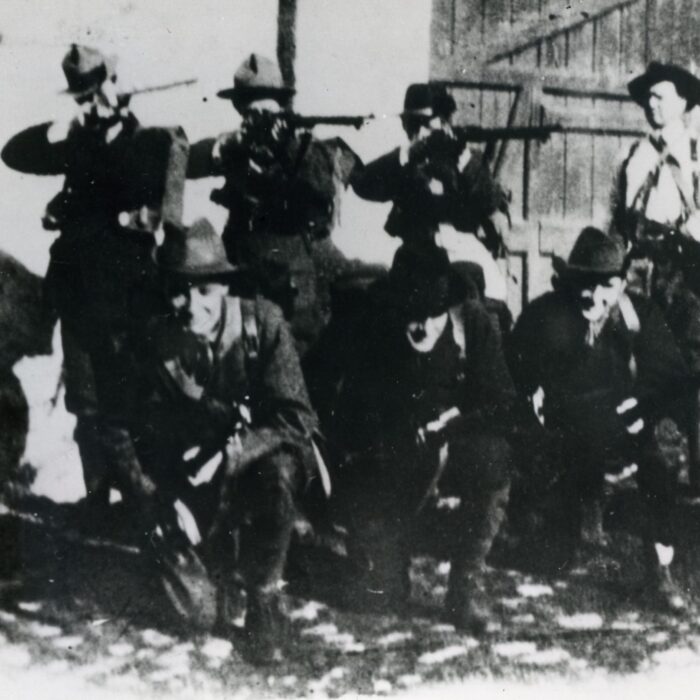
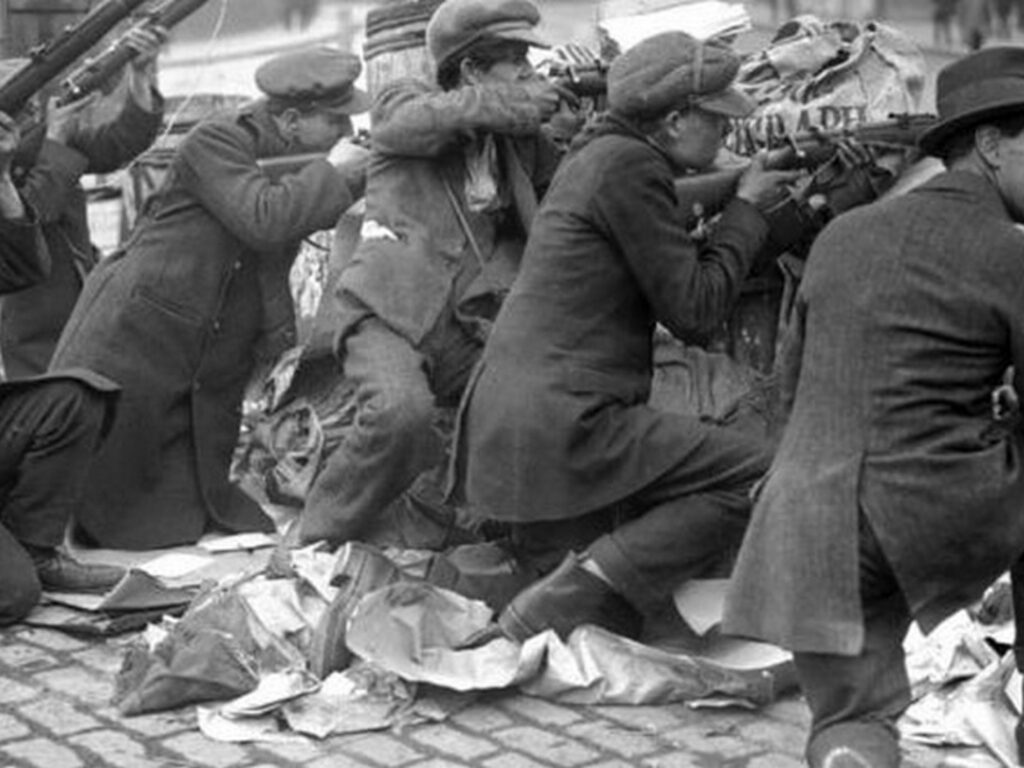
The Insurrection triggers a war of independenceIrish soldiers during the civil war – Public domain
Although the Easter Rising failed, it consolidated the anger and determination of nationalists in their independence drive. Very quickly, nationalists create a political party called “Sinn Féin.” Its ideology is to obtain Irish independence, and it is promptly declared illegal by the London government.
From then on, nationalist leaders like Michael Collins and Eamon De Valera decide to fight through guerrilla warfare. They organize attacks and hit-and-run actions via the armed wing of the IRA, an Irish nationalist militia.
Very quickly, this escalates into a broader conflict. The War of Independence breaks out in 1919 and ends in 1921. At that time, the London government arranges talks with Michael Collins and Arthur Griffith… It must be said that the war has been costly for England: economically strangled, it decides to make concessions.
The “Anglo-Irish Treaty” is then signed and formalizes the creation of a Free State of Ireland owing allegiance to England… In exchange, the United Kingdom retains Ulster (Northern Ireland).
A decision that does not please all the Irish. The annexation of the North is seen by many as a scandal and a pure abandonment of territory supposed to be Irish.
A civil war then breaks out, pitting Irish against Irish between 1922 and 1924. Eamon De Valera opposes Michael Collins, and numerous attacks and war scenes occur during this period.
By 1924, the war begins to fade. The independentists can no longer cope and resign themselves to the idea of a divided Ireland.
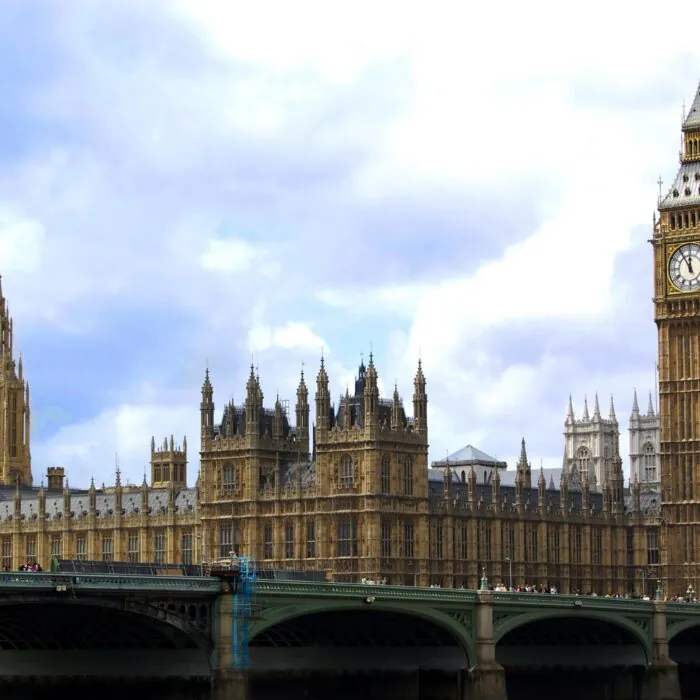
Much later, in 1931, the Statute of Westminster officially recognizes the independence of the Irish State. The southern part of the country no longer owes allegiance to Great Britain and is free from any interference…

 +
+