Do you have to like whiskey to step through the door of an Irish distillery? The question may seem almost incongruous, given how closely these places are associated with the glass served at the end of a visit. Yet a new survey points to a broader audience: visitors who come to explore a heritage, understand a craft or accompany their loved ones, without necessarily taking part in the tasting. For those who do not drink, this is a gateway into an Ireland that should not be dismissed too quickly.
More than a third of visitors do not drink on site
What the survey published in October 2026 actually reveals
According to the Irish Whiskey Association, in its report of 27 October 2026, more than a third of visitors to the establishments surveyed do not consume alcohol on site. The Irish Whiskey Way survey covers the period from June 2025 to June 2026 and concerns the association’s member distilleries.
One important distinction: this result does not mean that a third of visitors are abstainers. Nor does it indicate their individual reasons. Driving, personal preference or simply a desire to discover the place are all possible explanations, but the statement does not establish how they are distributed.
The report records 1,040,159 visits, an increase of more than 30,000 over the year. It comes from the sector’s professional body: a source that should be clearly identified, rather than presented as an independent study of the habits of all travellers in Ireland.
Heritage can also be explored without a tasting
Choosing a tour for what it has to tell you
When planning your stay, this finding is above all an invitation to look at what the tour includes. A visit focused on the buildings, processes and local history does not meet the same expectation as a workshop centred on comparing several whiskeys. The name of the experience therefore deserves as much attention as that of the distillery.
Before booking, ask yourself one simple question: what remains of the experience if the tasting is removed? The answer will help you choose an outing that genuinely interests you, rather than an activity where you are simply waiting for your companions to finish their drinks.
In Dublin, two practical options for non-drinkers
Jameson Bow St. offers an option without a whiskey tasting
In its official Bow St. Experience FAQ, Jameson says it offers a non-alcoholic ticket that allows visitors to follow the experience without the whiskey tastings. It is an option to look for when booking, rather than assuming that all packages can be adapted in the same way.
Another useful detail: Bow St. is a visitor attraction housed in the former distillery, not a site that is still in production. Jameson explains that production was moved to Midleton in 1975. If your priority is to see the manufacturing process in action, this distinction matters when choosing a site.
At Teeling, an alternative can be requested at reception
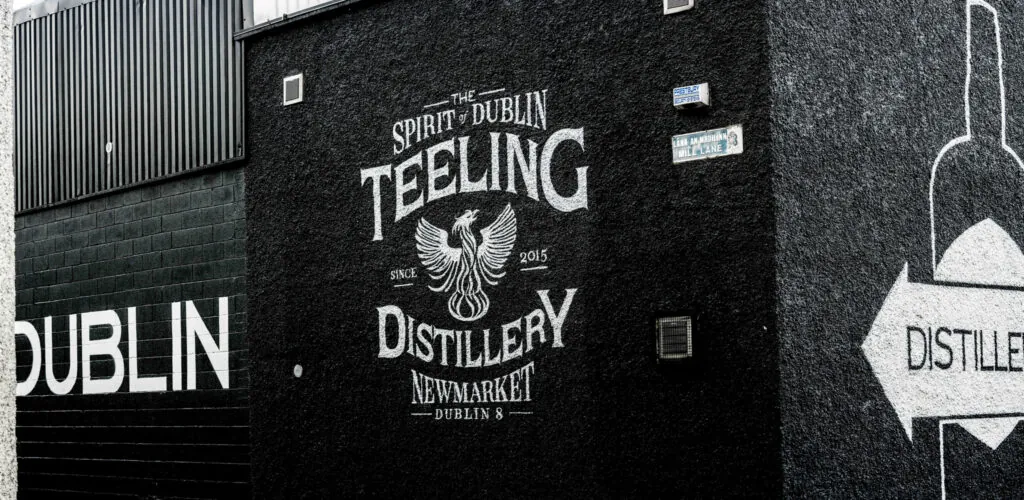
The Teeling FAQ states that the Teeling Tasting experience can be adapted without alcohol on request. Visitors are asked to let the team know when collecting their tickets so that a non-alcoholic cocktail can be prepared after the tour.
These two examples in Dublin show different arrangements: an identified ticket in one case, an adaptation to request in the other. They cannot be used to generalise about every establishment on the island.
How to book a distillery visit without drinking
Check the option and what it includes before paying
Ask for confirmation of the replacement drink, the areas you can access and any difference between tickets. If you are travelling as a group, make clear that one person wishes to follow the tour without consuming alcohol: this avoids discovering the available options once the tasting has begun.
A cocktail presented as an alternative should not become a source of uncertainty. If you need to avoid alcohol strictly, have its ingredients and your requirements confirmed directly with the team. For children, check admission conditions separately; an option for a non-drinking adult does not amount to general permission for minors.
Finally, choose the tour according to what appeals to you: history, architecture, production or exploring a neighbourhood. The end-of-tour drink may be part of your companions’ experience without being the reason for yours.