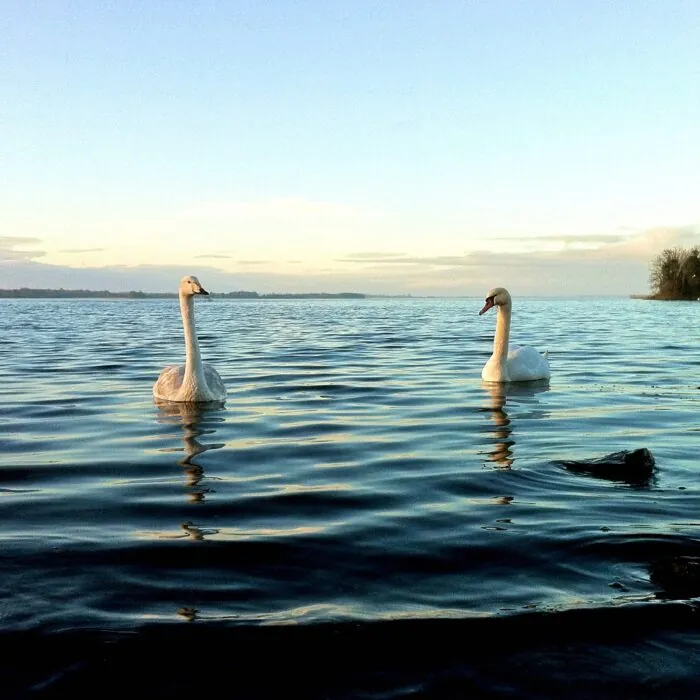


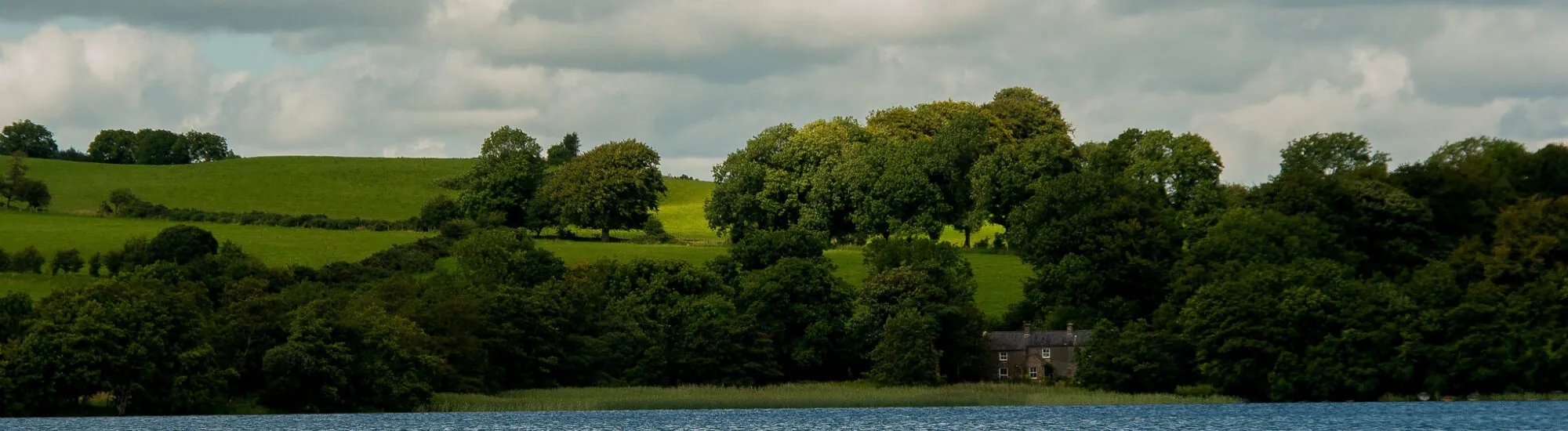
In the heart of County Westmeath, near Collinstown and the impressive Fore Abbey, Lough Lene is one of those Irish lakes where nature and history seem to echo one another at every turn. Its clear waters, small islands and surrounding green hills create a peaceful landscape that remains largely untouched by mass tourism.
The lake is particularly well known among anglers. Its waters are home to a substantial population of brown trout, and are managed to preserve the quality of the fishing. Yet Lough Lene is also worth visiting for its heritage: archaeological sites, ancient fortifications, legend-steeped islands and the discovery of an extraordinary medieval bell all bear witness to a long history of human settlement.
Easily reached from Castlepollard, Collinstown and Fore, Lough Lene makes a delightful stop for discovering a far less well-known side of the Irish Midlands.
Lough Lene lies in the north of County Westmeath, immediately beside the village of Collinstown. The lake stretches for around 3 km and forms a broad expanse of water surrounded by farmland and low hills.
The landscape is very different from the deep, dramatic lakes of Connemara or Kerry. There are no towering mountains here: Lough Lene belongs wholly to the Midlands landscape, with its pastures, hedgerows, narrow roads and gently rolling terrain.
This tranquil atmosphere is precisely one of its main attractions. The lake is far less visited than the major natural attractions of western Ireland and retains a distinctly local feel.
Its waters are also known for their quality. Lough Lene is an important resource for the region and, in particular, supplies the public drinking-water network.
The area around Lough Lene has an especially rich archaeological heritage. Several prehistoric and medieval monuments testify to an early human presence in this part of Westmeath.
The areas around Collinstown and Fore contain a range of archaeological sites, while several of the lake’s islands have also yielded evidence of settlement.
This richness is hardly surprising. For centuries, Irish lakes served as food reserves, transport routes and naturally defensible positions.
Fishing clearly played an important role in this local economy, but it would be excessive to claim that all the inhabitants of the surrounding villages were once fishermen “from father to son”. Agriculture also played a major part in the history of this rural region.
The best-known story associated with Lough Lene begins in 1881.
That year, a young boy fishing for eels on Castle Island discovered an extraordinary object: an ancient ecclesiastical bell that would become known as the Lough Lene Bell.
The object is now regarded as a remarkable example of early medieval Irish religious art.
Contrary to what is sometimes written, the bell is not made of solid silver. It is made of bronze, with a silver coating and decoration characteristic of early Irish Christian art.
It is generally dated to around the 7th or 8th centuries.
The discovery of such a valuable religious object on a small island in the lake naturally raised many questions.
Local tradition links the Lough Lene Bell with Saint Feichin, the religious figure who founded an important monastery at Fore in the 7th century, a few kilometres from the lake.
According to a long-repeated interpretation, the bell belonged to the religious community at Fore before being hidden on Castle Island to protect it during a period of unrest, sometimes associated with Viking incursions.
It is an appealing story, particularly as Irish religious establishments were indeed targeted in raids during the early Middle Ages.
However, it is important to distinguish tradition from what archaeology can establish with certainty. The bell’s presence on Castle Island is confirmed by its discovery, but the exact circumstances of its arrival on the island remain unknown.
Nevertheless, the Lough Lene Bell remains one of the most emblematic heritage objects associated with this part of Westmeath.
Several small islands rise from the waters of Lough Lene and contribute greatly to its character.
The best known is undoubtedly Castle Island, owing to the discovery of the Lough Lene Bell. As its name suggests, the island also bears traces of settlement and fortification.
Another island is known as Nun’s Island. Its name evokes an ancient religious tradition, although stories claiming that a convent of nuns once operated there should be treated with caution in the absence of sufficiently precise documentation.
There is also Turgesius Island, whose name refers to Turgesius – or Thorgest – a Viking leader linked by medieval chronicles to the Scandinavian invasions of Ireland in the 9th century.
As so often in Ireland, documented history, local traditions and legends have gradually become intertwined around these small islands.
One impression given by some older guidebooks needs correcting here: the islands of Lough Lene are not developed attractions with regular shuttle services or tourist landing points.
There is no tourist ferry allowing visitors simply to travel between Castle Island, Nun’s Island and Turgesius Island.
Visitors must also take account of land status, the protection of archaeological heritage and navigation conditions before considering any landing.
For most travellers, the islands are therefore above all part of the landscape to admire from the shore or from a boat used in accordance with local rules.
Lough Lene is not reserved for anglers. When temperatures become more pleasant, its waters also draw local residents for swimming.
The main recreational access is at The Cut, on the lakeshore. This area provides easy access to the water and is one of the best-known places to enjoy Lough Lene.
In summer and on sunny days, the spot can take on a surprisingly lively atmosphere, in contrast with the lake’s usual calm.
As with any open water, caution is essential. The water can remain cold even in summer, and conditions should be assessed before swimming.
Trout fishing is one of the main reasons for Lough Lene’s reputation.
The lake has a substantial population of brown trout and has long attracted enthusiasts of fly fishing and boat fishing.
The quality of its water and aquatic environment contributes greatly to this reputation.
Fishing is regulated, however. Open seasons, permitted methods and any local rules should be checked before casting a line.
Visiting anglers are therefore well advised to consult information from Inland Fisheries Ireland and local organisations before their stay, as regulations may change.
Fishing from a boat is also possible, but weather conditions should be monitored carefully. Even on an inland lake, wind can quickly make boating uncomfortable.
Lough Lene is also an interesting setting for nature lovers.
Its waters, reed beds and surrounding farmland support a variety of waterbirds and land birds. Naturally, the interest varies with the seasons, particularly during migration and wintering periods.
The best way to enjoy it is simply to take your time along the shores, away from the busiest areas.
Binoculars can be useful for watching birds on the lake and around the islands without disturbing them.
One of Lough Lene’s great advantages is its proximity to Fore, home to one of the Midlands’ most interesting monastic complexes.
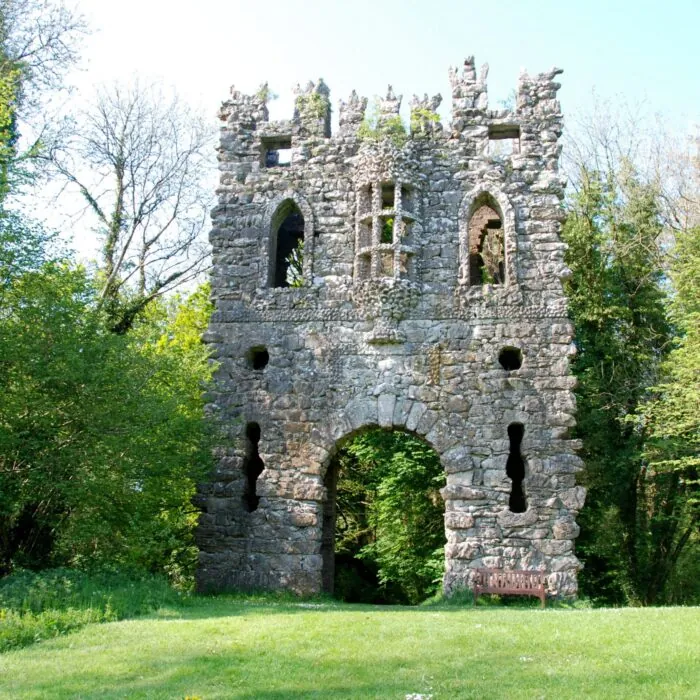
Fore Abbey lies just a few kilometres from the lake. Its imposing medieval ruins occupy a green valley surrounded by hills, making it an excellent visit to combine with Lough Lene.
The village is also famous for the legends of the Seven Wonders of Fore, seven “wonders” associated with Saint Feichin and the site’s religious history.
Further south, Castlepollard is the area’s main small town, with shops, cafés and services.
Together, Lough Lene and Fore Abbey make for a very enjoyable half-day in northern Westmeath, away from the busiest tourist routes.
Lough Lene can be explored throughout the year, with each season offering a different atmosphere.
Spring and summer are particularly pleasant for enjoying the shores and outdoor activities. The longer days also make it easy to combine the lake with a visit to Fore Abbey.
Autumn brings softer light and generally fewer visitors, while clear winter days lend the landscape a far starker atmosphere.
For anglers, the best time to visit depends chiefly on the seasons and regulations applying to the species sought.
Lough Lene may not be Ireland’s most spectacular lake at first glance. Yet, with its clear waters, mysterious islands, exceptional medieval bell and the nearby ruins of Fore, it is one of the most interesting stops for discovering a more secret side of Westmeath, away from the main tourist routes.
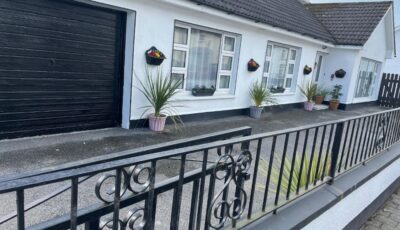
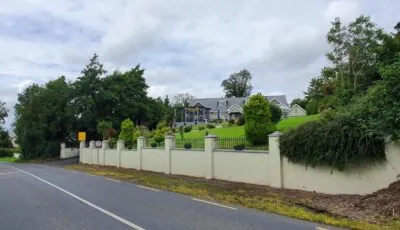
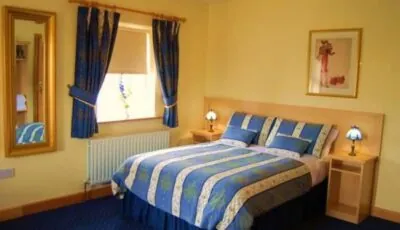
Want to extend your visit without having to rush around? Here are a few well-located places to stay near the must-see attractions.
Essential information to help you plan your visit, including key landmarks, access information, and booking options.
suivre la R362 en direction d'Athlone, County Westmeath, County Westmeath (County Westmeath) - Republic of Ireland
53.662856, -7.232256