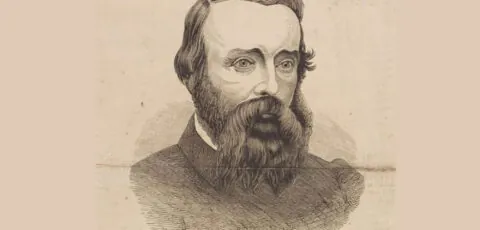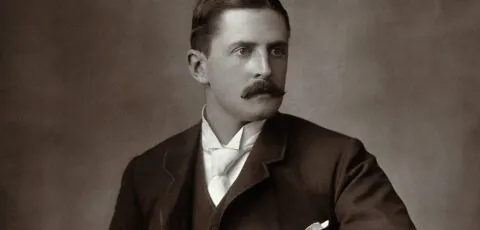
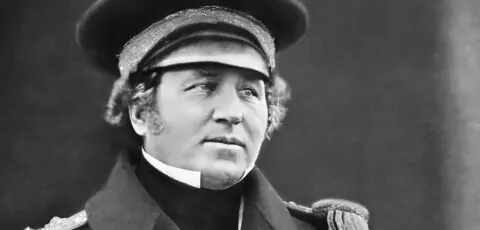



Ernest Shackleton (1874 – 1922) was a world-renowned Irish explorer. His name evokes epic adventures in the hostile ice of Antarctica, feats that bordered on the impossible, and unwavering determination. An early 20th-century explorer, Shackleton remains an iconic figure of the heroic age of polar exploration. His life was marked by spectacular expeditions, strong leadership, and relentless tenacity. Let’s revisit his extraordinary adventures!
Ernest Henry Shackleton was born on February 15, 1874, in County Kildare, Ireland. The son of a doctor, he grew up in a Protestant family before moving to England at the age of ten. He quickly developed a passion for adventure and the sea.
At 16, he left school to join the merchant navy, where he climbed the ranks with impressive speed.
This environment taught him not only navigation but also the importance of leadership and decision-making in critical situations—skills that would prove crucial during his future polar expeditions.
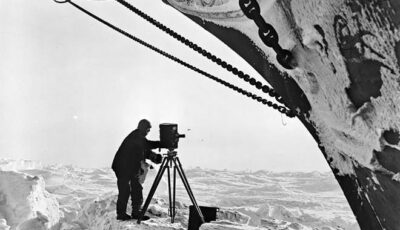
Ernest Shackleton in Antarctica
Shackleton’s explorer career began in 1901 when he joined the Discovery Expedition led by Robert Falcon Scott.
The goal: to reach the uncharted lands of Antarctica. During this mission, Shackleton took part in a bold attempt to reach the South Pole. Although they did not succeed, Shackleton and his team set a new southern record, reaching 82°17′ latitude. However, the extreme conditions weakened Shackleton, forcing him to leave the expedition due to health reasons.
This setback only strengthened his resolve. He realized he wanted to lead his own expeditions, with a philosophy focused on survival and exploration.
In 1907, Shackleton organized and led his own expedition aboard the Nimrod. This time, he aimed to reach the South Pole. Although the team did not reach their ultimate goal, they set a new record by reaching 88°23′ south latitude, just 180 kilometers from the pole.
This expedition also achieved scientific successes, including the discovery of the Beardmore Glacier and several mountain ranges. Shackleton demonstrated remarkable leadership by deciding to turn back to preserve the lives of his men. This difficult choice cemented his reputation as a cautious and compassionate leader.
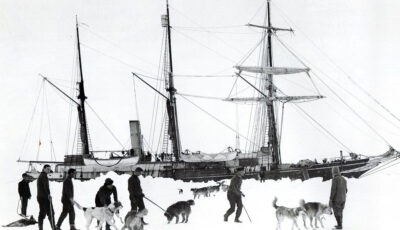
Ernest Shackleton’s Expedition
The Endurance Expedition immortalized Shackleton in the history of exploration. In 1914, he launched a daring mission: to cross Antarctica from coast to coast, a world first. However, things took a dramatic turn when their ship, the Endurance, became trapped in the Weddell Sea ice. After months of enduring extreme conditions, the ship was eventually crushed by the ice and sank.
What followed was a spectacular example of survival and leadership. Shackleton and his men drifted on the ice for months before reaching Elephant Island using lifeboats. Shackleton then decided to undertake a desperate rescue mission. With five men, he crossed 1,300 kilometers of ocean in a small boat, the James Caird, to reach South Georgia. This crossing, made under terrible conditions, is considered one of the greatest feats of navigation ever.
Once on South Georgia, Shackleton still had to cross unexplored mountains to reach a whaling station. Thanks to his courage and determination, he managed to organize the rescue of his men. Against all odds, no member of the Endurance expedition lost their life.
After the Endurance epic, Shackleton was celebrated as a hero, although his fame was overshadowed by the upheavals of World War I. Despite his achievements, he faced financial difficulties and struggled to find balance.
In 1921, he launched one last expedition aboard the Quest. But Shackleton never completed this journey. On January 5, 1922, he died of a heart attack on South Georgia at the age of 47. He was buried on the island, according to his wife’s wishes, marking the end of a life dedicated to exploration.
Shackleton is today an emblematic figure of human endurance, crisis leadership, and the thirst for exploration. His approach, centered on the survival of his men even at the cost of abandoning his goals, remains an example for modern leaders.
His story has inspired countless books, documentaries, and films, and his name is synonymous with courage and resilience in the face of adversity.
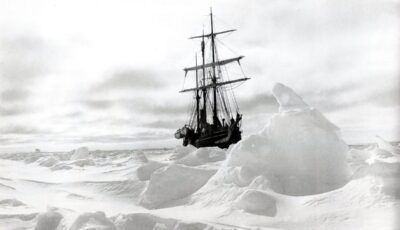
Ernest Shackleton’s ship Endurance
In 2022, one of his ships, the Endurance, was discovered by highly advanced submarines at a depth of over 3,000 meters. Located in the Weddell Sea, the wreck remains remarkably well-preserved to this day!
The ship sank in 1915 after being trapped in the ice. Ernest Shackleton had managed to save his men.
This discovery, considered a major breakthrough, has helped shine a new light on the extraordinary explorations of the Irishman.