

Bulmers cider is part of the fabric of Irish pubs. Outside the Republic of Ireland, the same drink is better known as Magners. This dual identity often intrigues travellers, but it is explained by the history of the brands and commercial rights. Behind both labels lies a cider born in Clonmel, County Tipperary.
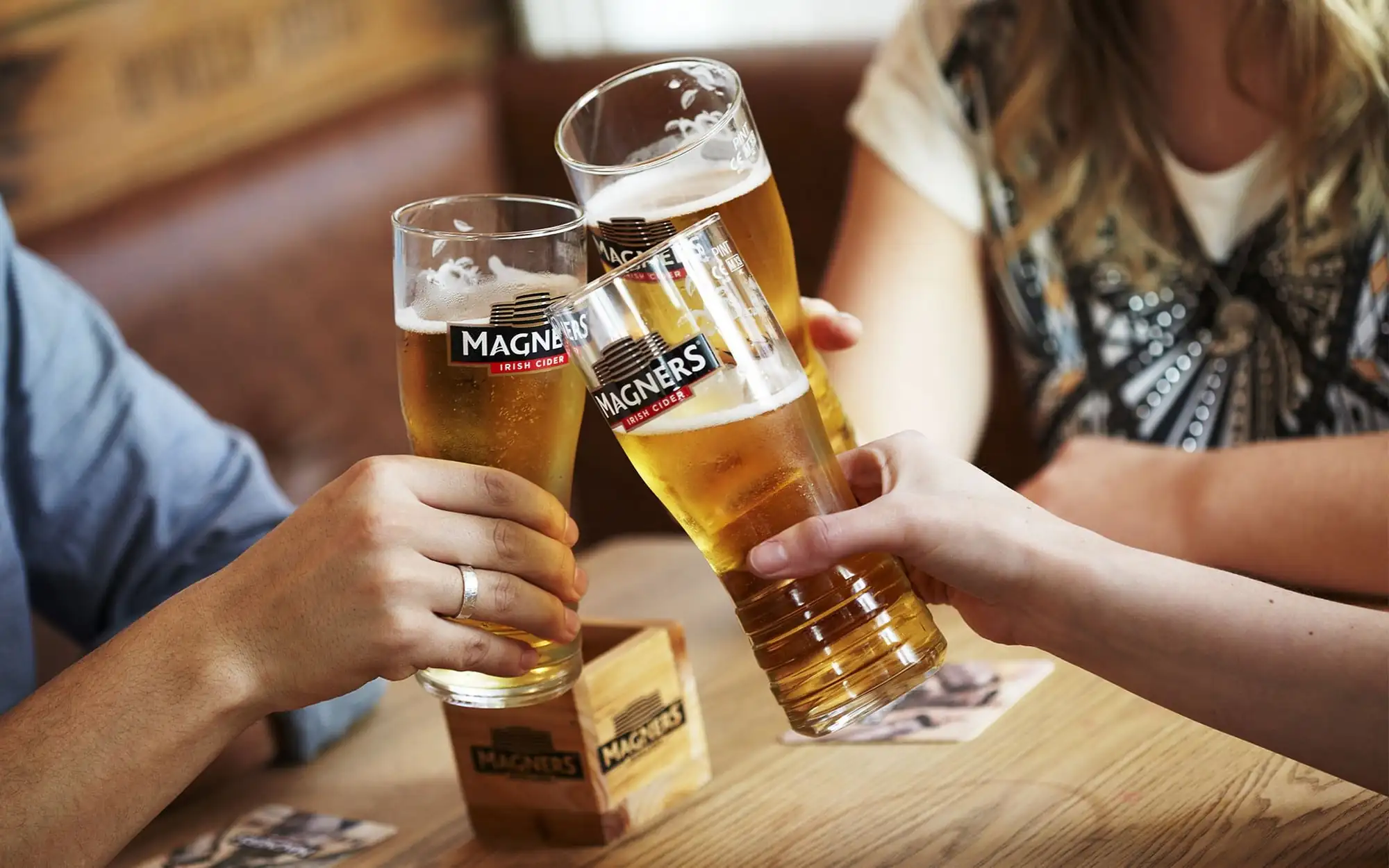
In the Republic of Ireland, the cider is called Bulmers Irish Cider. In many overseas markets, including the United Kingdom and France, it is sold under the Magners brand. They should not, therefore, be seen as two competing recipes: Bulmers and Magners represent the same Irish cider heritage, adapted for different commercial territories.
This distinction stems from the rights associated with the Bulmers name outside Ireland. When the Irish brand expanded internationally, it adopted the surname of its founder, William Magner. For travellers, the rule of thumb is simple: order a Bulmers in a pub in Dublin or Cork, but look for Magners in most other countries.
The story began in 1935, when William Magner started making cider at Dowd’s Lane in Clonmel. His original set-up was modest: a press and a few oak barrels. The business then grew to become one of Ireland’s leading names in the sector.
Clonmel remains closely associated with the drink. Located in an agricultural region of south-east Ireland, the town gave the brand a place, a history and an identity that it continues to highlight. Production is now part of the Irish C&C Group.
The Original version has an instantly recognisable profile: a fruity opening, measured sweetness, refreshing acidity and a slight bitterness on the finish. The fizz is present without taking over, making for an easy-drinking cider that is less austere than some very dry craft ciders.
Its amber colour and ripe apple notes set it apart from paler or sharply acidic ciders. Alcohol content may vary according to the market and format, so it is best to check the label rather than rely on a single figure.
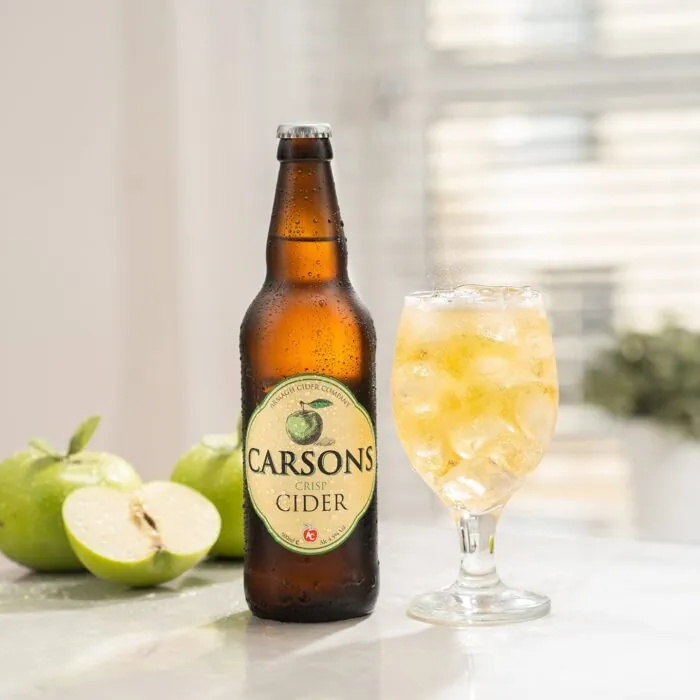
Magners has played a major part in popularising cider served in a large glass filled with ice. This presentation emphasises freshness and suits the drink’s fruity character. In Ireland, it is common to see a bottle served with a glass and ice, especially in fine weather.
That said, serving it this way is not an absolute rule. Without ice, the cider is less diluted and its apple aromas remain more concentrated. The choice depends as much on local habits as on individual preference.
Bulmers is easy to order in pubs across the Republic of Ireland, by the bottle or sometimes on draught. Its balance of fruit, sweetness and acidity makes it a good match for simple, flavoursome food: roast pork, sausages, chicken, fish and chips or Irish cheeses.
It works particularly well with savoury, slightly rich dishes, refreshing the palate as you eat. With a washed-rind cheese such as Durrus, a relatively dry cider makes for a coherent Irish pairing, its acidity answering the cheese’s creaminess.
Bulmers is undoubtedly Ireland’s most visible cider, but it does not represent the country’s entire production. Ireland is also home to small producers making drier, farmhouse-style ciders or ciders focused on particular apple varieties. Tasting them offers a way to compare a major national brand with more artisanal expressions.
Bulmers Magners nevertheless remains a good introduction to pub culture. Its two names, its Clonmel origins and its service over ice have made it a drink instantly associated with Ireland, to be enjoyed in moderation.
Production begins with harvesting and pressing the apples to extract their juice. The juice is then fermented: yeasts convert the naturally occurring sugars into alcohol and develop some of the aromas. The resulting cider may be blended to achieve a consistent profile, then filtered and packaged according to the product being sold.
For a major brand, blending plays an essential role. It helps maintain a recognisable signature despite natural variations between harvests. Not all apples bring the same qualities: some enhance fruitiness, others acidity, structure or bitterness. It is their balance, rather than any single variety, that shapes the final result.
Travellers used to Breton or Norman ciders will quickly notice the difference. Bulmers Original favours a very fruity expression, distinct carbonation and great freshness. It is generally seen as more approachable and more consistent than a farmhouse cider marked by its vintage or terroir.
This comparison is not intended to establish a hierarchy: the drinking occasions differ. Bulmers is designed as a refreshing pub drink, while many craft ciders are also enjoyed with food for their tannins, acidity or fermentation nuances. Trying both approaches greatly enriches the discovery of cider in Ireland.
In the Republic of Ireland, simply asking for a Bulmers will usually be enough. The server can then clarify the available format or version. As with beer, the offering varies from one venue to another: bottle, can or draught do not always give exactly the same impression on the palate.
Ice is often offered separately. It chills the cider quickly and reflects the brand’s popular image, but gradually softens the flavours as it melts. To better appreciate the fruit and finish, you may wish to start without ice and then adjust to your preference.
Bulmers’ success has made cider highly visible in Irish pubs, but the island’s cider history is more varied. Producers today work with local orchards, dry blends and sometimes low-intervention methods. The term craft cider often helps identify them on a drinks list.
A comparative tasting is particularly interesting: Bulmers provides a popular, instantly recognisable point of reference, while a craft cider may reveal more tannins, acidity or rustic notes. In both cases, checking the label remains the best way to establish the exact ingredients and alcohol content. Consumption should remain moderate.
Alcohol abuse is dangerous for your health. Drink in moderation.